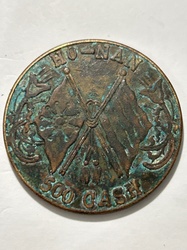
How to Identify the Ho-Nan 100 Cash
A collector's checklist for the Henan 100-cash copper: reading its province and value characters, judging struck bronze fabric, and spotting varieties and fakes.
Read the full Ho-Nan 100 Cash encyclopedia entry →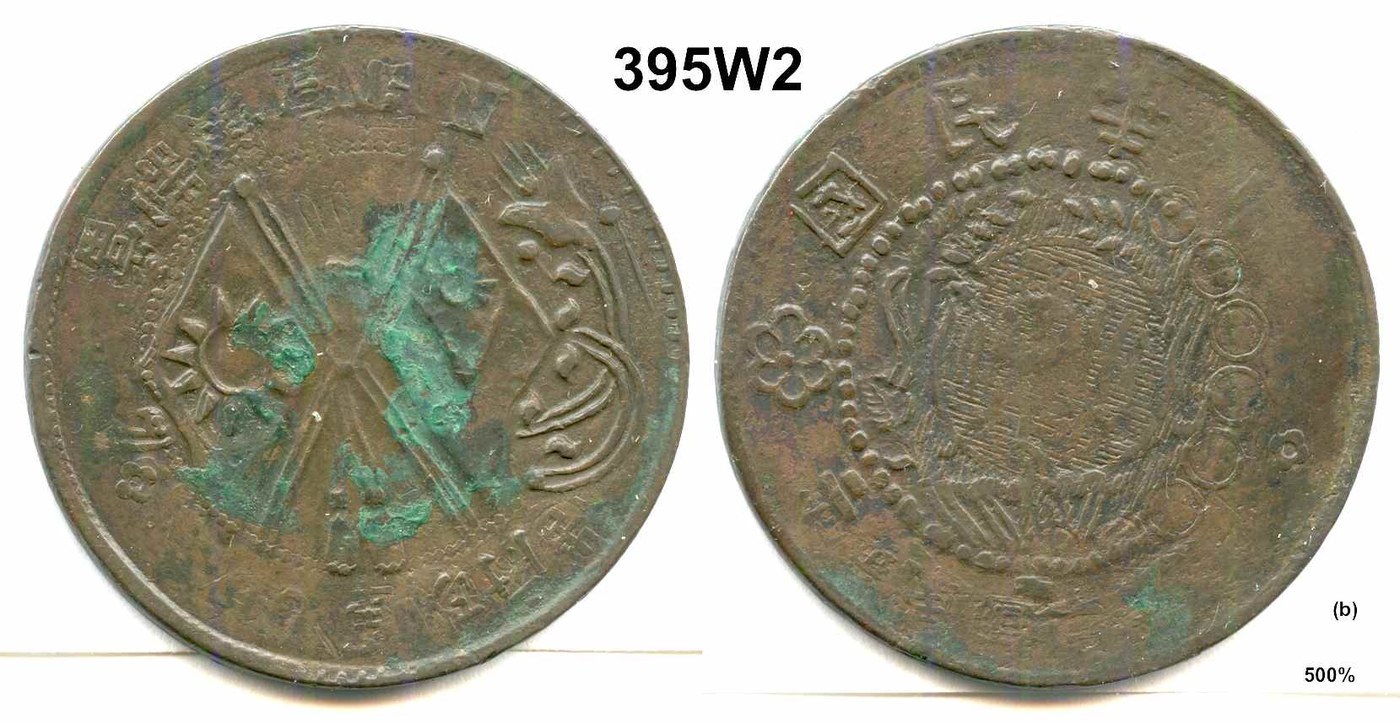
Begin with the overall fabric. The Ho-Nan 100 Cash is a large, struck bronze disc with raised rims and no central hole, produced on minting machinery rather than cast in a mold. If a coin is thin, has a square central hole, or shows the soft rounded relief and sprue marks of casting, it is a traditional cash coin and not this Republican-era copper.
Read the legends. One face should identify Henan Province and state the 100-cash value in Chinese characters set inside an ornate border. Look specifically for the character group meaning "one hundred" and the cash/wen unit; the surrounding decorative elements are a hallmark of the type. The other face carries a central inscription framed by a decorative pattern — often a floral rosette, wreath, or crossed-flag device common to Republican coppers.
Check size and weight against references. This is a large-module coin, clearly bigger and heavier than a minor cash piece, so measure the diameter and weigh it and compare to published figures for Henan 100-cash coppers. A piece that is far too small or light for its stated denomination deserves a second look.
Sort out the variety. Henan struck this denomination in several varieties that differ in how the legend is arranged, in the ornament, and in border style, and some carry a date or Western lettering. Match the exact wording and decorative detail to reference plates rather than assuming all 100-cash coppers are identical, since variety strongly affects both attribution and value.
Apply authentication caution. Judge the patina: genuine circulated bronze shows stable, ingrained brown or reddish-brown toning, whereas fresh, powdery, or painted-looking surfaces are warning signs. Be wary of cast copies (which show granular surfaces and mold seams instead of crisp struck detail), tooling, and modern fantasy pieces, and seek expert opinion for any high-grade or scarce example.
Frequently asked questions
Which side is the front of the coin?
By convention the face naming Henan Province and the 100-cash value is treated as the obverse, and the face with the decorative pattern around a central inscription as the reverse. Because both faces are ornate, use the legends rather than the ornament to orient the coin.
How do I tell it from a traditional Chinese cash coin?
Traditional cash coins are cast, thin, and have a square hole in the center. The Ho-Nan 100 Cash is a solid, struck bronze disc with raised rims and no hole, even though its value is stated in cash. Fabric and the missing hole are the quickest tells.
Are there fakes of the Ho-Nan 100 Cash?
Yes. Cast copies, tooled coins, and modern fantasy pieces exist. Look for crisp struck detail rather than granular cast surfaces or mold seams, check for stable ancient-looking patina versus fresh or painted color, and get expert authentication for valuable examples.
Why do two Ho-Nan 100 Cash coins look slightly different?
Henan struck the denomination in several varieties with different legend arrangements, ornaments, and borders, and hand-fed striking produced variation in centering and sharpness. Match your coin's exact wording and decorative detail to reference plates to pin down its variety.
Ho-Nan 100 Cash identified by the community
Recent Ho-Nan 100 Cash coins identified with Coin Identifier.