
How to Identify the Qian Feng Quan Bao
A collector's checklist for the Qian Feng Quan Bao: reading its four Tang-era characters, judging cast bronze fabric, and telling genuine coins from charms.
Read the full Qian Feng Quan Bao encyclopedia entry →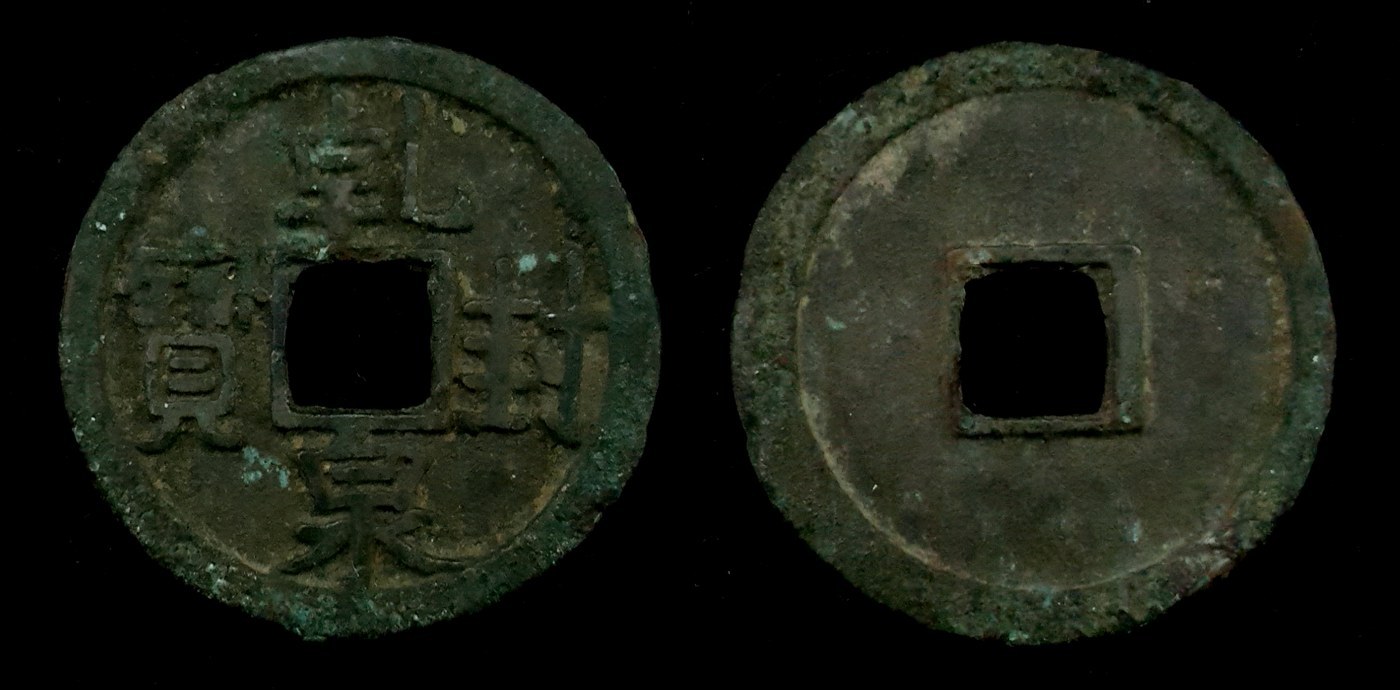
Start with the overall form. A Qian Feng Quan Bao is a round coin with a square central hole, made of bronze and produced by casting, not striking. Cast coins show softer, slightly rounded relief and may have casting seams or filing marks on the rim where the piece was removed from its mold. Crisp, perfectly uniform edges and sharp machine-cut detail point instead to a modern or struck reproduction.
Read the four characters around the hole. The legend is Qian Feng Quan Bao (乾封泉寶), read in the order top, bottom, right, left. The key distinguishing word is Quan Bao (泉寶), which is uncommon — most Tang and later cash instead read Tong Bao or Yuan Bao — so seeing Quan Bao is a strong pointer to this type. Check that all four characters are present, evenly spaced, and consistent in calligraphic style.
Inspect the reverse closely, because it carries a lot of weight here. Authentic circulating Tang cash usually have plain backs, at most a rim, crescent, or single dot. A decorative reverse with extra characters or ornament, like the coin pictured, is common on charms, amulets, and commemorative or reproduction castings that borrow the Qian Feng Quan Bao name. Treat an ornate back as a reason to look harder, not as proof of a rare original.
Measure size, weight, and fabric and compare against known Tang large-cash. The genuine issue was a substantial ten-cash coin, so a piece that is unusually thin, light, crude, or oversized may be a later casting. Note the diameter and weight, the depth and evenness of the characters, and whether the metal and patina look consistent with age throughout.
Apply authentication caution. This legend is heavily imitated, from old amulets to modern tourist casts, so look for stable, ingrained green or brown patina rather than fresh, powdery, or painted-looking surfaces, and make sure character style and fabric match a documented Tang type. For any coin offered as a genuine early-Tang original, seek expert opinion or third-party authentication before buying.
Frequently asked questions
How do I tell a genuine Tang coin from a charm using the same name?
Genuine circulating Tang cash usually have plain reverses and consistent cast bronze fabric with aged patina. A decorative reverse with extra characters or ornament, or crude and oddly sized metal, often signals a later charm, amulet, or reproduction. Compare size, weight, and character style to known Tang examples and get expert opinion for valuable pieces.
Which side is the front?
The side bearing the four characters Qian Feng Quan Bao is the obverse. Read them top, bottom, right, then left around the square hole. The reverse may be plain or, on charms and later castings, carry decorative marks or additional characters.
What makes Quan Bao different from Tong Bao coins?
Most Chinese cash read Tong Bao (通寶) or Yuan Bao (元寶) after the era name. Quan Bao (泉寶) uses quan, an older poetic word for money, and is far less common, which is one reason the Qian Feng Quan Bao legend stands out and is worth reading carefully.
Is a heavier or larger example more likely genuine?
Not by size alone. The original was a substantial ten-cash coin, but many reproductions and charms are also large. Use size and weight together with cast fabric, character style, reverse type, and patina rather than relying on any single measurement.