
How to Identify the Daoguang Tongbao
A collector's guide to attributing a Daoguang Tongbao cash coin: reading the reign title, decoding the Manchu mint mark, and spotting casts versus copies.
Read the full Daoguang Tongbao encyclopedia entry →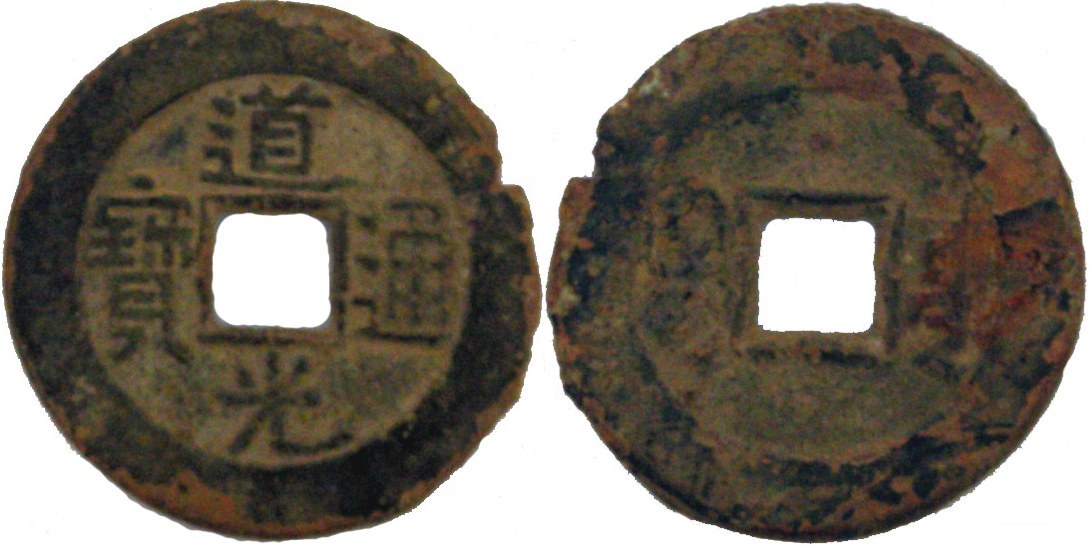
Begin with the obverse legend, because it fixes the emperor. Hold the coin so the square hole is centered and read the four characters top, bottom, right, then left: the top and bottom characters are Dao Guang (the reign title), and the right and left characters are Tong Bao ("circulating treasure"). Confirming the Daoguang reign characters is what separates this coin from the many other visually similar Qing cash coins such as Jiaqing, Xianfeng, or Qianlong Tongbao, which share the same size, shape, and Tongbao ending.
Then turn to the reverse to pin down the mint. Unlike the obverse, the reverse is written in Manchu script and names the casting mint. On this coin the two Manchu characters flanking the hole identify Bao Quan, the Board of Revenue mint in Beijing. Because every mint used a different Manchu name, the reverse is the diagnostic that distinguishes one Daoguang Tongbao from another; two coins with identical obverses can be quite different in scarcity depending on the mint named here.
Check the physical form and manufacturing method. A genuine single cash is a small round bronze or brass coin, roughly 22–25 mm across and light in the hand, with a clean square central hole. It should look cast rather than struck: expect softly rounded character edges, faintly grainy fields, and filing marks on the rim where the casting sprue was removed. Crisp, machine-sharp detail or a perfectly smooth modern surface is a warning sign.
Be cautious with look-alikes and reproductions. Chinese cash coins are among the most widely copied collectibles, sold as souvenirs, charms, and outright fakes, and many oversized "cash" charms are decorative pieces never meant as currency. Compare the diameter, weight, and character style against reference images for a genuine Bao Quan Daoguang Tongbao, and be wary of coins that are unusually heavy, unusually large, or show seams and file marks consistent with recent casting.
Finally, use good references before assigning value. Match both the obverse reign title and the exact Manchu mint name to a catalog or reputable online listing, since scarcity depends heavily on the specific mint and variety. For anything you intend to buy or sell above pocket-change value, corroborate the attribution with an experienced collector or a specialist reference rather than the obverse legend alone.
Frequently asked questions
How do I tell a Daoguang Tongbao from other Qing cash coins?
Read the top and bottom obverse characters, which give the reign title. They must read Dao Guang. Other emperors used the same round shape and the Tongbao ending, so the reign characters are the deciding factor.
How do I read the mint on the reverse?
The reverse uses Manchu script, not Chinese, with one character on each side of the hole naming the mint. Compare them to a Manchu mint-name chart; on this example they identify the Bao Quan mint in Beijing.
How can I tell a genuine cast coin from a modern copy?
Genuine cash were cast, so look for softly rounded characters, slightly grainy fields, and filed rim marks on a small, light coin about 22–25 mm wide. Sharp machine-like detail, excess weight, or large size suggests a charm or reproduction.
Is the obverse enough to fully identify the coin?
The obverse confirms the Daoguang reign, but not the specific issue. You need the Manchu reverse to identify the mint, since scarcity and value depend on which mint cast the coin. Always examine both faces.