
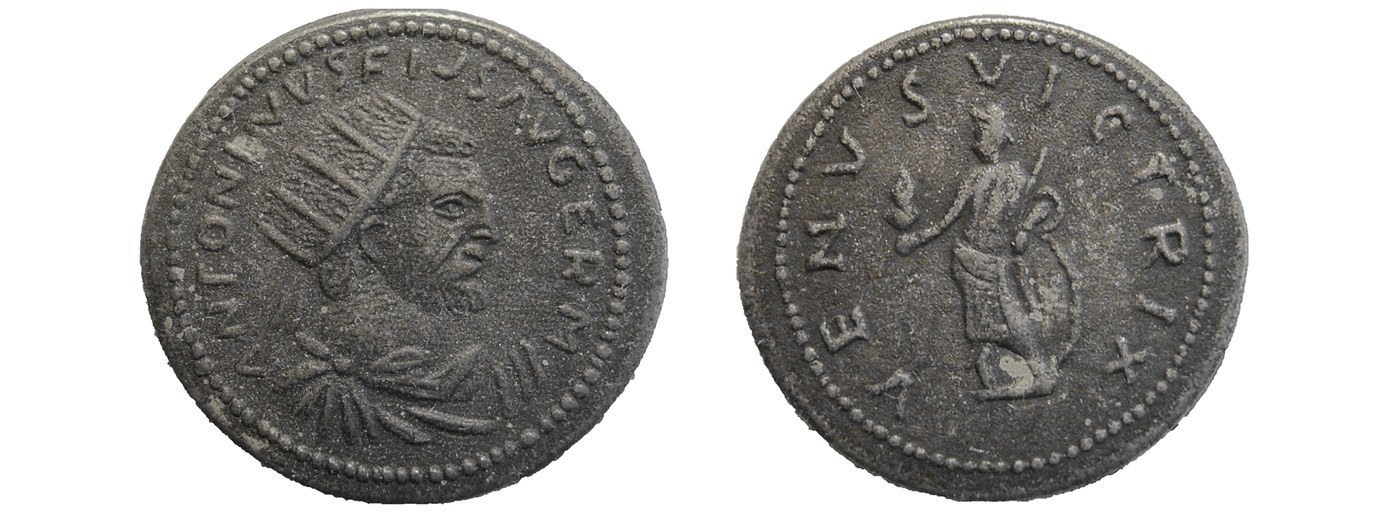
Antoninianus of Caracalla
The antoninianus introduced by Caracalla around AD 215, a radiate-crowned double denarius in debased silver that reshaped Roman coinage.
- Country
- Roman Empire
- Denomination
- Antoninianus
- Metal
- Billon
Got a coin like this?
Identify any coin from a photo, free.
Overview
The antoninianus is a Roman silver-alloy coin introduced under the emperor Caracalla around AD 215. It is distinguished from the older denarius by the radiate (spiked) crown worn by the emperor, a device that signaled the coin was tariffed as a double denarius even though it weighed less than two actual denarii.
The name "antoninianus" is a modern convention drawn from Caracalla's official name, Marcus Aurelius Antoninus; the coin's ancient name is not securely known, and collectors also call it a "radiate." Struck in the closing years of Caracalla's sole reign (AD 211-217), examples typically show a radiate, cuirassed bust of the emperor on the obverse and a standing deity or personification such as Victory on the reverse.
As the first issues of a denomination that would dominate the third century, Caracalla's antoniniani are historically important and widely collected. Early strikes carried a relatively high silver content compared with the badly debased pieces of later decades.
History & Background
Caracalla (Marcus Aurelius Antoninus, sole ruler AD 211-217) faced heavy military costs, and around AD 215 his government introduced the antoninianus as a way to stretch the state's silver. The coin was valued at two denarii but weighed only about one and a half, making it an overvalued piece that let the treasury issue more spending power from the same bullion.
The radiate crown became the visual marker of this doubled value, following an older Roman convention in which a radiate portrait indicated a double unit. On coins of imperial women, a crescent set beneath the bust served the same doubling function. The denomination was struck at Rome alongside the continuing denarius.
The antoninianus was briefly discontinued after Caracalla but revived under later emperors, after which it was steadily debased across the third century until it became a small bronze coin with only a silver wash. Caracalla's issues therefore stand at the beginning of one of the most significant currency transformations in Roman history.
How to Identify
Look first at the emperor's crown. A radiate crown of pointed spikes, rather than a laurel wreath, is the defining feature that separates an antoninianus from a denarius. On these coins the obverse shows the radiate, cuirassed (and sometimes draped) bust of Caracalla facing right, usually with a Latin legend beginning ANTONINVS and including titles such as PIVS AVG GERM.
The reverse carries a standing figure, commonly a deity or personification, with Victory, Sol, Jupiter, and Serapis among the types seen for this reign. A winged Victory holding a wreath and palm, or a robed deity holding attributes, matches the standing-figure reverse observed on this piece. A surrounding legend names the figure or virtue depicted.
In hand the coin is roughly 22-24 mm across and about 5 grams, larger and heavier than a contemporary denarius. The fabric is a silver alloy (billon); Caracalla's early strikes retain a fair amount of silver and often show a pale grey metal, unlike the coppery, silver-washed radiates of later reigns.
Value & Collectibility
Caracalla's antoniniani are among the most affordable early examples of the denomination and are readily available to collectors. Well-worn or common reverse types often trade in the low tens of dollars, while attractive, well-centered coins with clear portraits and good silver surfaces typically bring the mid-tens to low hundreds.
Value is driven by the sharpness of the radiate portrait, the completeness of the legends, the reverse type and its rarity, and overall eye appeal. Because these were the first issues of the denomination and Caracalla is a well-known emperor, demand is steady across the market.
Prices given here are general ranges for context, not appraisals; condition, reverse type, and provenance can move an individual coin well outside them. Specialist attribution to a specific reverse and mint issue can add a premium.
Frequently asked questions
Why is it called an antoninianus if Caracalla struck it?
The name is a modern label based on Caracalla's official name, Marcus Aurelius Antoninus. Its true ancient name is unknown, so scholars adopted "antoninianus" for the denomination he introduced.
How is an antoninianus different from a denarius?
The antoninianus was tariffed as a double denarius and is marked by the emperor's radiate (spiked) crown instead of a laurel wreath. It is also somewhat larger and heavier, though it contained less silver than two real denarii.
What metal is it made of?
It is a silver alloy usually classed as billon. Caracalla's early issues retained a relatively high silver content, before the denomination was heavily debased by later third-century emperors.
Are Caracalla antoniniani rare or valuable?
They are common and generally affordable, being the first issues of a widely produced denomination. Nicer examples with strong portraits and good silver can command higher prices, but most are accessible to beginning collectors.
Antoninianus of Caracalla guides
In-depth guides for identifying, valuing, and collecting Antoninianus of Caracalla.
Other coins you may enjoy
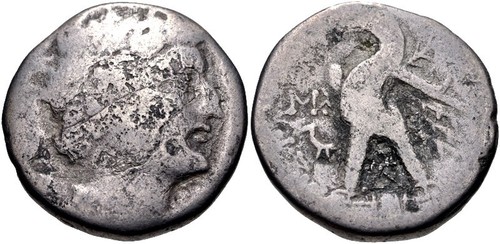
Tetradrachm of Ptolemy XII
80-51 BC
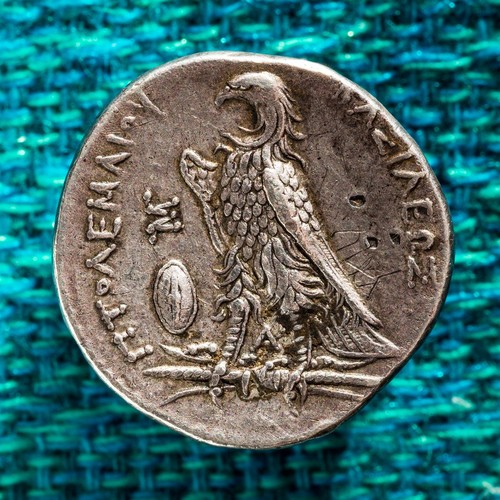
Tetradrachm of Ptolemy I
305-283 BC
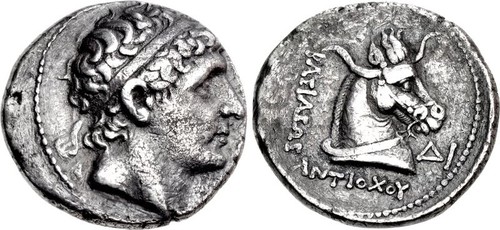
Tetradrachm of Antiochos I Soter
281-261 BC
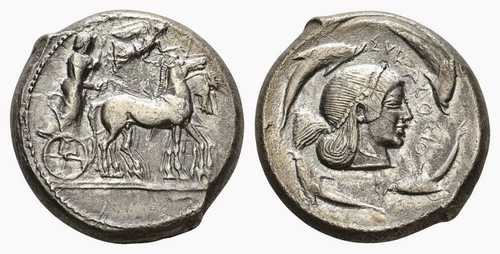
Syracuse Tetradrachm
c. 5th-4th century BC (Classical period)
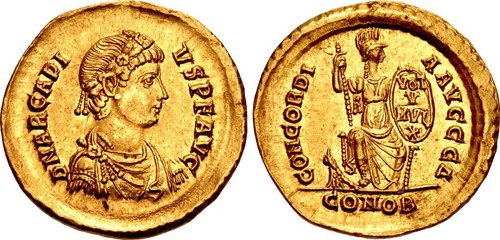
Solidus of Arcadius
AD 395-402
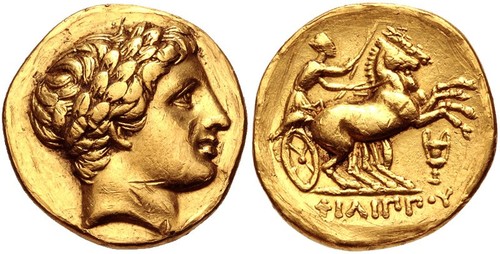
Philip III Gold Stater
323-317 BC
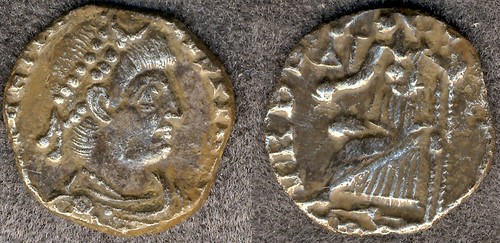
Siliqua of Gratian
AD 367-383
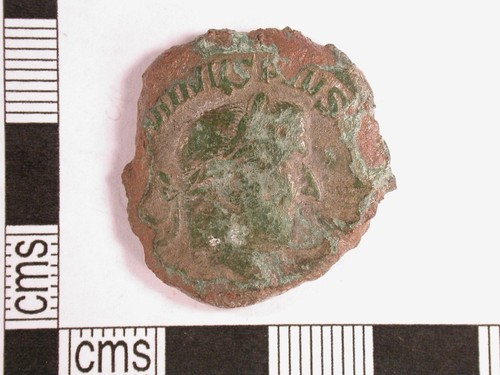
Sestertius of Maximinus Thrax
235-238 AD
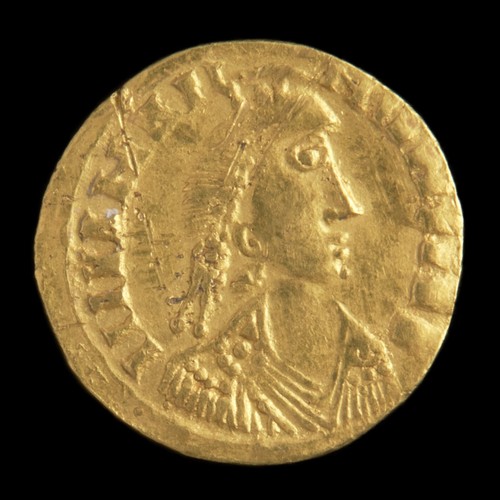
Solidus of Valentinian III
AD 425-455
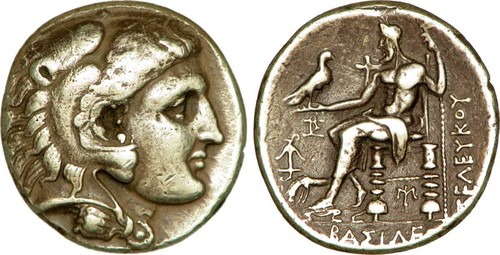
Seleucus I Nicator Tetradrachm
Late 4th-3rd century BC
Nummus of Magnentius
AD 350-353
Follis of Galerius
AD 308-310