
Coin Encyclopedia
Search and identify coins from around the world — with country, denomination, metal, mint, history, and how to tell them apart.
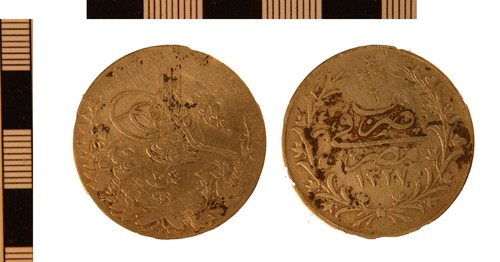
Ottoman Silver Coin
A silver coin of the Ottoman Empire bearing the sultan's tughra monogram amid floral ornament, with Arabic-script inscriptions on the reverse.
World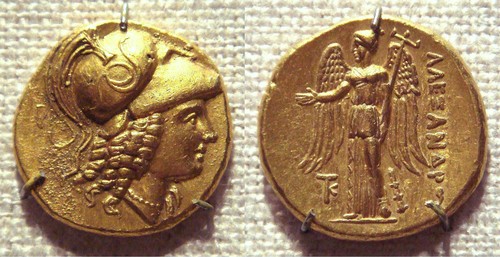
Alexander the Great Gold Stater
Gold stater struck in the name of Alexander the Great, with a helmeted Athena obverse and Nike holding a wreath on the reverse; this example c. 323-315 BC.
Ancient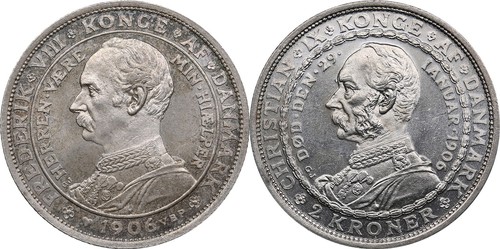
2 Kroner
A Danish silver 2 Kroner dated 1875, the first year of the krone, showing the crowned Danish coat of arms and the denomination 2 KRONER.
Modern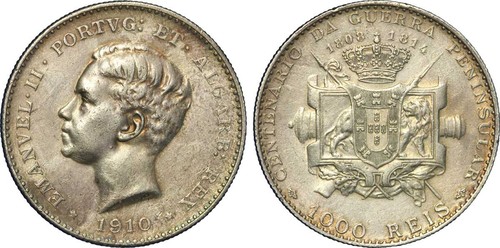
Reis (Peninsular War)
A 1910 Portuguese silver Reis struck under King Manuel II to mark the centenary of the Peninsular War, dated 1808-1814 across the king's bust.
Modern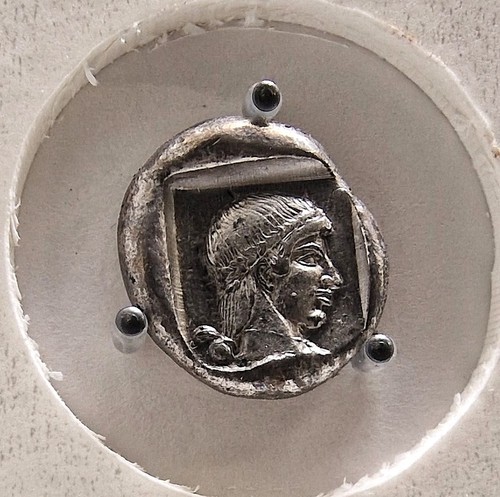
Cnidian Drachm
An archaic hand-struck silver drachm of the Greek city of Cnidus, showing the goddess Aphrodite on one side and an eagle on the other.
Ancient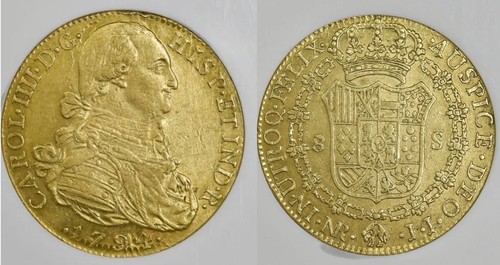
8 Escudos (Carolus)
The largest Spanish gold coin of the age, the 8 Escudos or doubloon, struck under the Habsburg Carolus rulers with the crowned quartered royal arms.
Early Modern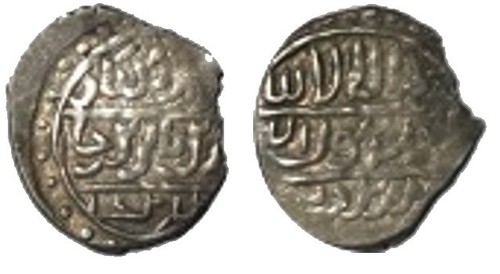
Akçe
The akçe was the tiny silver coin at the heart of the early Ottoman economy, struck with Arabic-script inscriptions and no portrait or figural imagery.
Medieval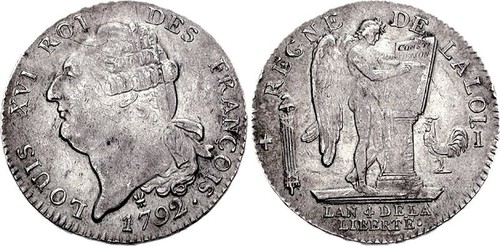
Constitutional Ecu
A French silver ecu of the constitutional-monarchy era showing King Louis XVI on the obverse and a standing armed Liberty figure on the reverse, dated 1792.
Revolutionary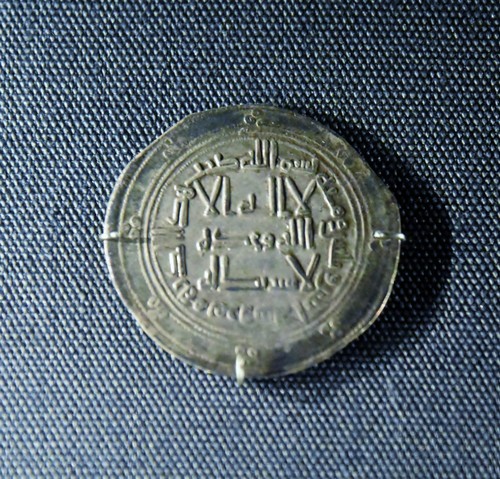
Abbasid Silver Dirham
A thin, broad Islamic silver coin of the Abbasid Caliphate, covered edge to edge with concentric Kufic Arabic inscriptions and dated AH 132 (AD 749–750).
Islamic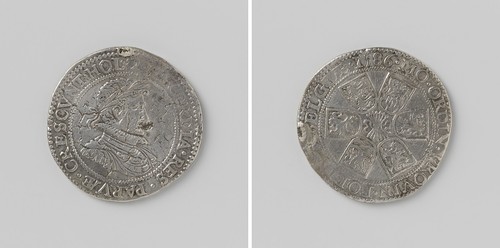
Halve Rijksdaalder van Leicester
Silver half rijksdaalder of the Leicester type, struck in the rebelling Dutch provinces, showing an armored bust and a split provincial shield.
Early Modern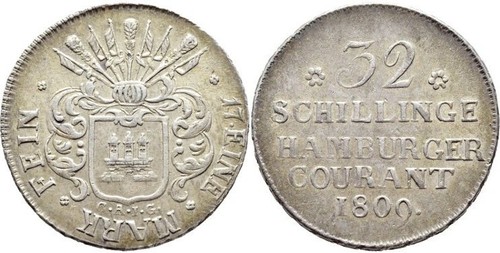
Hamburg 32 Schilling
A 1800 silver 32 Schilling of the Free City of Hamburg, with the city coat of arms and a 'HAMBURGER COURANT' reverse.
German States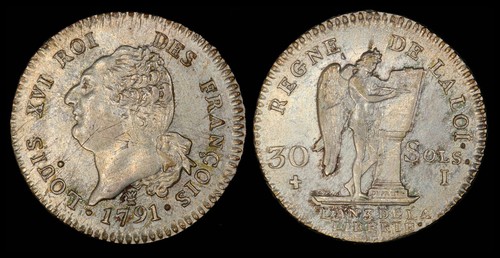
French 30 Sols
A silver coin of the early French Revolution showing Louis XVI as constitutional king on one side and a standing Liberty on the other.
Revolutionary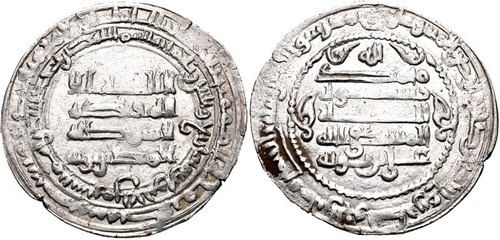
Buyid Silver Dirham
Broad, thin silver dirham of the Buyid (Buwayhid) dynasty, struck in Kufic Arabic with religious legends and marginal mint-and-date text.
Medieval Islamic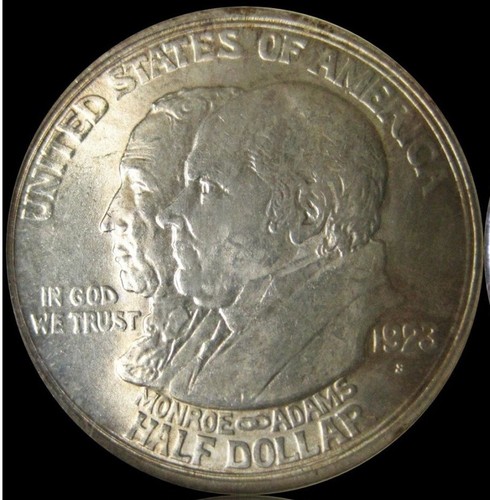
Monroe Doctrine Centennial Half Dollar
A 1923 U.S. silver commemorative half dollar marking the centennial of the Monroe Doctrine, with jugate portraits of James Monroe and John Quincy Adams.
Classic Commemorative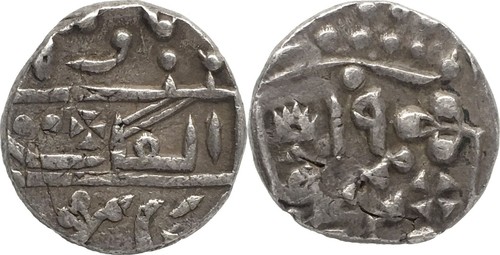
Kotah State Rupee
Silver rupee of the princely state of Kotah in Rajputana, struck with Persian and Devanagari legends and the state's katar-dagger emblem.
Princely & Presidency States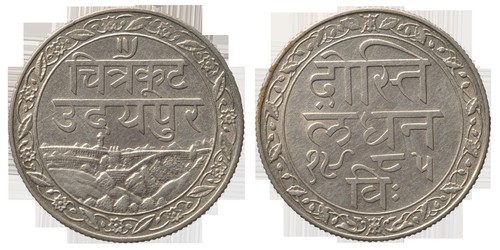
Mewar Chitrakut Half Rupee
A silver half rupee of the princely state of Mewar (Udaipur), dated VS 1985 (c. 1928), with Devanagari legends including the denomination अर्धरुपये.
Princely & Presidency States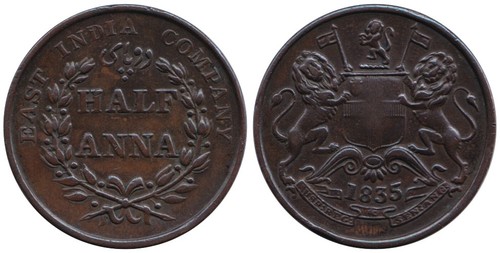
East India Company Half Anna
Large copper Half Anna of the East India Company, dated 1835, with laurel-wreath legend and the Company's heraldic lion-and-shield arms.
British India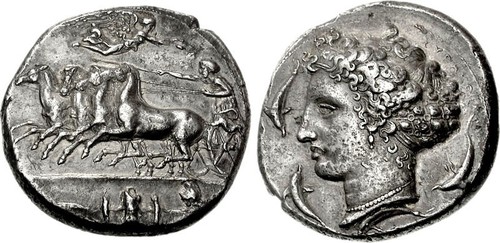
Syracuse Dekadrachm
Large silver dekadrachm of Syracuse, c. 405-380 BC, showing a racing quadriga crowned by Victory and a head of the nymph Arethusa with flowing hair.
Ancient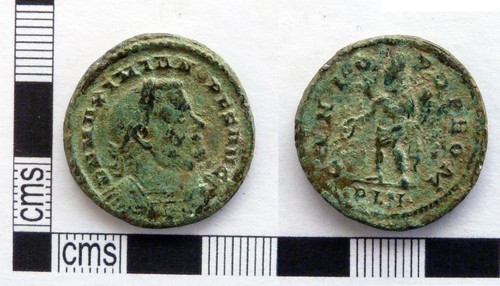
Roman Follis (AE3)
A small late Roman bronze follis of the Constantine I era (AD 320-330), with an emperor's profile obverse and a Victory or vota-in-wreath commemorative reverse.
Ancient
Roman Centenionalis
A small fourth-century Roman bronze coin, part of the reformed low-value currency struck across the empire's mints during a period of frequent monetary change.
Ancient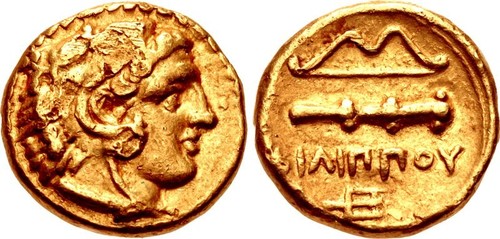
Alexander the Great Gold Quarter Stater
A small gold fraction of the Alexander the Great coinage, showing the head of Heracles and an eagle perched on a thunderbolt, the attributes of Zeus.
Ancient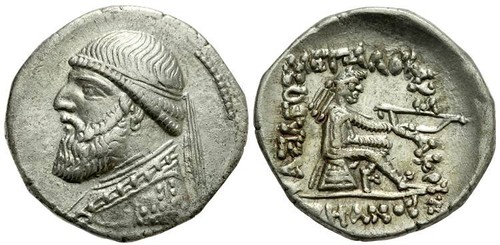
Parthian Drachm
Silver drachm of the Parthian (Arsacid) Empire, pairing a bearded royal profile with a seated archer holding a bow, struck in the era of Mithradates II.
Ancient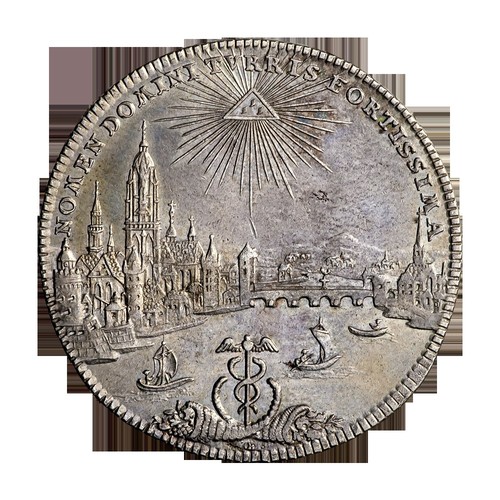
Frankfurt am Main Taler
A 1772 silver Taler of the Free Imperial City of Frankfurt am Main, famed for its detailed city-view reverse with walls, towers and radiant sun.
German States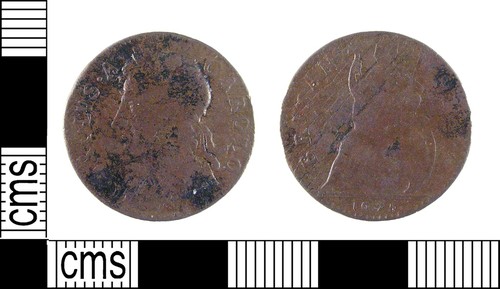
Charles II Halfpenny
A milled copper halfpenny of Charles II showing his laureate bust and a seated Britannia, part of the first regal copper coinage of England, dated 1675.
Milled