
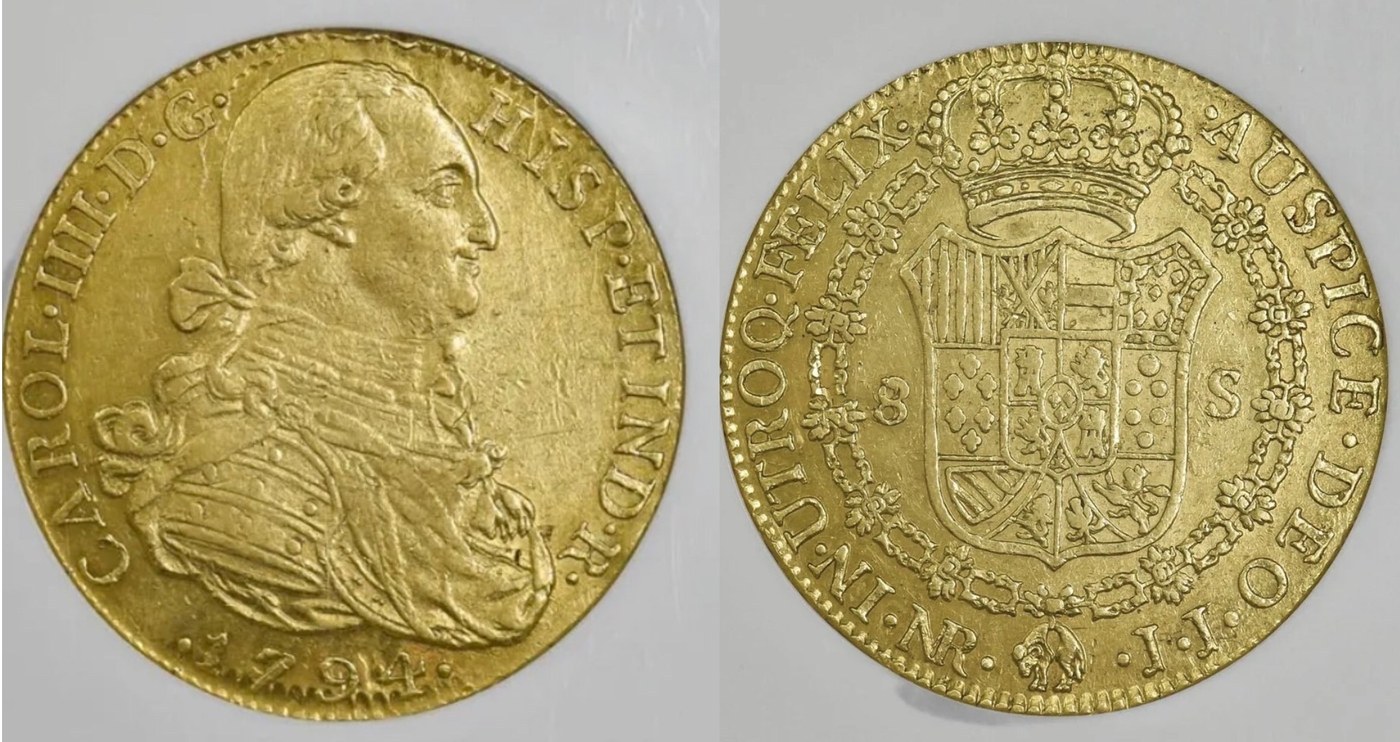
8 Escudos (Carolus)
The largest Spanish gold coin of the age, the 8 Escudos or doubloon, struck under the Habsburg Carolus rulers with the crowned quartered royal arms.
- Country
- Spain
- Denomination
- 8 Escudos
- Metal
- Gold
Got a coin like this?
Identify any coin from a photo, free.
Overview
The 8 Escudos is the largest standard gold denomination of early modern Spain, the piece English speakers came to call the doubloon and the Spanish called the onza. This example belongs to the Habsburg era, when coins carried the name CAROLVS for a King Charles, and it is defined by its heavy gold content and the crowned, elaborately quartered royal coat of arms.
As a full 8 Escudos, it represented a very large sum in its day and was a coin of international commerce rather than everyday spending. Struck in high-purity gold, it was prized across Europe and the Americas and became the model for the gold doubloon that features so heavily in the lore of Spanish treasure fleets.
Coins of this type were produced both in Spain and at colonial mints in the New World, so surfaces and strike quality vary widely. Many surviving pieces show irregular flans and off-center dies typical of hand-hammered production, while the gold itself has kept its warm yellow color for centuries.
History & Background
Spain introduced the escudo gold system in 1537 under Charles I, the Habsburg king who also reigned as Holy Roman Emperor Charles V. The 8 Escudos sat at the top of that system as the great gold multiple, complementing the famous silver 8 Reales. The Latin name CAROLVS on the coinage marks the Charles kings of the dynasty.
The gold that fed these coins flowed in enormous quantity from Spanish possessions in the Americas, and mints in both Spain and the colonies struck escudos to move that wealth across the Atlantic. Through the 1500s and 1600s most large-denomination pieces were hand-struck cobs, cut from cast bars and hammered between dies, which is why period examples are so often irregular in shape.
The 8 Escudos became the standard heavy gold coin of the Spanish world and, as the doubloon, a fixture of global trade and of the treasure carried by homebound fleets. Its design and weight standard endured with modifications long after this early period, cementing its place in numismatic and maritime history.
How to Identify
The defining feature is the crowned, quartered royal coat of arms that dominates the design, a complex heraldic shield combining the emblems of the Spanish kingdoms, with the castles and heraldic lions of Castile and Leon among its quarters and a crown above. The observed piece shows this ornate armorial layout on both faces, with the shield and crown as the central motifs.
Look for the Latin legend built around the name CAROLVS, identifying a King Charles, together with royal titles running around the arms. As a full 8 Escudos struck in gold, the coin is substantial in size and weight and shows the deep yellow color of high-purity gold rather than the paler tone of a lower-carat alloy.
Many genuine examples are hand-hammered cobs, so expect irregular edges, uneven thickness, and legends that run off the flan; a perfectly round, machine-even piece would be unusual for this early period. The heavy gold weight, the crowned quartered arms, and the CAROLVS legend together are the core identifiers of the type.
Value & Collectibility
As a large early modern gold coin, the 8 Escudos carries significant value from both its substantial gold content and its strong collector and historical demand. Even worn examples are meaningful pieces, and well-preserved or shipwreck-provenanced coins command considerable premiums, so figures span a very wide range rather than any single price.
Condition, mint, date, and the sharpness of the crowned arms all affect desirability, and coins tied to documented treasure recoveries can carry a premium of their own. Because this is a high-value gold type, it is also among the more frequently faked and altered coins, which makes provenance and expert grading especially important to value.
Anyone buying or selling should rely on specialist attribution and authentication rather than a fixed quote, since the market for genuine early Spanish gold is driven by rarity, eye appeal, and pedigree. Treat any single number as broad context, not a firm valuation.
Frequently asked questions
What does the name Carolus mean on this coin?
Carolus is simply the Latin form of Charles, naming the reigning King Charles of the Spanish Habsburg dynasty. It appears in the legend around the royal arms and identifies the ruler under whom the coin was issued.
Is the 8 Escudos the same as a doubloon?
Yes. English speakers called the large Spanish 8 Escudos gold coin the doubloon, while Spanish sources called it the onza. It was the top gold denomination of the Spanish escudo system.
Is this coin made of real gold?
Yes. The 8 Escudos was struck in high-purity gold and shows the deep yellow color of that metal. Its gold content is a large part of why it was valuable then and remains valuable to collectors now.
Why are many of these coins irregular in shape?
Most 1500s-1600s examples are cobs, hand-hammered from cast gold between dies. That process produced uneven, often off-round flans with legends that can run off the edge, which is normal for genuine coins of the period.
Are these coins valuable?
They can be very valuable as large early Spanish gold, with prices spanning a broad range based on condition, mint, date, and provenance. Because the type is heavily faked, authentication and pedigree matter greatly to value.
8 Escudos (Carolus) guides
In-depth guides for identifying, valuing, and collecting 8 Escudos (Carolus).
Other coins you may enjoy
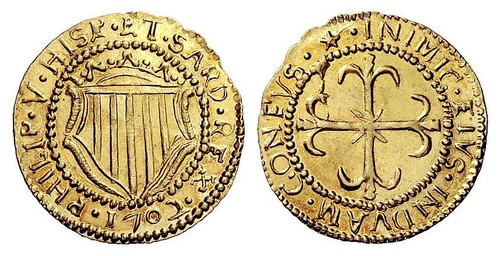
Scudo (Philip V)
c. 1701–1708
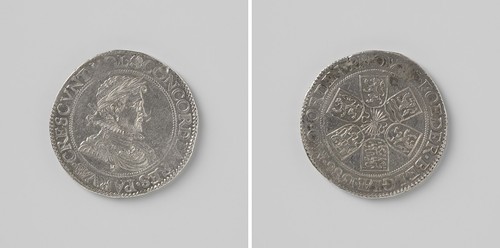
Rijksdaalder van Leicester
1580s-1590s
Kopek (Peter I)
c. 1704–1718 (observed 1711)
Imperial Chervonets
1762
Prinsendaalder (Rijksdaalder)
1592
10 Para
AH 1280 (1863-1864 CE)
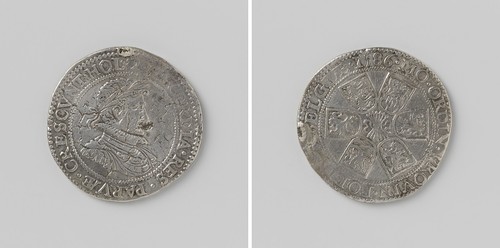
Halve Rijksdaalder van Leicester
1580s-1590s
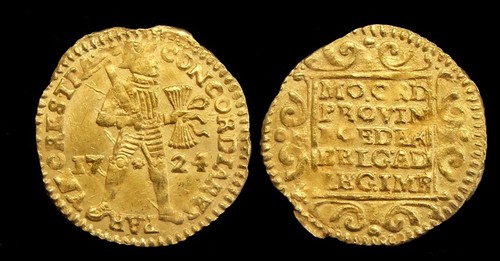
Gouden Dukaat
1724
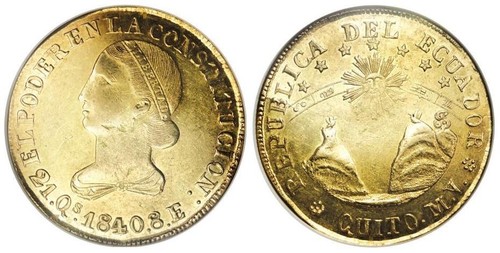
Escudo (Joanna and Charles V, contemporary copy)
1516-1558
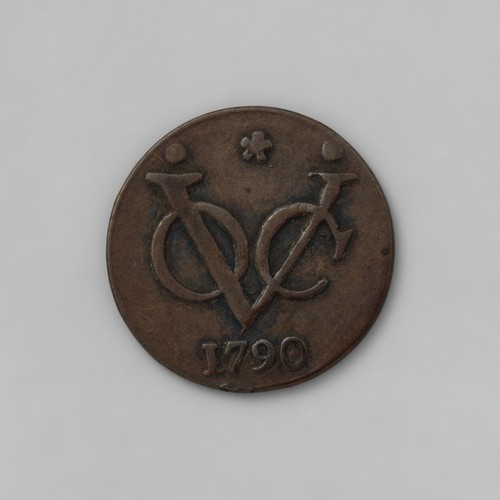
Duit (VOC)
1790
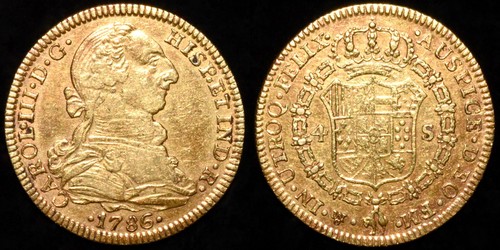
4 Escudos
1780s
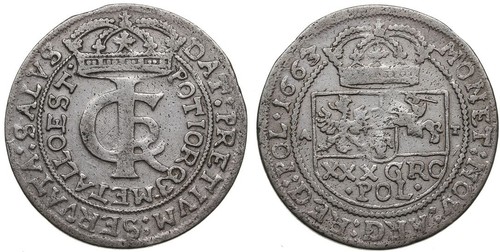
Tymf
1663