
How to Identify the 8 Escudos (Carolus)
A collector's guide to recognizing the Spanish 8 Escudos doubloon by its crowned quartered arms, CAROLVS legend, heavy gold weight, and cob strike.
Read the full 8 Escudos (Carolus) encyclopedia entry →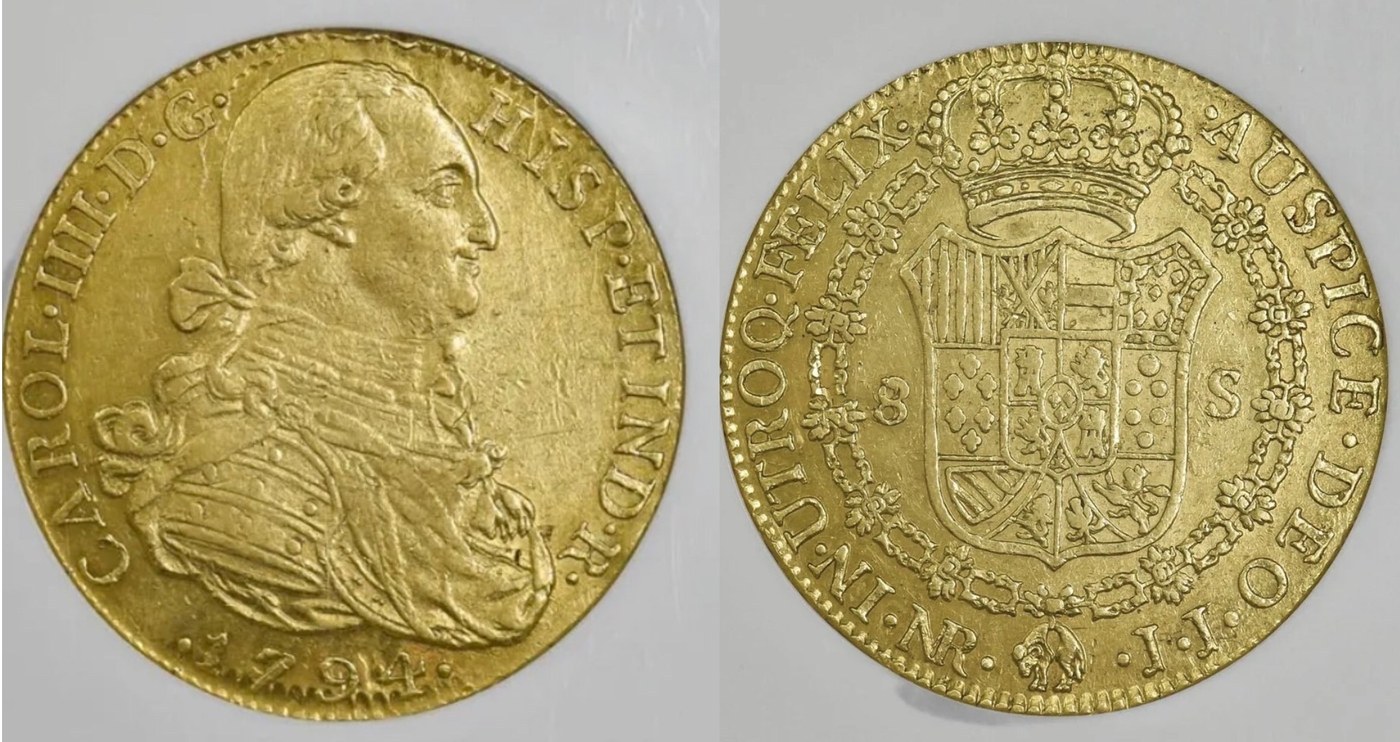
Start With the Denomination and Metal
The 8 Escudos is a large, heavy gold coin, so weight and color are the first checks. Genuine pieces show the deep yellow of high-purity gold and have real heft for their size, consistent with the top gold denomination of the Spanish system. A light, pale, or thin coin of this design should be treated with suspicion until confirmed.
Read the Arms and the Legend
The central design is a crowned, quartered royal coat of arms combining the emblems of the Spanish kingdoms, including the castles and heraldic lions of Castile and Leon, beneath a crown. Around the arms, look for a Latin legend built on the name CAROLVS, the Latin for Charles, along with royal titles. That crowned armorial shield plus the CAROLVS legend is the signature of this type.
Expect a Cob, Not a Machined Coin
Most 1500s-1600s 8 Escudos are cobs: hand-hammered from cast gold, so they are often irregularly shaped, uneven in thickness, and struck off-center with parts of the legend missing at the edge. This irregularity is normal and is itself a clue to a period piece. A perfectly round, evenly milled coin of this era is unusual and warrants closer scrutiny.
Separate It From Look-Alikes
Do not confuse the gold 8 Escudos with the silver 8 Reales, which is a similar large coin but in white metal and worth far less by metal. Smaller gold escudos (1, 2, or 4) share the design but are lighter and smaller. Later milled 8 Escudos with portrait busts belong to a different, post-1700 period and should not be attributed to the early Carolus heraldic type.
Be Cautious About Authentication
Because this is high-value gold, it is among the most commonly counterfeited and altered of all Spanish coins, including cast copies, added or altered mint marks, and modern fantasy pieces. Do not rely on appearance alone. Confirm weight and dimensions against reference standards and, for any significant purchase, insist on expert attribution and reputable third-party authentication and provenance.
Frequently asked questions
How can I tell an 8 Escudos from an 8 Reales?
The 8 Escudos is gold, with a deep yellow color and heavy feel, while the 8 Reales is silver and white in tone. They can look similar in design, but the metal is the immediate distinction, and the gold piece is far more valuable.
What legend should I look for?
Look for a Latin legend around the crowned arms containing CAROLVS, the Latin form of Charles, together with royal titles. That name identifies the Carolus ruler and, combined with the quartered arms, confirms the type.
Is an irregular, off-round shape a bad sign?
Not for this era. Most genuine 1500s-1600s 8 Escudos are hand-struck cobs and are naturally irregular, uneven, and often off-center. That look is expected; it is a perfectly machined coin that would be more surprising for the period.
How do I avoid buying a fake?
Because early Spanish gold is heavily faked, check weight and size against known standards and never rely on appearance alone. For any valuable example, obtain specialist attribution and reputable third-party authentication with documented provenance.