
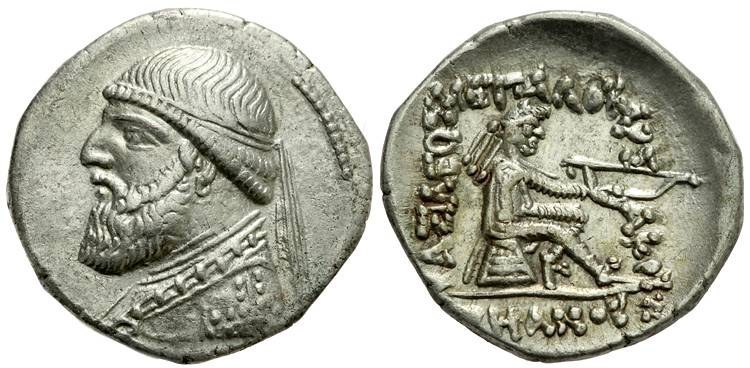
Parthian Drachm
Silver drachm of the Parthian (Arsacid) Empire, pairing a bearded royal profile with a seated archer holding a bow, struck in the era of Mithradates II.
- Country
- Parthian Empire
- Denomination
- Drachm
- Metal
- Silver
Got a coin like this?
Identify any coin from a photo, free.
Overview
The Parthian drachm is a small silver coin of the Arsacid dynasty that ruled Parthia, a great Iranian empire centered on the Iranian plateau and Mesopotamia. This example dates to roughly 121-91 BC, the reign associated with Mithradates II, one of the most powerful Parthian kings. The obverse carries a bearded royal bust in profile facing left, and the reverse shows a seated archer holding a bow, the signature emblem of Parthian silver.
Parthian drachms were the everyday high-value silver of a vast trans-Asian empire that straddled the Silk Road between Rome and Han China. They were struck in enormous quantities over nearly five centuries, which makes them among the most accessible of all ancient Iranian coins to modern collectors.
Because the seated-archer reverse stayed remarkably consistent across many reigns, these coins are usually attributed by the style and details of the royal portrait, the Greek legends, and the small mint monograms rather than by any date on the coin itself.
History & Background
The Parthian Empire was founded in the mid-3rd century BC when the Arsacid line displaced Seleucid Greek control over the region of Parthia in northeastern Iran. Over the following generations it expanded westward across the Iranian plateau and into Mesopotamia, becoming Rome's principal rival in the East for centuries.
The period of about 121-91 BC corresponds to the reign of Mithradates II, often called Mithradates the Great, under whom Parthia reached a peak of territory and prestige, opened diplomatic contact with Han China, and standardized a broad silver coinage. The seated-archer drachm became the workhorse denomination of this system, echoing the dynasty's self-image as heirs to both Iranian and Hellenistic tradition.
Parthian rule lasted until roughly AD 224, when the Sasanian dynasty overthrew the last Arsacid king. Across that long span the drachm remained the core silver coin, and the archer reverse endured as a dynastic symbol, so surviving examples span many kings and mints.
How to Identify
The obverse shows a bearded male bust in profile, here facing left, wearing royal Parthian headgear such as a diadem or a tall pointed tiara depending on the reign. Early kings of this era typically face left; the portrait style, beard, and headdress are the main clues to which ruler is depicted, since the coins are not dated.
The reverse shows a seated figure, an archer in Parthian dress, seated on a throne or backless seat and holding a bow in an outstretched hand. Around this figure runs a multi-line Greek inscription giving royal titles, commonly including the word ARSAKOU (of Arsaces), the dynastic name adopted by every Parthian king. Small monograms or letters in the field indicate the mint.
The coin is small silver, generally on the order of 18 to 21 mm across and roughly 3.5 to 4 grams for a full drachm, so it is thin and light in hand. Key identifiers are the left-facing bearded bust, the seated archer with bow, the Greek (not Latin or Aramaic) legend naming Arsaces, and the overall Hellenistic-into-Iranian style.
Value & Collectibility
Parthian drachms are among the more affordable ancient silver coins because they were produced in vast numbers and many survive. Typical circulated examples with a clear portrait and readable archer trade in the range of a modest collectible, often low-to-mid tens of dollars, with common types available inexpensively.
Value rises with grade, strike quality, and the specific king. Sharp, well-centered coins with a full portrait, complete legend, and clear mint monogram bring higher premiums, and scarcer rulers or unusual mints can be worth considerably more than common issues. Attractive old toning and original surfaces add appeal.
Exact prices depend on ruler, condition, centering, and market demand, so treat these as general ranges rather than fixed quotes. Corroded, cleaned, clipped, or damaged pieces sell for less, and desirable high-grade or rare-ruler examples can command substantially higher prices.
Frequently asked questions
Who is on the obverse of a Parthian drachm?
A Parthian (Arsacid) king shown as a bearded bust in profile, here facing left, wearing a diadem or tall tiara. This example dates to the era of Mithradates II, around 121-91 BC.
What is the seated figure on the reverse?
It is a seated archer in Parthian dress holding a bow, the standard reverse emblem of Parthian silver coinage and a symbol of the ruling Arsacid dynasty.
Why do the coins have Greek writing?
Parthia inherited Hellenistic coinage traditions from the Seleucids, so its drachms carry Greek legends naming the king and the dynastic title Arsaces for centuries.
Are Parthian drachms real silver?
Yes. Full drachms of this period are struck in good silver, which is why they are small but dense. Debasement grew in much later reigns, but classic drachms are genuine silver.
How can the coins be dated without a date?
They carry no year. Attribution relies on the portrait style, headdress, beard, Greek legend, and mint monograms, which specialists match to a particular king and mint.
Parthian Drachm guides
In-depth guides for identifying, valuing, and collecting Parthian Drachm.
Other coins you may enjoy
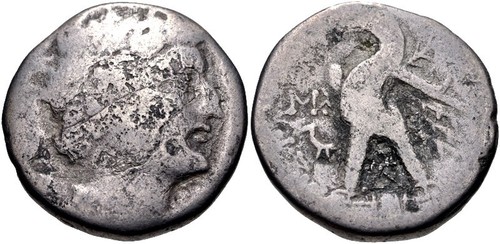
Tetradrachm of Ptolemy XII
80-51 BC
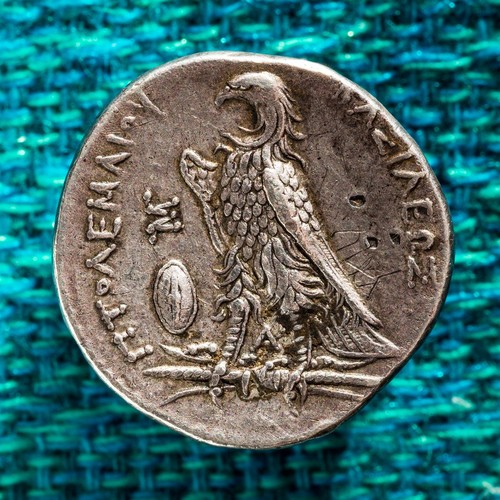
Tetradrachm of Ptolemy I
305-283 BC
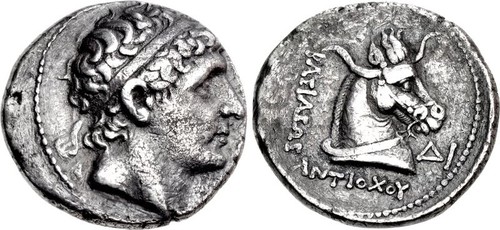
Tetradrachm of Antiochos I Soter
281-261 BC
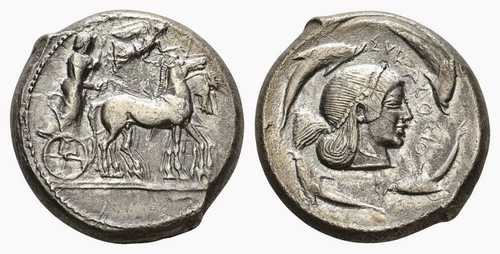
Syracuse Tetradrachm
c. 5th-4th century BC (Classical period)
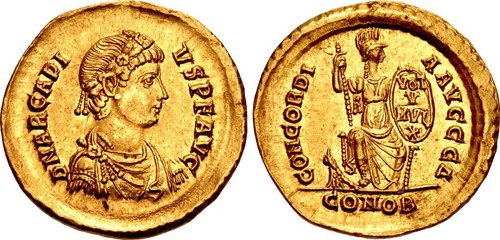
Solidus of Arcadius
AD 395-402
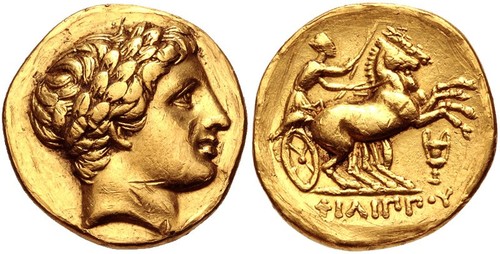
Philip III Gold Stater
323-317 BC
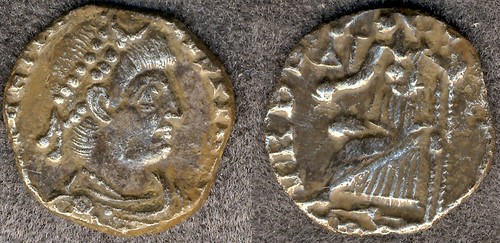
Siliqua of Gratian
AD 367-383
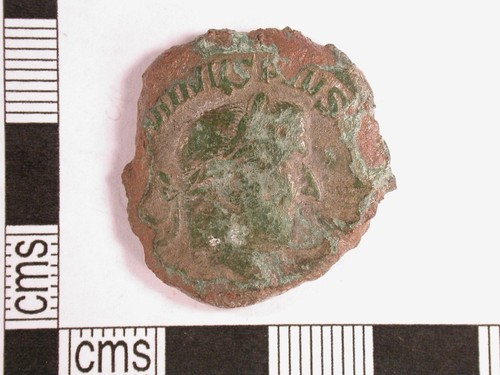
Sestertius of Maximinus Thrax
235-238 AD
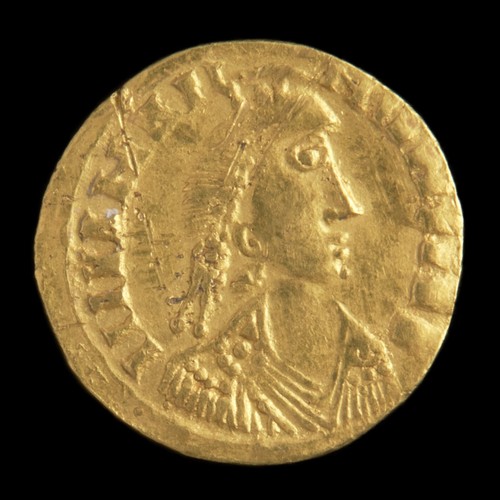
Solidus of Valentinian III
AD 425-455
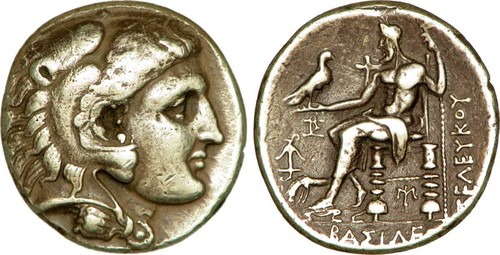
Seleucus I Nicator Tetradrachm
Late 4th-3rd century BC
Nummus of Magnentius
AD 350-353
Follis of Galerius
AD 308-310