
How to Identify the Parthian Drachm
A collector's guide to recognizing a Parthian silver drachm by its bearded royal bust, seated archer reverse, Greek legend, and small silver format.
Read the full Parthian Drachm encyclopedia entry →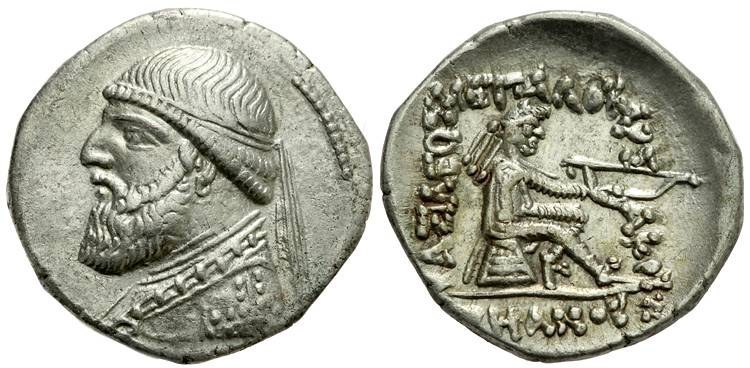
Read the Reverse First
The fastest confirmation is the reverse. A Parthian drachm shows a seated archer, a figure on a throne or seat holding a bow forward in one hand. This single motif runs across nearly the whole dynasty and is the coin's dynastic signature. If the reverse shows a standing deity, an eagle, or a temple instead of a seated bowman, it is not a classic Parthian drachm.
Confirm the Obverse Portrait
The obverse should be a bearded male bust in profile, a Parthian king wearing a diadem or a tall pointed tiara. For the early-first-century-BC period this example belongs to, the bust typically faces left. The style of beard, the headdress, and the treatment of the hair are the main tools specialists use to assign the coin to a specific ruler such as Mithradates II, since the coin bears no date.
Check Size, Weight, and Metal
Expect a small, thin silver coin roughly 18 to 21 mm across and about 3.5 to 4 grams for a full drachm. It should be non-magnetic and have the tone of ancient silver, often with old gray or iridescent patina. Larger, heavier tetradrachms of the same design exist too, so weigh and measure the coin: a light, small module points to a drachm rather than the bigger silver.
Read the Legend and Monograms
Around the archer runs a multi-line Greek inscription of royal titles, very often including ARSAKOU, of Arsaces, the name every Parthian king used. The legend is Greek, not Latin, Aramaic, or Pahlavi, on coins of this era. Small monograms or letters in the reverse field are mint marks; they help pin down where the coin was struck and are useful for precise attribution.
Rule Out Look-Alikes and Fakes
Seleucid, Elymaean, Persis, and Indo-Parthian silver can resemble Parthian drachms in size and style, so compare the archer reverse and the Greek Arsaces legend against trusted references before concluding. Cast counterfeits and tourist copies exist; watch for seams, a soft mushy strike, wrong weight, or a too-smooth surface. For scarcer rulers or higher-value pieces, favor coins with clear provenance or third-party authentication.
Frequently asked questions
What is the single best identifier of a Parthian drachm?
The seated archer holding a bow on the reverse. This motif is the dynastic emblem of Parthian silver and, combined with a Greek legend naming Arsaces, distinguishes these coins.
How do I tell a drachm from a Parthian tetradrachm?
By size and weight. A drachm is about 18 to 21 mm and roughly 3.5 to 4 grams, while a tetradrachm is much larger and heavier though it can share the same royal and archer imagery.
How is the king identified if there is no date?
Specialists match the portrait style, beard, and headdress, the exact wording of the Greek legend, and the mint monograms to published references to assign a ruler and mint.
What look-alikes should I watch for?
Seleucid, Persis, Elymais, and Indo-Parthian silver can look similar. Check for the seated-archer reverse and the Greek Arsaces legend, and be alert to cast fakes with seams or wrong weight.