French 30 Sols
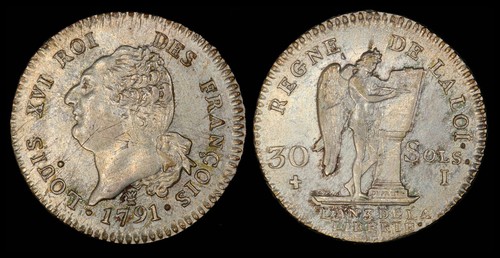
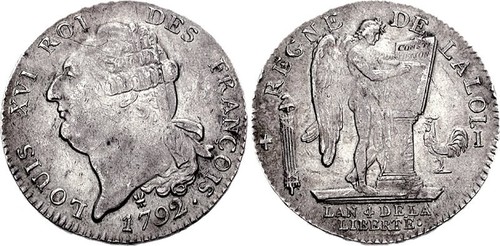
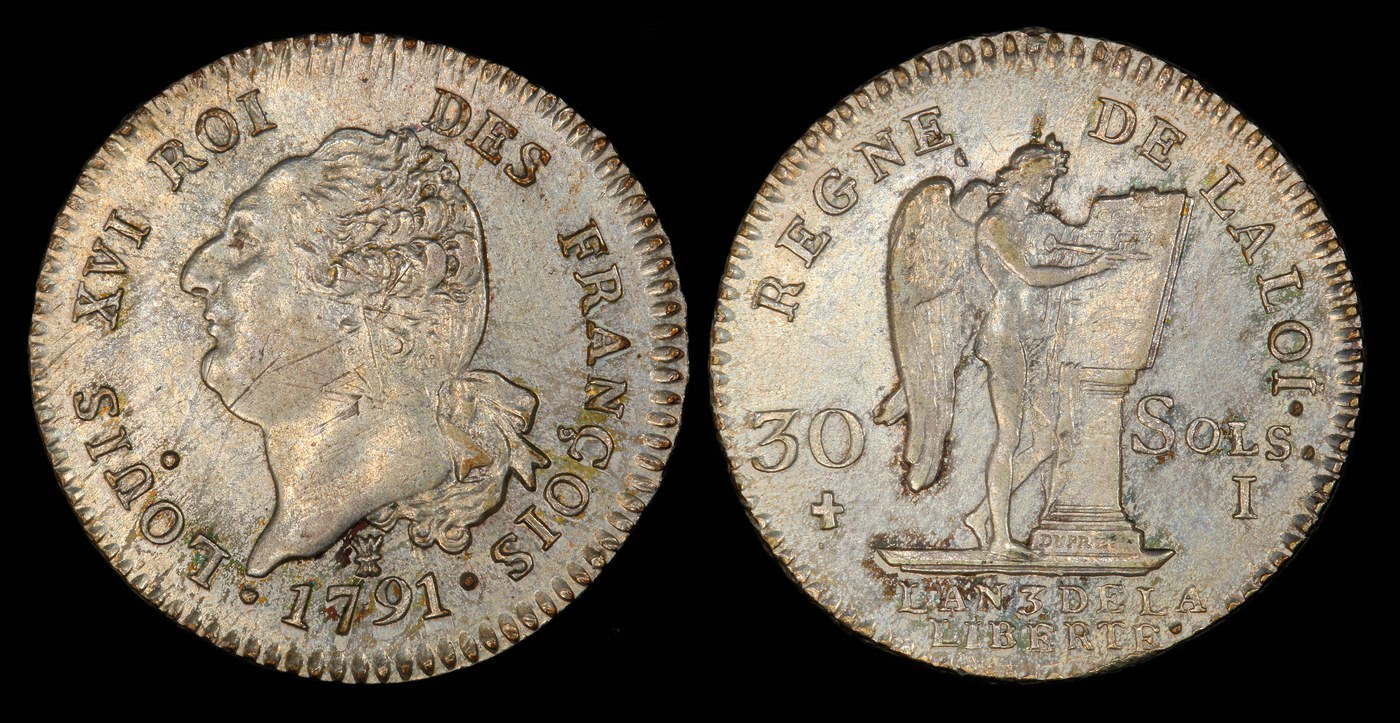
A silver coin of the early French Revolution showing Louis XVI as constitutional king on one side and a standing Liberty on the other.
- Country
- France
- Denomination
- 30 Sols
- Metal
- Silver
Got a coin like this?
Identify any coin from a photo, free.
Overview
The French 30 Sols is a silver coin struck during the early years of the French Revolution, when France was governed as a constitutional monarchy with Louis XVI still on the throne but reduced to a limited, constitutional role. The example shown here carries the bust of the king on the obverse and a standing personification of Liberty on the reverse, with a revolutionary date reckoned from the birth of French freedom.
The coin belongs to the so-called constitutional coinage, a transitional series that pairs royal portraiture with revolutionary imagery and legends. The obverse names the ruler as LOUIS XVI ROI DES FRANÇAIS — "King of the French" rather than the older "King of France" — a deliberate change of title that placed sovereignty in the nation rather than the crown.
As a silver piece from a short and historically charged period, the 30 Sols is a popular collector coin. It is valued far more for its association with the Revolution and its unusual blend of monarchy and republic than for any precious-metal content.
History & Background
After the fall of the Bastille in 1789 and the sweeping reforms that followed, France reorganised itself as a constitutional monarchy. In 1791 a new coinage was authorised to reflect the changed order: the king remained on the coins, but his traditional titles and regalia gave way to revolutionary language and symbols. The 30 Sols and its larger companion, the 15 Sols, were part of this constitutional silver series designed by the celebrated engraver Augustin Dupré.
The reverse legend L'AN 3 DE LA LIBERTÉ — "Year 3 of Liberty" — reflects a new revolutionary way of counting time, dated from the beginning of French liberty rather than from a royal reign or the Christian calendar. Coins of the type therefore carry both an ordinary Gregorian date, such as 1791, and a "Year of Liberty" figure, and different combinations appear across the short run of the series.
The experiment was brief. The monarchy was suspended in 1792 and Louis XVI was executed in January 1793, after which the constitutional coinage ceased and France moved to fully republican designs. The 30 Sols thus survives as a snapshot of a fleeting moment when king and Revolution appeared together on the same coin.
How to Identify
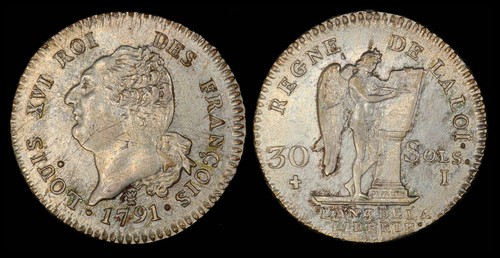
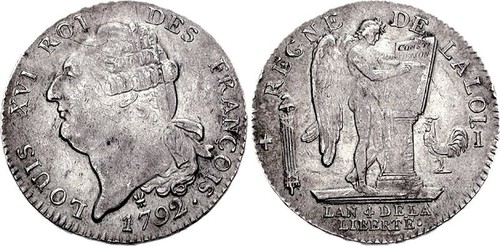
Obverse (king's side): a bust of Louis XVI facing left, surrounded by the legend LOUIS XVI ROI DES FRANÇAIS ("Louis XVI, King of the French"). A date in ordinary numerals, such as 1791, appears with this side. The "King of the French" wording, rather than "King of France," is a key marker of the constitutional issue.
Reverse (Liberty side): a standing personification of Liberty, shown with a staff and flag among revolutionary emblems, encircled by the legend L'AN 3 DE LA LIBERTÉ ("Year 3 of Liberty") together with the denomination expressed in sols. The combination of a monarch's portrait with an overtly revolutionary reverse is the defining feature of the type.
Size and metal: a mid-sized silver coin, larger than the small billon and copper sous of the period but smaller than the écu. Look also for a mint-mark letter and small privy symbols in the legends, which identify the striking mint and officials; these vary from coin to coin and help distinguish genuine issues.
Value & Collectibility
The French 30 Sols is a genuinely historic coin, and even well-worn examples carry a clear collector premium over their modest silver content because of their Revolutionary date and imagery. Common dates in circulated grades are affordable and widely traded, making the type an accessible entry into Revolutionary numismatics.
Value rises sharply with condition and with scarcer mint and date combinations. Sharp, lightly circulated pieces with clear portrait and Liberty detail, and any rarer mints, command substantially more than heavily worn coins. Original surfaces and honest wear are preferred; harshly cleaned or damaged examples are discounted.
Because prices depend heavily on date, mint mark, grade and the state of the collector market, treat any single figure as indicative only. Check recent auction results for the specific date and mint before buying or selling, and be cautious of coins offered without provenance given the type's popularity.
Frequently asked questions
What is the French 30 Sols?
It is a silver coin of the early French Revolution, struck around 1791–1793, showing Louis XVI as a constitutional king on one side and a standing Liberty on the other.
Why does it call Louis XVI 'King of the French'?
The legend LOUIS XVI ROI DES FRANÇAIS reflects the constitutional monarchy, when sovereignty was said to rest with the nation. The older title had been 'King of France.'
What does 'L'AN 3 DE LA LIBERTÉ' mean?
It means 'Year 3 of Liberty,' a revolutionary way of dating time from the start of French freedom rather than from a royal reign, appearing alongside the ordinary year such as 1791.
Is the French 30 Sols made of silver?
Yes. It is a silver denomination, larger than the base-metal sous of the period, though it is collected chiefly for its history rather than its metal value.
Is it valuable?
Even worn examples carry a premium over silver value for their Revolutionary interest. Sharper coins and scarcer mints are worth considerably more, so grade and mint mark matter.
French 30 Sols guides
In-depth guides for identifying, valuing, and collecting French 30 Sols.