
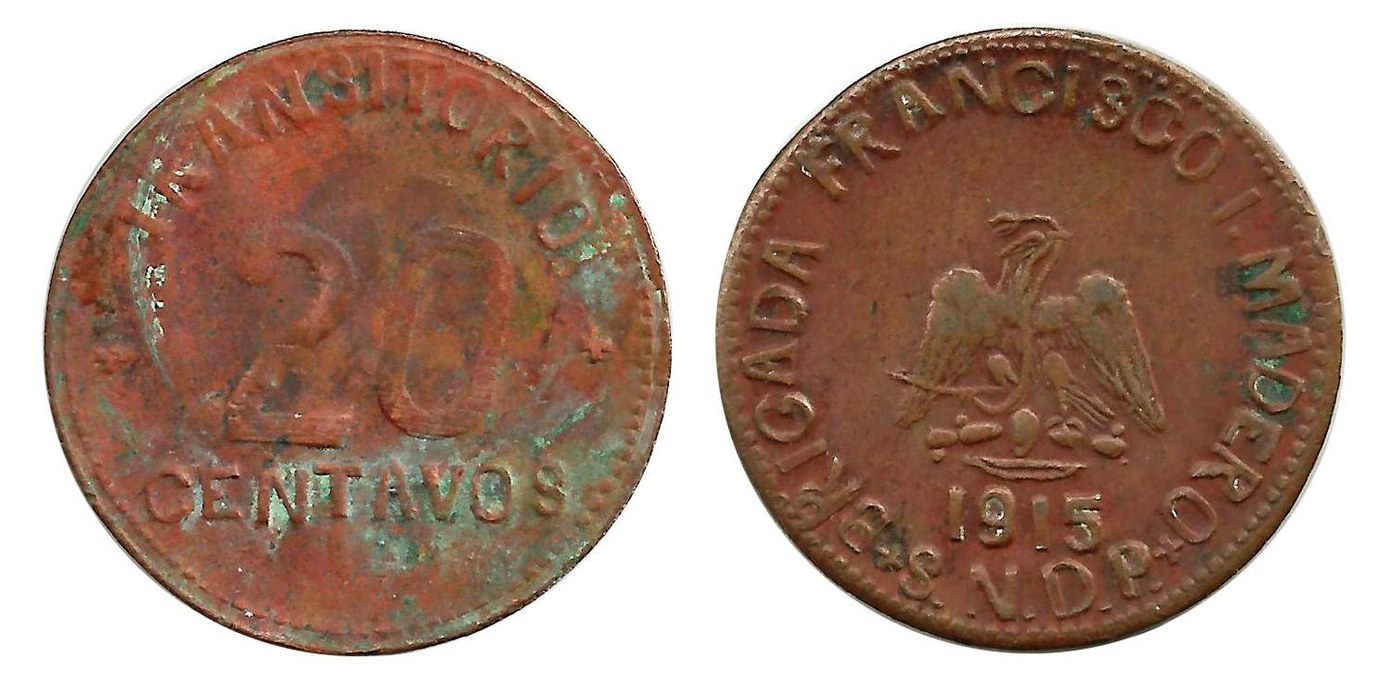
Puebla 20 Centavos
A copper 20 centavos struck in the State of Puebla during the Mexican Revolution, showing a profile bust and the numeral 20 with the national eagle, dated 1915.
- Country
- Mexico
- Denomination
- 20 Centavos
- Metal
- Copper
Got a coin like this?
Identify any coin from a photo, free.
Overview
The Puebla 20 centavos is a copper coin issued in the State of Puebla during the Mexican Revolution, dated 1915. It belongs to the wide family of revolutionary or "necessity" coinage produced by regional and state authorities when the normal federal supply of small change broke down amid the fighting.
Unlike the plainest revolutionary coppers, this type carries a profile bust on the obverse, while the reverse is dominated by a large numeral 20 for the denomination paired with the Mexican national eagle with spread wings. The bust adds a portrait element to what is otherwise a utilitarian emergency issue, and the eagle affirms the coin's Mexican identity.
Because it was struck locally under wartime pressure rather than at a fully equipped federal mint, the coin is comparatively crude, and surviving examples vary in strike, centering, and surface. As a base-copper piece it is collected for its historical interest as a relic of the revolutionary period rather than for any bullion value.
History & Background
During the Mexican Revolution the flow of federal coinage was repeatedly disrupted, and states, municipalities, and revolutionary forces produced their own coins to keep local commerce functioning. Puebla, a state in central Mexico, was one of several jurisdictions that issued its own low-denomination pieces, including copper centavos dated to the mid-1910s.
These state and local issues are collectively known as revolutionary coinage. They were struck to meet an urgent, practical need for small change in a time of civil war, using whatever dies, presses, and metal were at hand. The results are uneven in quality and simple in design, favoring bold numerals, the national eagle, and in this case a profile bust over elaborate engraving.
The 1915 date places this coin in one of the most turbulent phases of the Revolution. Coins of this kind circulated regionally and were often accepted mainly within the area that issued them, which is part of what makes them such direct evidence of the fragmented economic conditions of the period.
How to Identify
Identify the coin by the pairing of its two faces. The obverse shows a profile bust, and the reverse carries a large numeral 20 indicating twenty centavos together with the Mexican national eagle with spread wings. The date 1915 appears on the coin, tying it to the revolutionary period. Wording referencing the State of Puebla and the centavos denomination is typically part of the design or its surrounding inscriptions.
The piece is copper, so expect a brown, reddish, or sometimes darkened surface depending on wear and preservation. It is a low-value module with the somewhat rough, hand-finished look characteristic of locally produced revolutionary coinage: uneven strike, occasional off-center design, and variation from piece to piece are normal.
Because many different revolutionary authorities struck eagle-and-numeral coppers in this era, the combination of the Puebla attribution, the 1915 date, the numeral 20, the profile bust, and the copper composition is what pins down this specific type. Do not rely on the eagle alone, since the national eagle appears on countless Mexican coins.
Value & Collectibility
As a copper revolutionary issue, the Puebla 20 centavos of 1915 is collected chiefly for its historical interest rather than for metal value. Prices depend heavily on condition, strike quality, and eye appeal. Well-worn or corroded examples are the most affordable, while sharply struck coins with a clear bust, a bold numeral, crisp eagle detail, and attractive original surfaces bring stronger premiums.
Revolutionary coins can also carry premiums tied to specific varieties, die states, and the demand among collectors who specialize in this series. Because production was irregular, small differences in the bust, lettering, spacing, and strike can distinguish varieties that specialists value differently.
Since crude local minting and later reproductions both exist in this field, attribution and authenticity matter to value. For any better example, confirm prices against recent sales of comparable, verified coins rather than relying on the denomination alone.
Frequently asked questions
What is the Puebla 20 centavos?
It is a copper coin issued in the State of Puebla, Mexico, during the Mexican Revolution and dated 1915. It shows a profile bust on one side and a large numeral 20 with the Mexican national eagle on the other.
Why did a state issue its own coins?
During the Revolution the normal federal supply of small change was disrupted, so states and local authorities like Puebla struck their own low-value coins, known as revolutionary coinage, to keep everyday commerce going.
Is this coin made of silver?
No. It is a copper piece, a base-metal coin for small change. Its appeal to collectors is historical, as a relic of the revolutionary period, rather than tied to precious-metal content.
What do the designs mean?
The numeral 20 states the value, twenty centavos, and the eagle with spread wings is the Mexican national emblem. The profile bust adds a portrait element to what is otherwise a plain emergency issue.
Why is the coin somewhat crude?
It was produced locally under wartime conditions rather than at a fully equipped federal mint. Dies, presses, and metal were used as available, so strike quality, centering, and surfaces vary from coin to coin.
Puebla 20 Centavos guides
In-depth guides for identifying, valuing, and collecting Puebla 20 Centavos.
Other coins you may enjoy
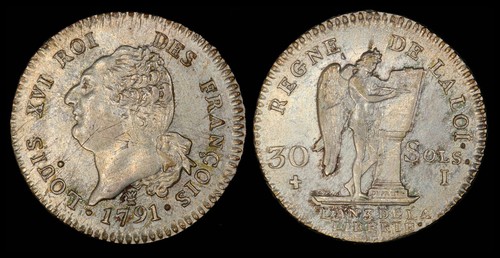
French 30 Sols
1791–1793 (French Revolution)
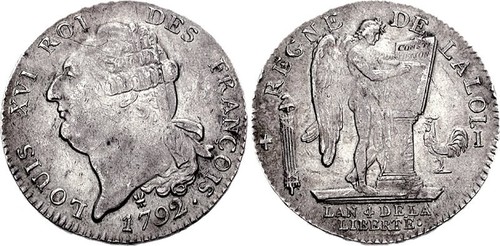
French Constitutional Ecu
1792
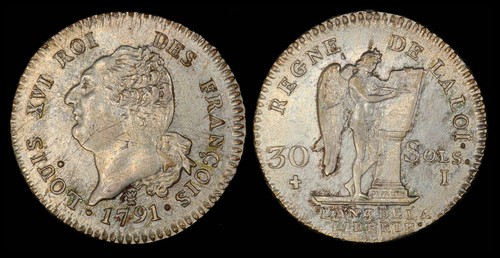
30 Sols (Half Ecu)
1791
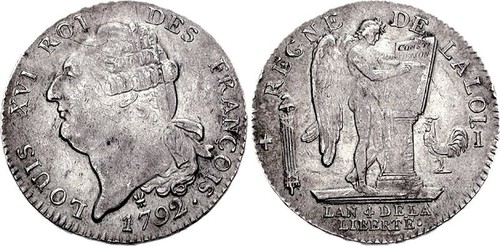
Constitutional Ecu
1792
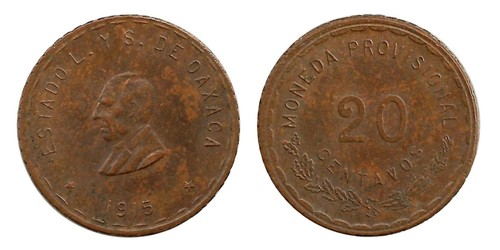
Oaxaca 20 Centavos
1915 (observed); Mexican Revolution provisional issue
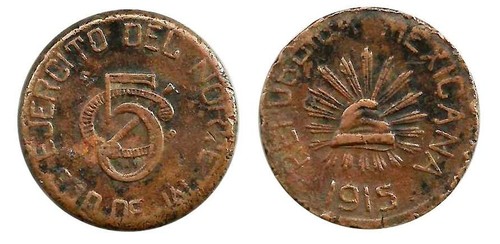
Jalisco 5 Centavos
1915
Oaxaca 5 Centavos
1915
Durango 5 Centavos
1914
Aguascalientes 20 Centavos
1915
Chiconcuautla 20 Centavos
1915