
How to Identify the French 30 Sols
A collector's guide to recognising the Revolutionary French 30 Sols by its Louis XVI bust, Liberty reverse, legends and silver fabric.
Read the full French 30 Sols encyclopedia entry →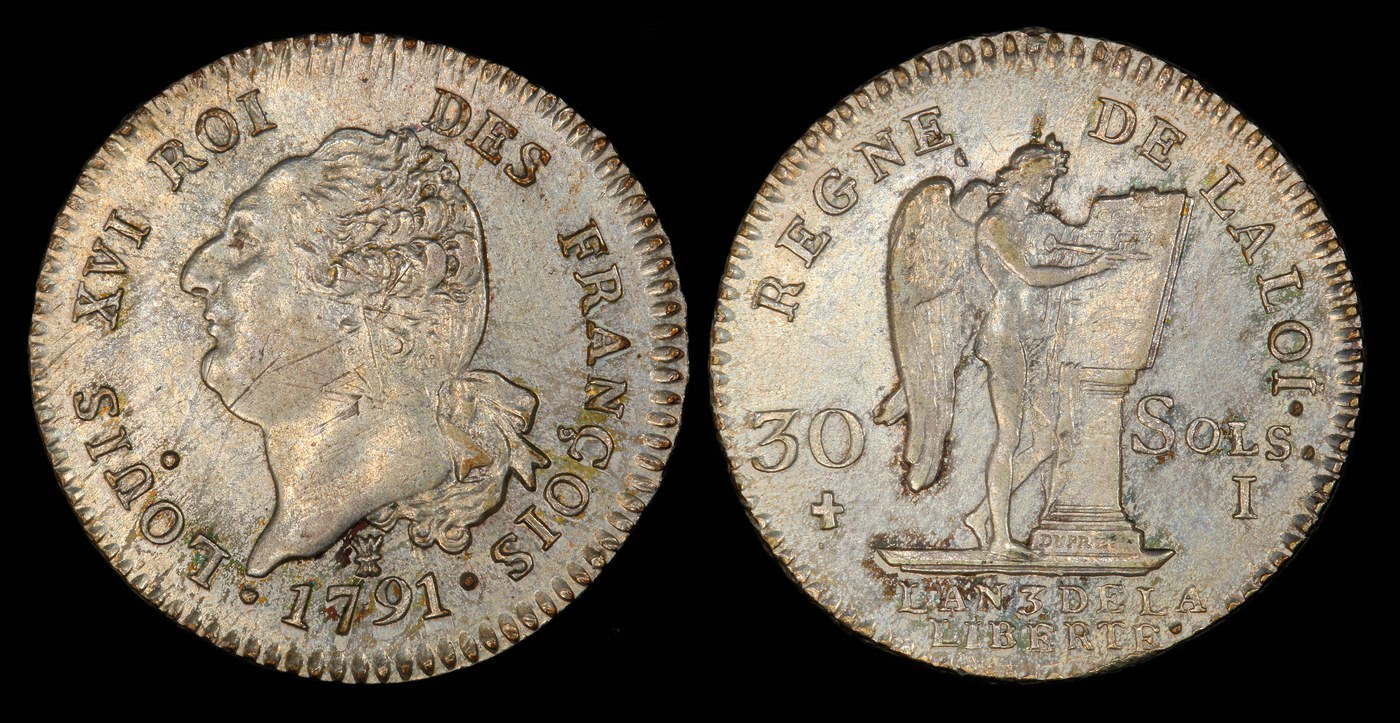
Begin with the obverse legend, which is the single most decisive feature. A genuine constitutional 30 Sols reads LOUIS XVI ROI DES FRANÇAIS — "King of the French," not "King of France" (ROI DE FRANCE). This wording, wrapped around a left-facing bust of the king, immediately marks the coin as a Revolutionary constitutional issue rather than an earlier royal type. Confirm the ordinary date, such as 1791, in the surrounding inscription.
Turn to the reverse to confirm the type and denomination. You should see a standing figure of Liberty with a staff and flag among revolutionary emblems, encircled by L'AN 3 DE LA LIBERTÉ ("Year 3 of Liberty") and the value expressed in sols. The pairing of a royal portrait with an openly revolutionary reverse and a "Year of Liberty" date is the defining signature of this short-lived series.
Check size and metal. The 30 Sols is a mid-sized silver coin, distinctly larger and heavier than the small billon and copper sous of the same era but smaller than the large silver écu. A coin of the right design but base-metal appearance, or one much larger, is a different denomination. Weighing and measuring against published figures for the type helps confirm a piece is right.
Read the small marks in the legends. These coins carry a mint-mark letter identifying the striking mint and tiny privy symbols for the mint officials. Locating and matching these against references pins the coin to a specific mint and issue, and their absence or a mismatch is a warning sign. Note that a companion 15 Sols of very similar design exists, so read the denomination carefully rather than assuming the value from the imagery alone.
Finally, weigh authenticity. Because the type is historically desirable, it attracts both cast and struck counterfeits and altered dates. Favour coins with crisp, well-defined lettering, correct weight and diameter, natural silver toning and honest wear over the portrait and Liberty. For any significant purchase, prefer examples with provenance or independent authentication, and compare against confirmed reference images of the same date and mint.
Frequently asked questions
What is the fastest way to identify a French 30 Sols?
Read the obverse: LOUIS XVI ROI DES FRANÇAIS around a left-facing bust, paired with a standing Liberty reverse and L'AN 3 DE LA LIBERTÉ. That combination confirms the constitutional type.
How do I tell the 30 Sols from the 15 Sols?
The two share the same Louis XVI and Liberty design, so read the stated denomination in the reverse legend and check the size and weight; the 30 Sols is the larger, heavier coin.
Where are the mint marks?
Look for a small letter and tiny privy symbols within the inscriptions. These identify the mint and officials and should match published references for a genuine issue.
How can I avoid a fake?
Check weight, diameter and lettering sharpness, look for natural silver toning, and be wary of altered dates. For valuable examples, seek provenance or third-party authentication.