
Coin Encyclopedia
Search and identify coins from around the world — with country, denomination, metal, mint, history, and how to tell them apart.
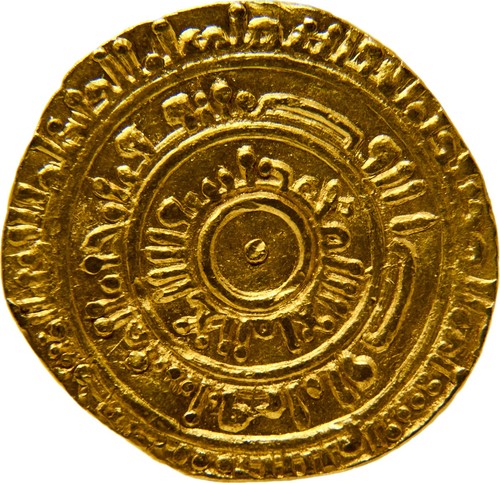
Fatimid Dinar of Imam Nizar
An 11th-century Fatimid gold dinar with concentric circular Kufic inscriptions naming the ruler and Shi'a invocations, a hallmark of Fatimid coinage.
Islamic (Medieval)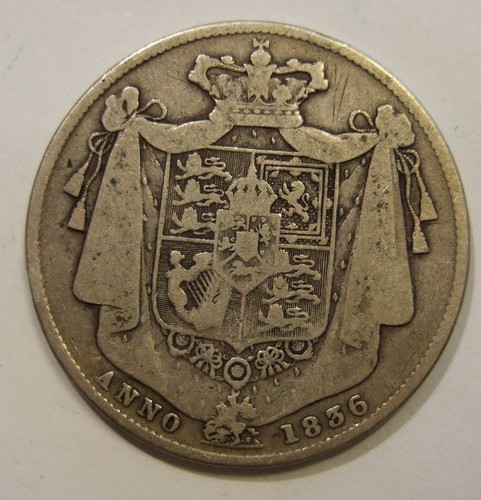
Half Crown of William IV
A milled British silver half crown of King William IV, with the king's bare head facing right and a crowned royal shield of arms on the reverse.
Milled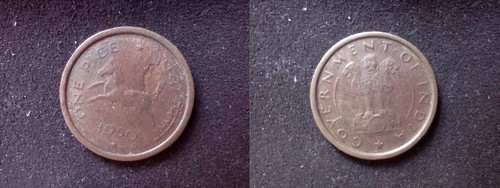
Republic India One Pice
A small bronze one-pice from 1950, the first year of the Republic of India, the lowest coin of the pre-decimal anna series struck in a copper alloy.
Modern India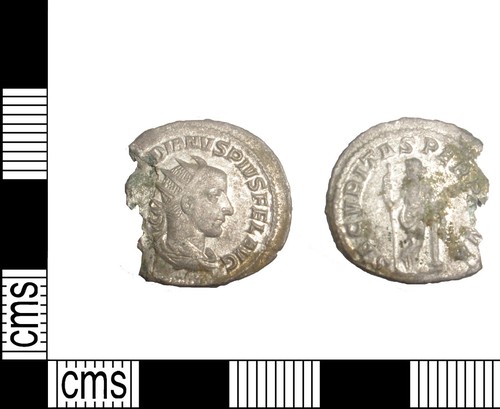
Antoninianus of Gordian III
Silver double-denarius of the young emperor Gordian III (238-244 AD), marked by his radiate crown and a standing deity on the reverse.
Ancient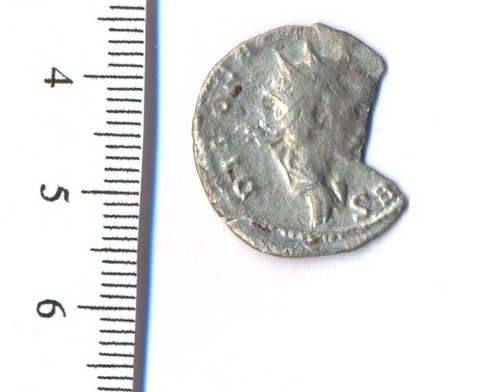
Antoninianus of Valerian II
Roman radiate coin of Valerian II, the young Caesar (c. 253-260 AD), showing his spiked crown and a standing figure on the reverse.
Ancient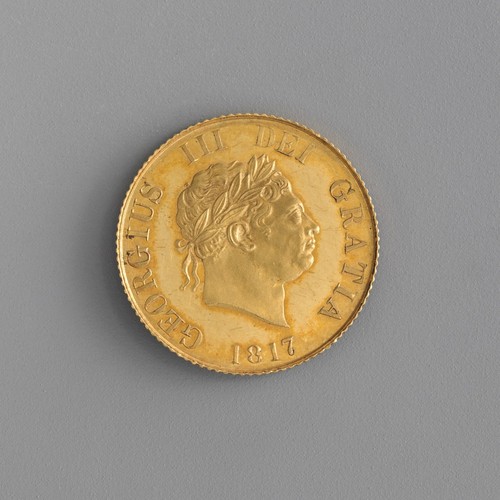
Half Sovereign of George III
British 22-carat gold half sovereign of George III, introduced in 1817 with a laureate bust and a crowned shield of arms; face value ten shillings.
Milled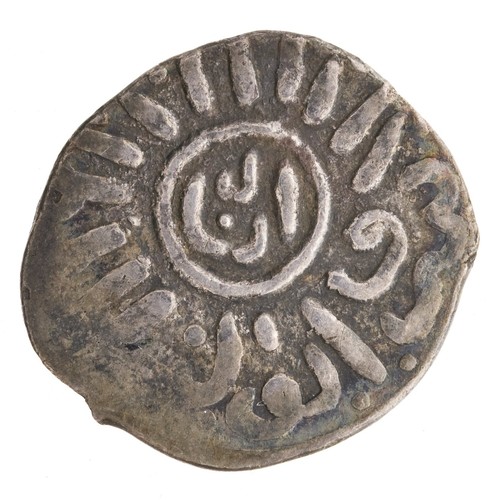
Silver Dirham of Sayf ad-Din Inal
A thin Mamluk silver dirham of Sultan al-Ashraf Sayf ad-Din Inal (r. 1453–1461), covered on both faces with Arabic inscriptions naming the sultan and his titles.
Islamic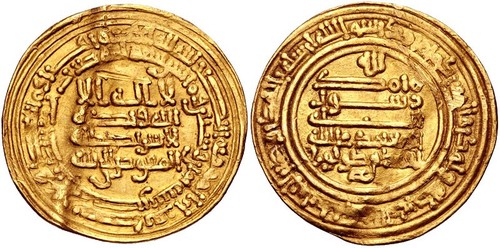
Gold Dinar of Ahmad ibn Tulun
A late-9th-century Islamic gold dinar of the Tulunid ruler Ahmad ibn Tulun, its faces filled with concentric Arabic inscriptions and dated AH 268 (881–882 CE).
Islamic (Medieval)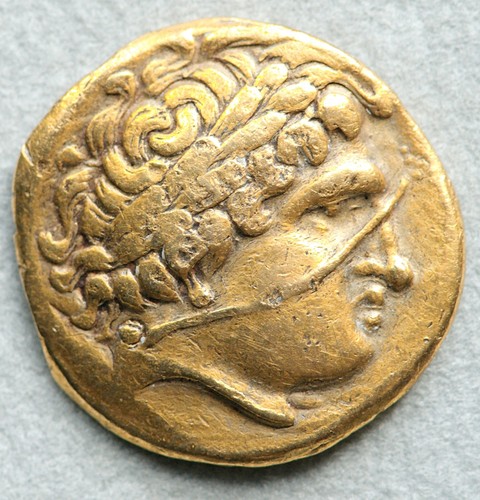
Gallic Imitation Stater
A gold stater struck by the tribes of Gaul, whose stylized head and single horse descend from Greek Macedonian prototypes reworked into abstract Celtic art.
Ancient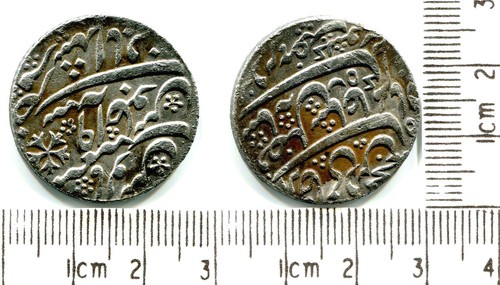
East India Company Rupee
British East India Company silver rupee struck to the Mughal pattern, carrying only Persian/Urdu calligraphy naming the reigning emperor.
British India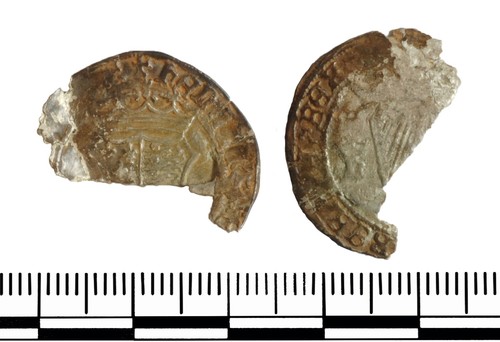
Irish Groat of Henry VIII
A hand-hammered silver fourpence struck for Ireland under Henry VIII, famed for introducing the crowned harp to Irish coinage.
Hammered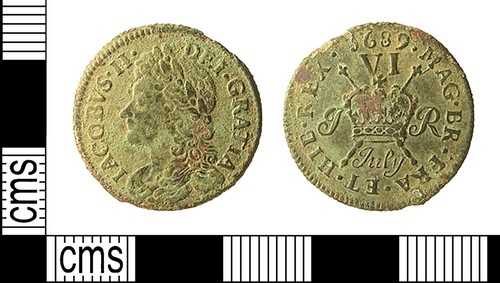
Irish Gun Money Sixpence
A base-metal emergency sixpence struck for James II in Ireland during the Williamite War, its brass alloy cast from melted guns, bells, and scrap.
Emergency Coinage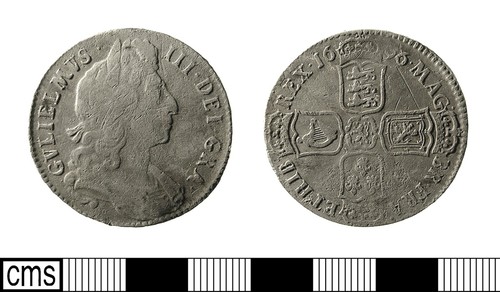
Halfcrown of William III
A silver two-shilling-and-sixpence coin of William III showing his laureate profile facing right and crowned cruciform shields of arms, dated 1696.
Milled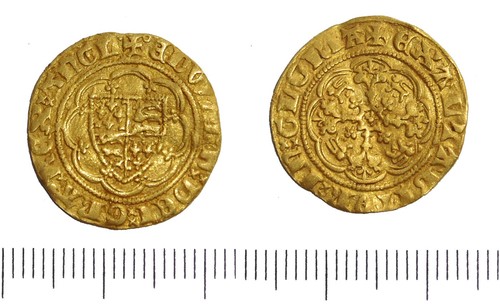
Edward III Quarter Noble
Small medieval English gold coin of Edward III, showing a crowned shield of arms on the obverse and an ornate floral cross design on the reverse.
Medieval Coins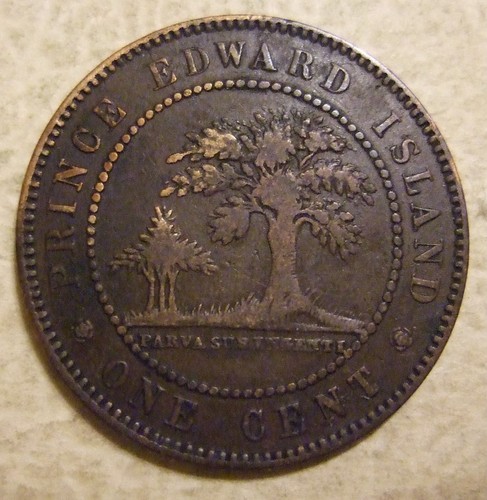
Prince Edward Island One Cent
Bronze one-cent coin struck in 1871 for the colony of Prince Edward Island, with Queen Victoria on the obverse and the island's name and date on the reverse.
Canadian & Provincial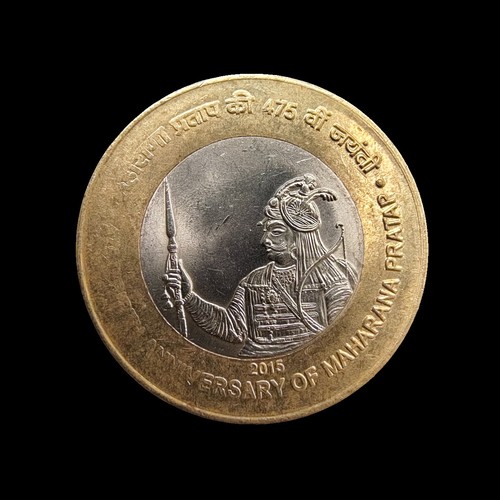
India 10 Rupees Commemorative
Bi-metallic Indian 10-rupee commemorative honoring Maharana Pratap, shown in armor with a sword and Devanagari inscription, dated 2015.
Modern India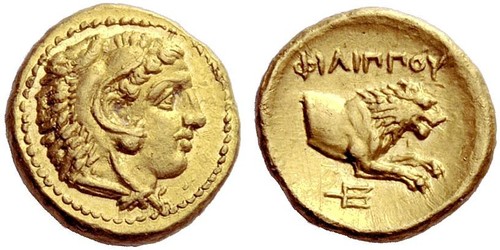
Philip II Gold Half Stater
Gold half stater of Philip II of Macedon, c. 359-336 BC, showing the head of Heracles and an eagle perched on a thunderbolt.
Ancient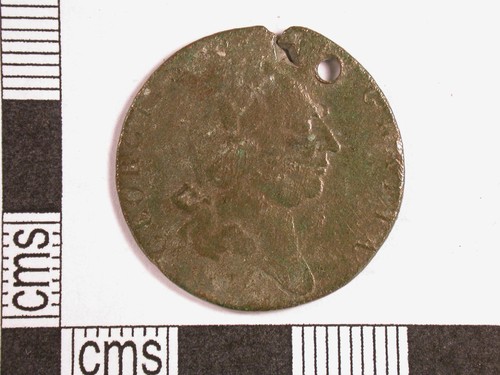
Guinea Counter (Imitation)
A brass or bronze gaming counter made to imitate a George III guinea, showing a faint male profile and a shield reverse; a token, not money.
Token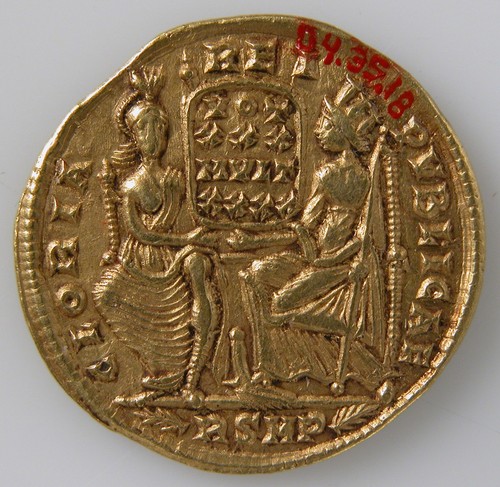
Solidus of Constantine II
Late Roman gold solidus of Constantine II, showing his ornately crowned bust and a seated figural reverse type.
Ancient Coins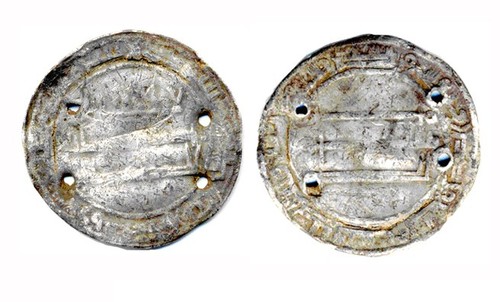
Imitation Abbasid Dirham
A thin, broad silver coin that copies an Abbasid dirham but was struck in northern Europe, with blundered pseudo-Kufic script and a piercing for wear.
Islamic (Medieval)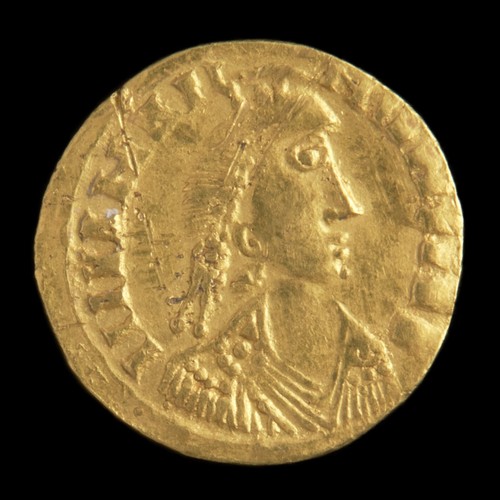
Solidus of Valentinian III
A gold solidus of the Western Roman emperor Valentinian III (AD 425-455), with his diademed profile and an imperial or military reverse.
Ancient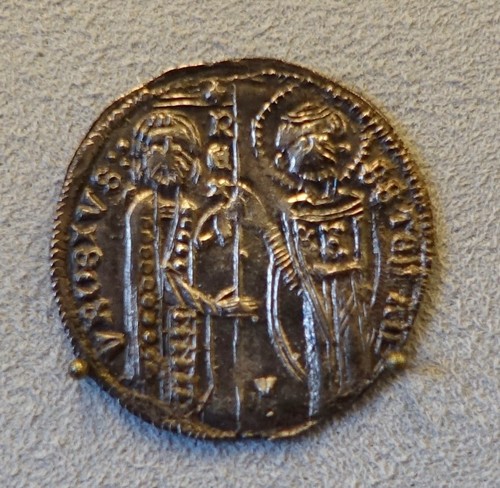
Matapan (Serbian imitation)
A medieval Serbian coin modeled on the Venetian matapan (grosso), showing standing figures on the obverse and a cross on the reverse.
Medieval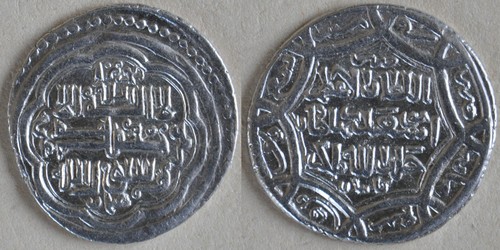
Ilkhanid Dirham of Abu Said
A hand-struck Mongol Ilkhanate silver dirham of Abu Sa'id Bahadur Khan, with the ruler's titles set in a cartouche and religious inscriptions in concentric bands.
Islamic (Medieval)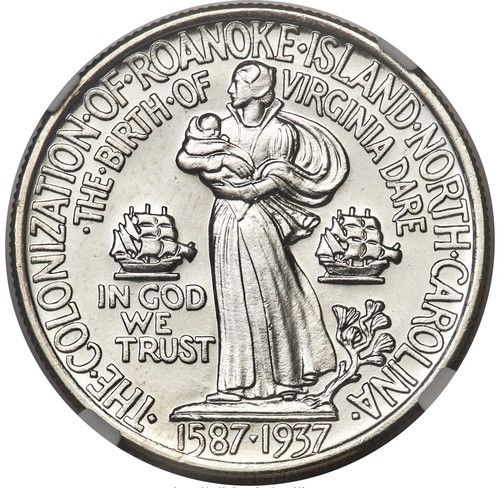
Roanoke Island Half Dollar
A 1937 U.S. silver half dollar marking 350 years since the Roanoke Island colony and the birth of Virginia Dare, with Sir Walter Raleigh and a sailing ship.
Classic Commemorative