East India Company Rupee
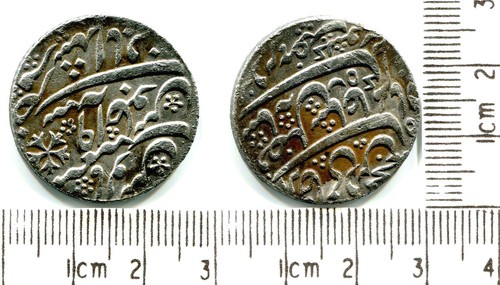
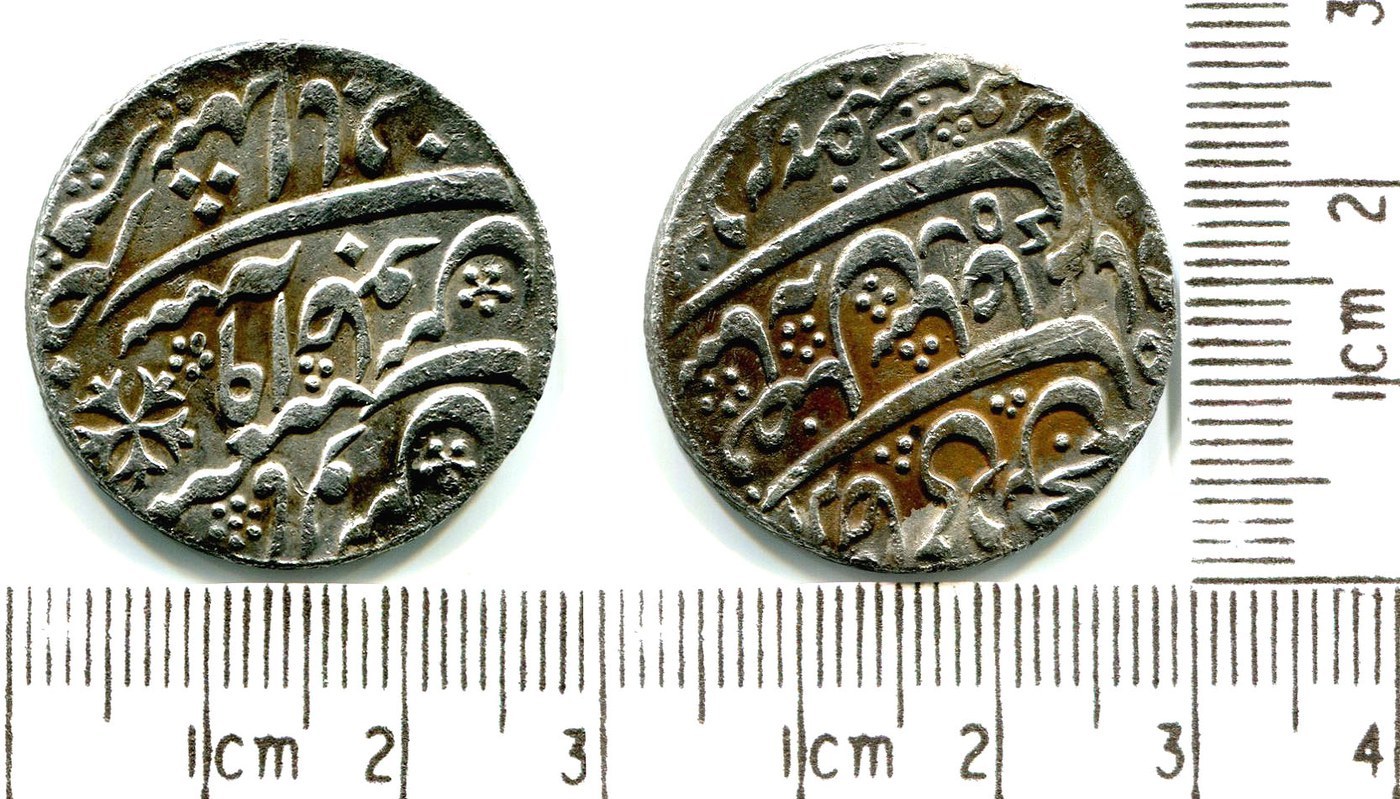
British East India Company silver rupee struck to the Mughal pattern, carrying only Persian/Urdu calligraphy naming the reigning emperor.
- Country
- British India
- Denomination
- 1 Rupee
- Metal
- Silver
Got a coin like this?
Identify any coin from a photo, free.
Overview
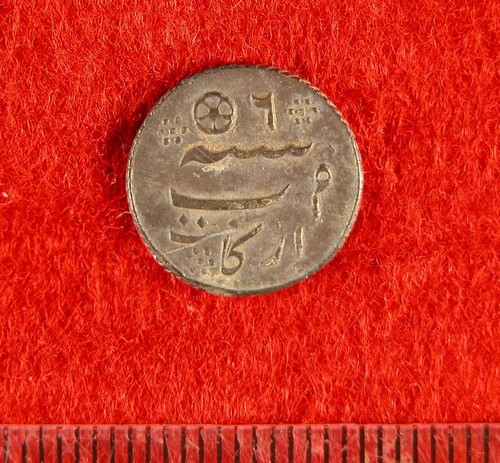
The East India Company Rupee is a silver one-rupee coin issued by the British East India Company across its Indian territories. The example shown is of the earlier, Mughal-style type: both faces carry flowing Persian (Arabic-script) calligraphy and no portrait, coat of arms, or Latin lettering. The obverse names and praises the reigning Mughal emperor with his regnal titles, while the reverse records the mint and a regnal-year formula.
Although struck by a European trading company, this rupee deliberately follows Mughal monetary tradition so that it would be trusted and accepted in Indian markets. It served as the standard high-value silver coin of the Company's provinces, circulating alongside the rupees of the Bengal, Madras, and Bombay Presidencies and the many independent princely-state issues.
History & Background
The English East India Company began as a trading body but, after military successes in Bengal from 1757 onward, acquired revenue and administrative power across large parts of the subcontinent. To fund and conduct that trade it needed a reliable silver coinage, and the simplest route to public acceptance was to continue the existing Mughal system rather than impose an unfamiliar Western coin.
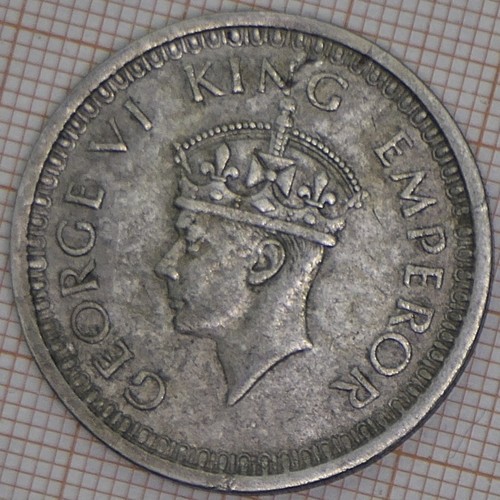
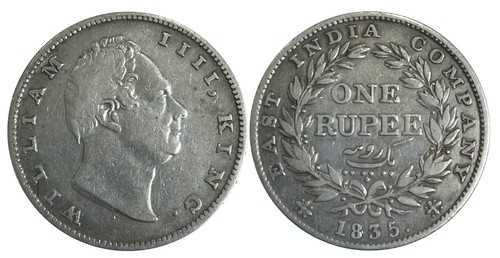
For decades the Company therefore struck rupees in the name of the reigning Mughal emperor at Delhi, even as real political authority had passed to the Company itself. These imperial-name rupees were produced at Company mints under the three presidencies, each with its own weight standards and stylistic conventions. The purely Mughal-pattern issues gradually gave way to a uniform, Westernized coinage in the 1830s, culminating in the East India Company rupees of 1835 that carry English lettering. The Company's imperial-name coinage ended entirely after its dissolution and the transfer of India to the Crown in 1858.
How to Identify
Start with the script. A Mughal-style Company rupee carries only Persian (Arabic-script) calligraphy on both faces, with no portrait and no Latin letters. The obverse holds the emperor's name and titles; the reverse gives the mint attribution and a regnal-year or accession formula. Reading the ruler's name in the obverse legend is the surest way to place the coin within a particular reign.
The physical standard is a full silver rupee, typically near 11.6 grams and roughly 24-30 mm across, though hand-struck flans vary in shape and centering. Because the dies were often larger than the blank, part of the legend commonly runs off the edge; this is normal for the type, not a defect.
The Company routinely froze dates and regnal years to keep a trusted coin in continuous production, so the same year can appear on coins struck across many seasons. Attribution to the Company (rather than to a princely state using the same Mughal template) rests on the mint name, mint symbols, and die style rather than on any Western date.
Value & Collectibility
Value depends heavily on the specific mint, the ruler named, strike quality, and preservation. Common, well-worn Mughal-style Company rupees generally trade at modest premiums over their silver content, because enormous numbers were struck across many mints and many years. Sharply struck examples, scarcer mints and varieties, and problem-free higher grades command meaningful premiums.
As with all silver rupees of this era, cleaning, edge damage, mount marks, and tooling reduce value. Because attribution differences can move the price substantially, compare a given coin against recent auction results for the matching mint and variety rather than relying on a single catalog figure. An accurate reading of the mint and date is usually the biggest factor in where a piece sits in the market.
Frequently asked questions
Why does a British East India Company coin carry only Persian writing and name a Mughal emperor?
The Company struck rupees in the reigning emperor's name, in the established Mughal style, so they would be trusted and accepted in Indian markets. Real authority had passed to the Company, but the familiar imperial coinage kept commerce running smoothly.
Is the East India Company rupee real silver?
Yes. The standard Company rupee was struck in high-grade silver at close to the traditional rupee weight of about 11.6 grams.
Why is there no portrait or English lettering on my coin?
The earlier Company rupees follow the aniconic Mughal pattern, carrying only Persian calligraphy with no portrait or Latin script. Westernized, English-lettered East India Company rupees only appear from the 1830s onward.
How is a Company rupee told apart from a princely-state rupee?
Both often use the same Mughal template, so attribution rests on the Persian mint name, mint symbols, and die style rather than on any Western feature. The mint legend is usually the deciding evidence.
Are these rupees rare?
Most ordinary examples are common, since the Company struck vast quantities over many years and mints. Scarcer mints, specific dates and varieties, and exceptionally well-struck high-grade pieces are the ones that carry real premiums.
East India Company Rupee guides
In-depth guides for identifying, valuing, and collecting East India Company Rupee.