
How to Identify the East India Company Rupee
A collector's checklist for attributing a Mughal-style East India Company silver rupee by its script, mint formula, size, and metal.
Read the full East India Company Rupee encyclopedia entry →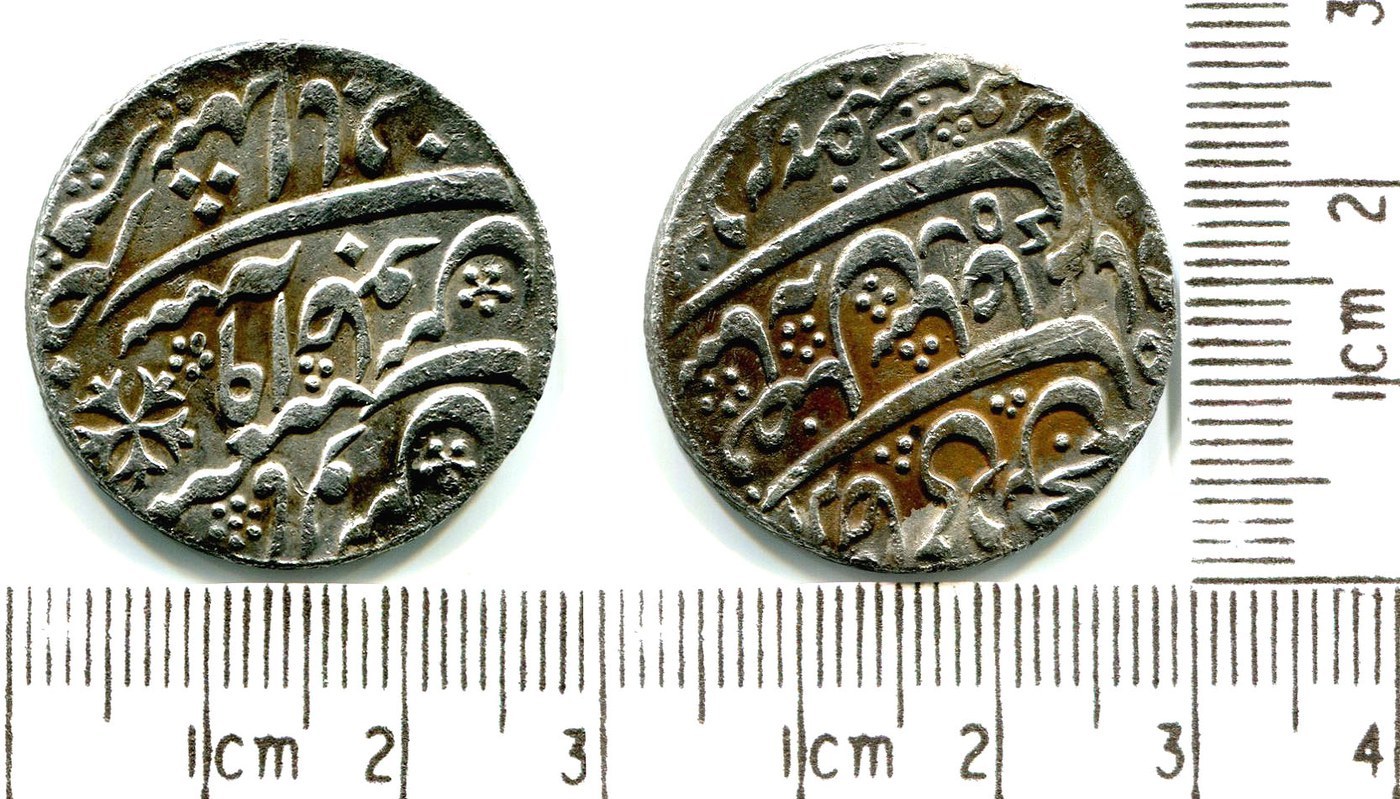
Begin with the script and imagery. A Mughal-style Company rupee shows Persian (Arabic-script) calligraphy on both faces, with no portrait and no Latin lettering. If your coin instead carries English text or a European design, it is a later Westernized issue rather than this earlier imperial-name type. The obverse names and praises the reigning Mughal emperor; the reverse holds the mint-and-regnal formula. Both faces matter for a confident attribution.
Check the physical standard next. A full silver rupee sits near 11.6 grams and roughly 24-30 mm in diameter. Confirm it reads as good silver: bright metal, appropriate weight, a clear ring rather than a dull thud, and no response to a magnet. Expect a broad, sometimes irregular flan, because these coins were struck by hand from dies larger than the blank. Off-center legends and text running off the edge are normal for the type and should not be treated as damage.
Attribute the mint and reign carefully. Company rupees, the various presidency issues, and independent princely-state coins all borrow the same Mughal template and can look alike at a glance. The deciding evidence is the Persian mint name, the small mint symbols in the field, the ruler's name in the obverse legend, and the die style, not any Western date. Read the mint city and, where present, the regnal (julus) year, since rarity within the series depends far more on mint and date than on the coin simply being a Company issue.
Mind the frozen dates. The Company deliberately kept the same year and regnal figure in production for long stretches to preserve a trusted design, so identical dates across many coins are expected and are not by themselves a sign of forgery. The visible year is not a reliable indicator of when a given coin was actually struck.
Be cautious with authentication. This broad type is widely imitated, and tourist-market fakes are common. Genuine coins are struck, not cast, so watch for casting seams, trapped-air pits, a soft or mushy surface, incorrect weight, or magnetic metal. Look under magnification for the crisp, sharply cut Persian lettering of a struck die, and be alert to tooled fields where a forger has re-cut weak legends. When the mint or reign is ambiguous, photograph both faces clearly and check the legend against standard references before assigning any value.
Frequently asked questions
What single feature most reliably identifies the coin?
The Persian legends read together: the emperor's name on the obverse and the mint name on the reverse. Because the Mughal-style template was shared widely, the mint legend and die style settle the attribution more than weight or the visible year.
The date looks fixed across several of my coins. Are they fakes?
Not necessarily. The Company routinely froze regnal years to keep a trusted design in continuous production, so identical dates on many coins are expected and are not by themselves evidence of forgery.
How do I spot a cast forgery?
Look for soft or blurred detail, a seam around the edge, tiny surface pits from trapped air, and a weight or ring that is off. Struck originals show crisp, sharply cut Persian lettering and no mold seam.
Does an off-center strike or missing legend hurt the coin?
Mild off-centering is normal for hand-struck rupees and is not damage. Value is affected far more by wear, cleaning, edge knocks, and mounting than by a legend that runs off the flan.