British India One Pice
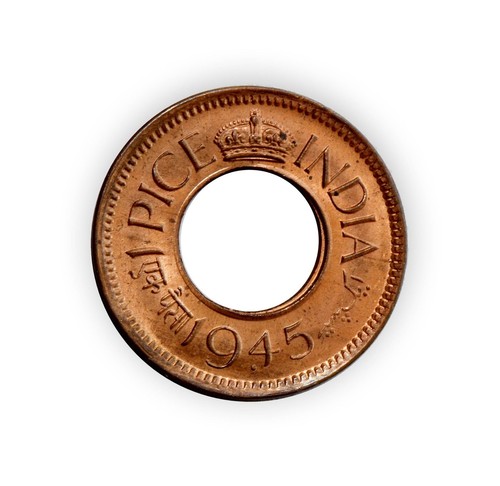
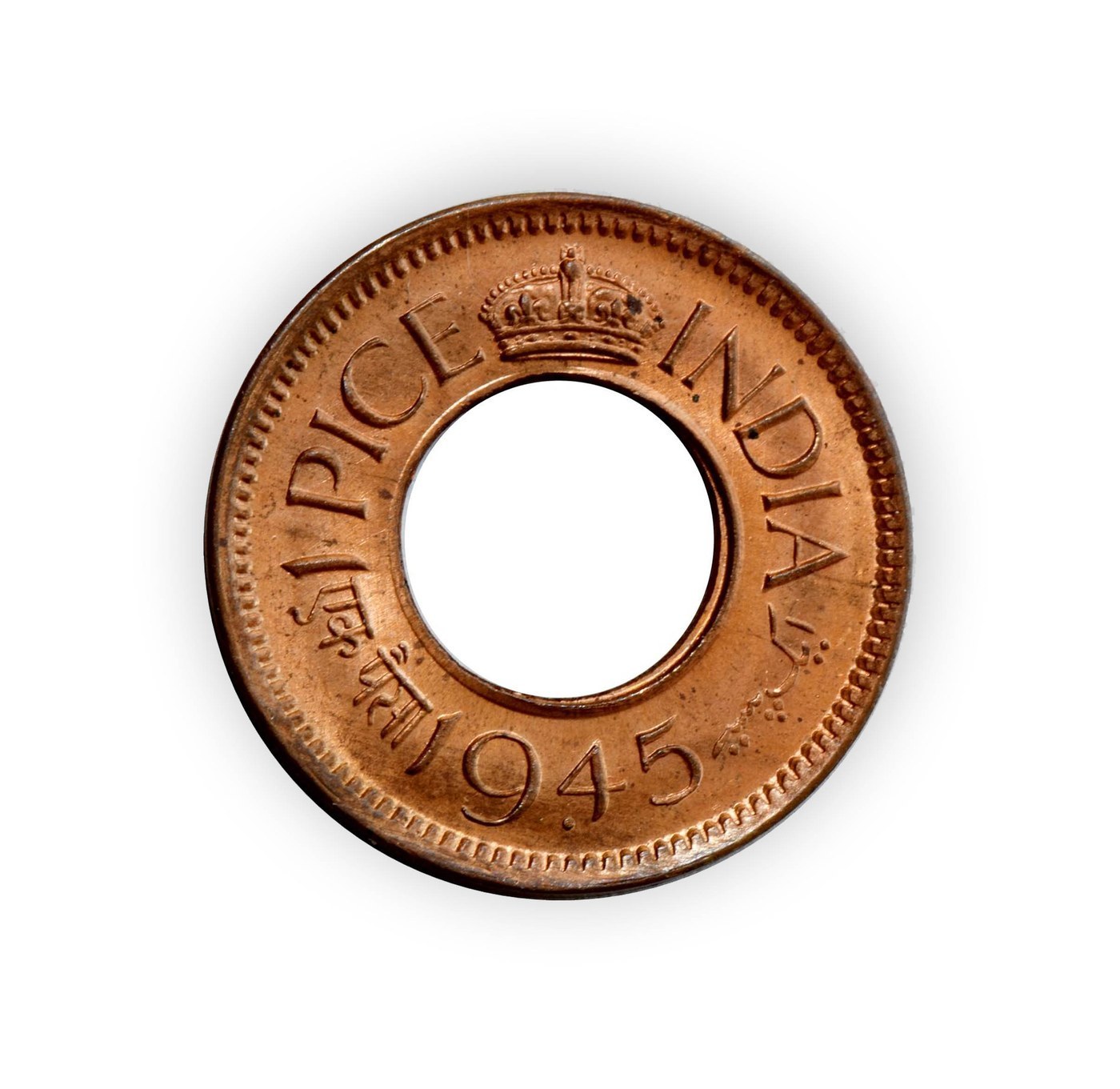
A small holed copper-bronze One Pice of British India under George VI, dated 1945, its obverse crowned and lettered INDIA and PICE around a central hole.
- Country
- India
- Denomination
- 1 Pice
- Metal
- Copper
Got a coin like this?
Identify any coin from a photo, free.
Overview
The British India One Pice is a small copper-alloy coin issued under King George VI during the final years of British rule in India. The example photographed here shows the obverse of the type: an imperial crown at the center-top, the word INDIA above and PICE below, the date 1945, and a distinctive round hole punched through the middle of the coin.
The pice was one of the lowest-value denominations in circulation, sitting well below the anna and the rupee. In the pre-decimal system used at the time, four pice made one anna and sixteen annas made one rupee, so the pice was an everyday small-change coin used for the most modest purchases.
What makes this issue immediately recognizable is the central hole. The One Pice of this period was among the first regular Indian coins struck with a hole through the center, a feature that sets it apart from the solid copper quarter-anna and half-anna pieces that came before it.
History & Background
By the 1940s British India's coinage was issued in the name of George VI, who is styled King and Emperor on the larger denominations of the period. The One Pice belonged to the base-metal end of this system, alongside the pie, the quarter anna and the half anna, and served as small change across the subcontinent.
The holed pice was introduced during the Second World War era. Piercing the coin reduced the amount of metal required for each piece and gave the low-value denomination a form that was easy to tell apart from other coins by touch and sight, both useful considerations in a period of wartime economy and heavy coin production. The 1945 date on this example places it squarely in that wartime issue.
These coins circulated in very large numbers in the years just before Indian independence in 1947, after which the currency was reorganized under the new Republic. Because so many were struck and used, worn survivors of the British India pice are common today and are widely collected as an accessible piece of late colonial Indian history.
How to Identify
Identify this coin first by the hole. The British India One Pice is a small, round copper-bronze coin with a neat circular hole through its center, which by itself narrows it down considerably among Indian coins of the era. It is noticeably smaller and lighter than the copper quarter-anna and half-anna pieces.
The obverse carries an imperial crown near the top, with the legend INDIA and the denomination PICE arranged around the central hole, and the date, here 1945. There is no royal portrait on this small denomination, unlike the higher-value silver and nickel coins of George VI that show the king's effigy. The reverse of the type continues the holed layout and typically presents the value and issuing details around the central opening rather than a figural design.
Use the spelled-out denomination and the date to confirm the type. The word PICE distinguishes it from the similarly small pie and from the anna denominations, and the four-digit date fixes the year of issue. Because the coins saw heavy use, expect real wear on the crown and lettering on most surviving examples.
Value & Collectibility
The British India One Pice of 1945 is a common, widely available coin, so ordinary circulated examples are inexpensive and typically trade for only a few US dollars. Values here are broad context rather than fixed prices, since condition is the main driver.
Heavily worn, corroded, or cleaned pieces sit at the bottom of the range, while coins with sharp crown detail, full clear lettering, an evenly struck central hole and original surfaces bring more. Genuinely uncirculated or lustrous examples are much scarcer than the well-worn survivors and command a premium with collectors. As always, recent sales of the same type, date and grade are the best guide to a specific coin's worth.
Frequently asked questions
What is a pice worth in old Indian money?
In the pre-decimal system, four pice made one anna and sixteen annas made one rupee, so a pice was a very low-value coin used for everyday small change. It was one of the smallest denominations then in circulation.
Why does the coin have a hole in the middle?
The British India One Pice of this era was struck with a central hole. Piercing the coin saved metal on a low-value denomination and made the pice easy to recognize by sight and touch, a practical choice during the wartime years.
Who was the ruler when this 1945 pice was made?
It was issued under King George VI, during the final years of British rule in India before independence in 1947. The small pice does not show his portrait, unlike the larger silver and nickel coins of the period.
Is the British India One Pice made of copper?
Yes. It is a base-metal coin struck in a copper-based bronze alloy, not silver. Its brown or reddish-brown tone and light weight are typical of the low-value copper coinage of the time.
Is a 1945 One Pice rare or valuable?
Most are common. Huge numbers were struck and circulated in the 1940s, so ordinary worn examples are inexpensive. Only well-preserved, sharply struck or uncirculated pieces carry a meaningful premium.
British India One Pice guides
In-depth guides for identifying, valuing, and collecting British India One Pice.