
How to Identify the British India One Pice
A collector's guide to spotting the holed 1945 British India One Pice: the central hole, crown and INDIA PICE legend, size, metal and look-alikes.
Read the full British India One Pice encyclopedia entry →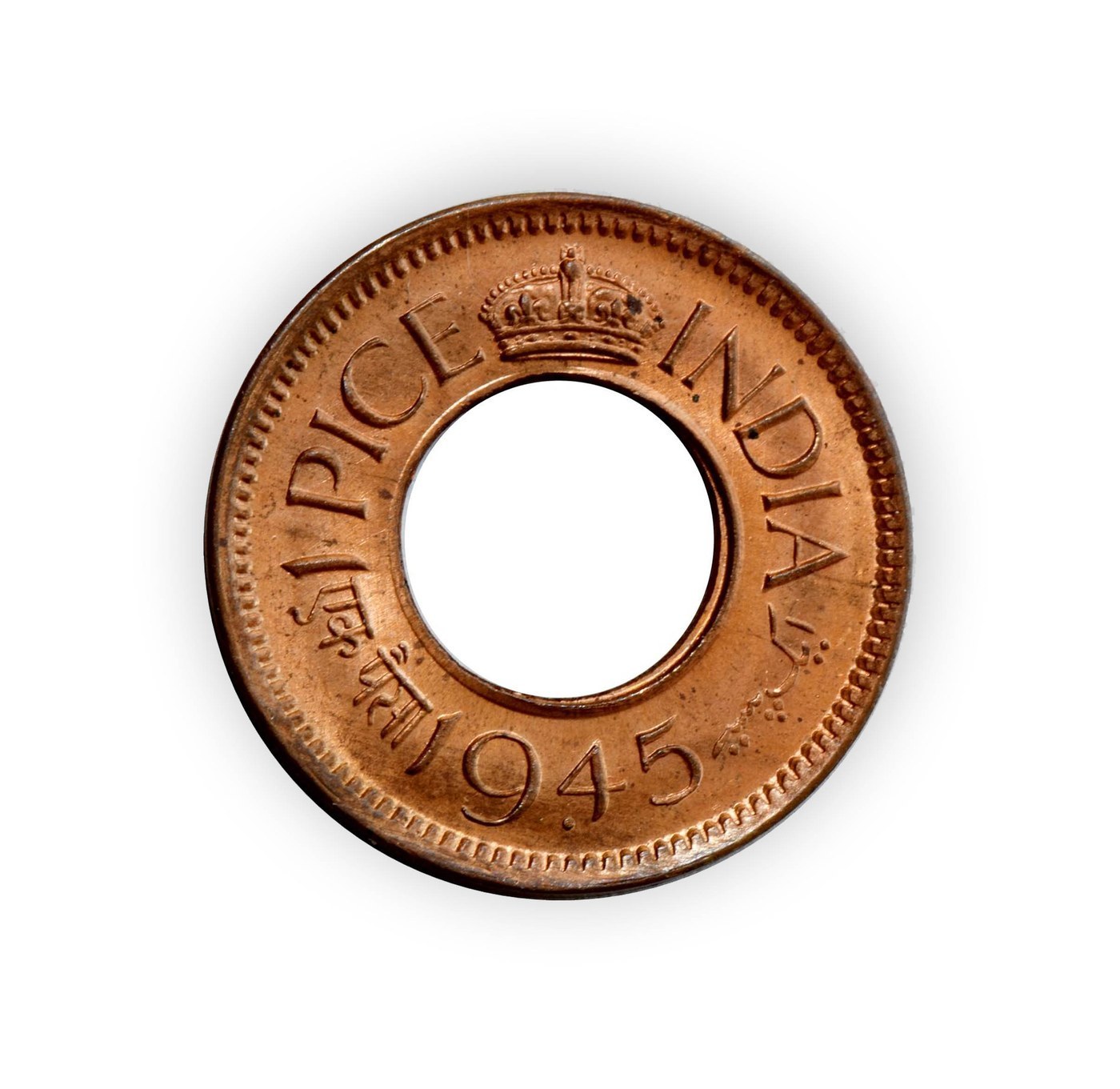
Start with the shape and size. The British India One Pice is a small, round copper-bronze coin with a clean circular hole punched through the center. That central hole is the single most useful diagnostic, because it separates the pice from the solid quarter-anna and half-anna coppers and from the small silver and nickel denominations of the same era. The coin is light and modest in diameter; a large, heavy copper piece is a different denomination.
Read the obverse legend around the hole. Look for an imperial crown near the top with the words INDIA and PICE arranged around the central opening, and a four-digit date, 1945 on this example. The spelled-out word PICE is important: it distinguishes this coin from the smaller pie and from the anna denominations, which are marked differently. Note that this low value carries no royal portrait, so if you see the head of George VI you are looking at a higher denomination, not the pice.
Check the metal and surfaces. Genuine examples are a copper-based bronze with a brown to reddish-brown tone; a bright silvery or magnetic coin is not this type. Because these pieces circulated heavily right up to independence, most survivors show honest wear on the crown and lettering, along with the natural surface marks of a coin that spent years in pockets and tills. Even, undamaged wear is normal and expected.
Be aware of look-alikes and the reverse. Other small holed coins and later Indian holed issues can resemble the pice at a glance, so confirm the denomination and date from the lettering rather than the hole alone. The reverse of the type keeps the holed layout with value and issuing details around the central opening rather than a picture; use both faces together to settle the identification.
On authentication, this is a common, low-value coin, so it is rarely faked for profit; the bigger risks are misattribution and condition problems. Watch for corrosion, verdigris, cleaning, tooling around the hole, or a hole that has been drilled after striking rather than punched during manufacture. When unsure, compare weight, diameter and the exact legend against a standard catalog of British India coinage.
Frequently asked questions
How do I tell the pice from other small Indian coins?
The pice is a small copper-bronze coin with a central hole and the word PICE in the obverse legend. The hole plus the spelled-out denomination distinguish it from the solid quarter-anna and half-anna and from the pie and anna coins.
Should there be a portrait of the king on it?
No. The One Pice is a low denomination and carries a crown and lettering rather than the king's effigy. A coin showing the portrait of George VI is a larger denomination, not the pice.
Is the hole in the coin original or damage?
On this type the central hole is an original, deliberate feature made during manufacture, so it is neatly centered and evenly formed. A ragged or off-center hole may indicate a coin that was drilled or damaged later.
How can I confirm the exact year and type?
Read the four-digit date and the word PICE in the obverse legend, then check the coin's weight, diameter and lettering against a standard reference for British India coinage to confirm both the denomination and the year.