Indian Silver Coin
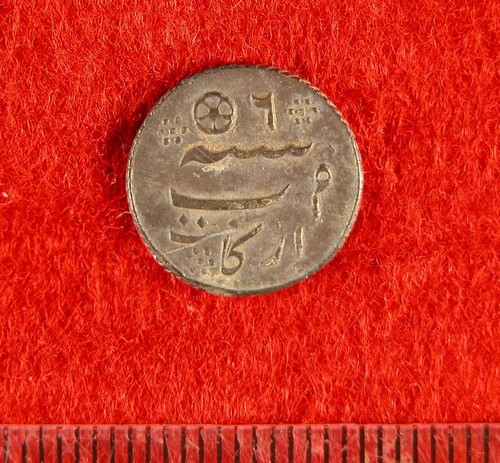
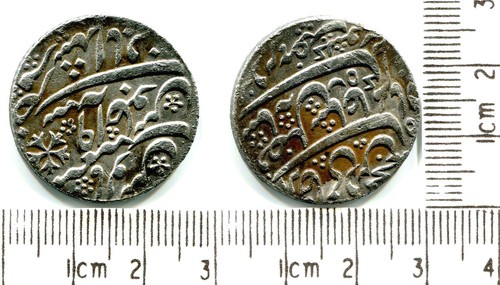
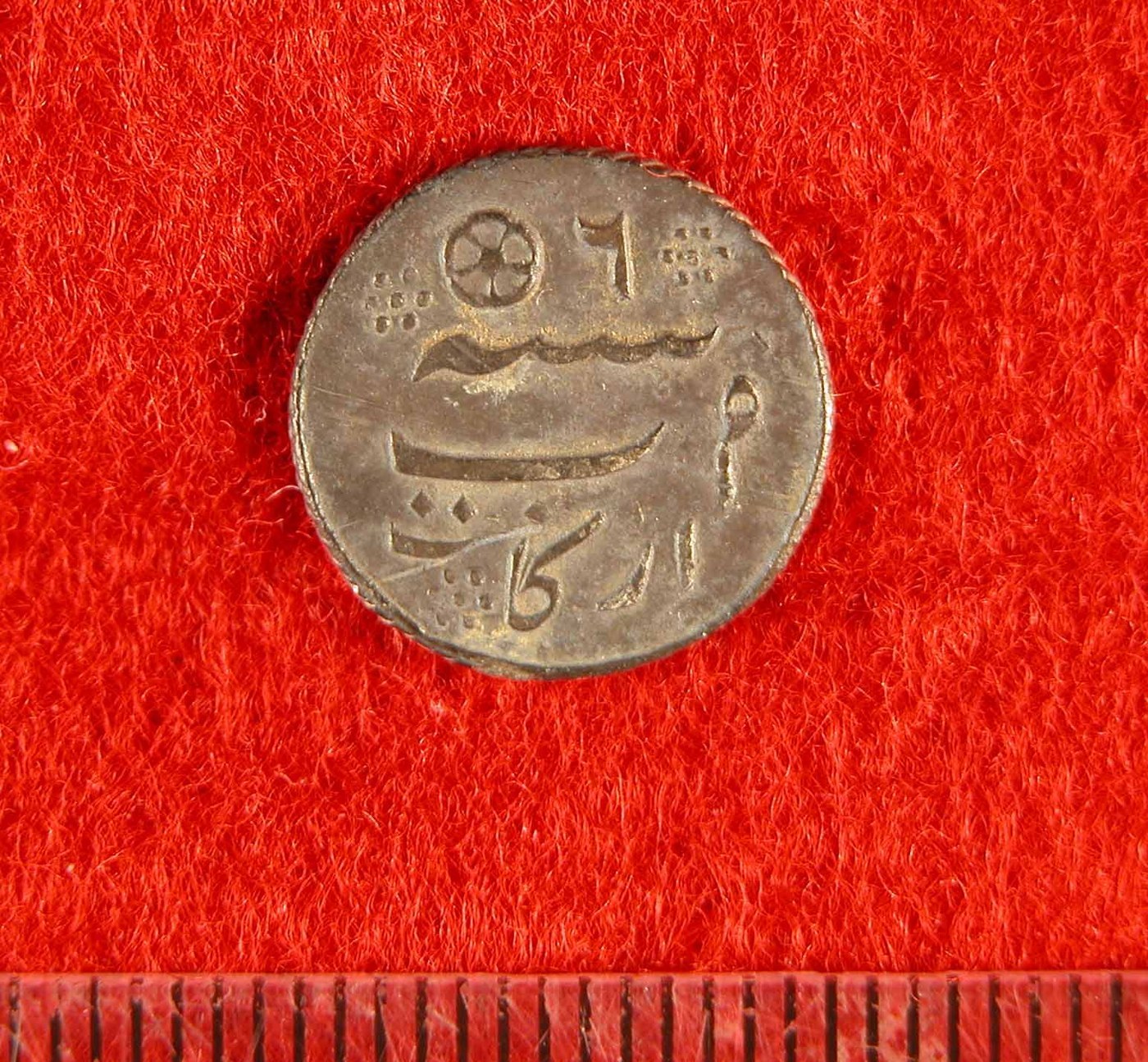
A silver coin of British India bearing Persian/Urdu calligraphy and a mint mark, in the Mughal-derived inscriptional style of Company-era coinage.
- Country
- India
- Metal
- Silver
Got a coin like this?
Identify any coin from a photo, free.
Overview
The Indian Silver Coin shown here is a British India silver piece struck in the aniconic, calligraphic tradition inherited from Mughal coinage. The photographed face carries flowing Persian/Urdu script together with a mint mark, and no portrait or figural device. This is the hallmark of the silver coinage circulated across India during the East India Company and early British administration, when new rulers continued to strike money in the established Persian-legend format that merchants and the public already trusted.
Because only one face is visible in the photograph and no denomination or date can be read from it, the coin is best described by what is certain: it is silver, it is Indian, it belongs to the British India series, and it uses Persian/Urdu legends with a mint mark rather than European-style lettering or a bust. A precise denomination (such as a full rupee or a fraction of a rupee) and mint attribution would require reading the complete legends on both faces.
History & Background
When European trading powers began issuing coinage in India, they did not impose an unfamiliar design. The East India Company and other authorities struck silver in the Mughal manner, with Persian couplets, the name of a mint, and often a regnal or Hijri year, so that the coins would be accepted in existing markets. For a long period Company silver was even issued in the name of the reigning Mughal emperor, which is why so many British India silver coins carry pure Persian/Urdu calligraphy despite being products of Company mints.
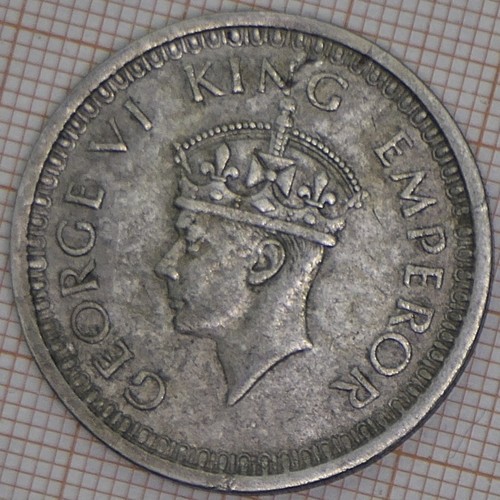
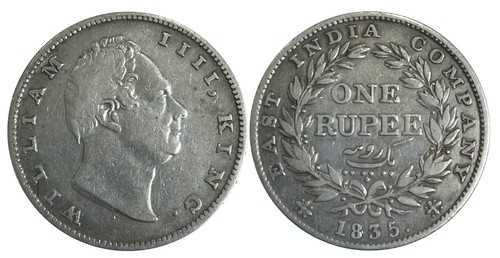
Over the eighteenth and nineteenth centuries these silver pieces were produced at a range of mints across the subcontinent, each identified within the legend or by a mint mark. Only later, with the consolidation of British rule and the introduction of imperial coinage, did design shift toward European conventions such as the monarch's portrait and English lettering. A silver coin like this one, defined by its Persian script and mint mark, sits in that earlier, calligraphic phase of the British India series.
How to Identify
Identify this piece first by its material and script: it is a silver coin whose visible face is filled edge to edge with Persian/Urdu calligraphy and includes a mint mark, with no portrait, animal, or Latin lettering. That combination places it in the Mughal-derived silver coinage used throughout British India rather than in the later portrait-and-English series.
Beyond that, exact attribution depends on details not readable from a single photographed face. The denomination (full rupee versus a half, quarter, or smaller fraction) is usually judged from diameter and weight; the mint and date are read from the Persian legend and any Hijri or regnal year. Hand-struck production means centering, flan shape, and legend placement vary from coin to coin, so off-center strikes and partially off-flan inscriptions are normal and not signs of a problem.
Value & Collectibility
Value for a Persian-legend British India silver coin varies widely with denomination, mint, date, and condition, so any figure should be treated as broad context rather than a fixed price. Common, heavily circulated silver pieces of this type are affordable and frequently trade in the low tens of US dollars, while scarce mints, sharp strikes, clear legends, and well-preserved examples can bring considerably more.
Because this coin cannot be pinned to a specific denomination or mint from the single visible face, precise pricing is not possible here. For a realistic estimate, weigh and measure the coin, read the full Persian legend on both faces to establish mint and date, and compare it against auction records and catalogue listings for the same type. Silver content also sets a baseline melt value beneath any collector premium.
Frequently asked questions
Why does a British India coin have Persian or Urdu writing instead of English?
Early British India silver, including East India Company issues, was struck in the Mughal calligraphic style so it would be accepted in existing markets. Many pieces were even issued in the name of the Mughal emperor, which is why they carry Persian/Urdu legends rather than English lettering.
What denomination is this coin?
It cannot be confirmed from the single visible face. Persian-legend British India silver was struck as full rupees and as fractions such as half, quarter, and smaller pieces; the denomination is judged from diameter and weight together with the legend.
What is the mint mark on it?
The small symbol accompanying the script is a mint mark identifying where the coin was struck. Reading it, along with the surrounding Persian legend, is how the specific mint and date are established.
Is it made of real silver?
Coins of this British India type were struck in silver, which gives them a baseline melt value. The exact fineness and weight depend on the specific denomination and issuing authority and are best confirmed by testing and weighing the coin.
How can I find out exactly which coin this is?
Read the full Persian legend on both faces to identify the mint and date, then measure the diameter and weight to determine the denomination, and compare against a British India or East India Company coinage catalogue.
Indian Silver Coin guides
In-depth guides for identifying, valuing, and collecting Indian Silver Coin.