
How to Identify the Indian Silver Coin
A collector's guide to placing a Persian-legend British India silver coin by script, mint mark, size, and metal, and avoiding common mix-ups.
Read the full Indian Silver Coin encyclopedia entry →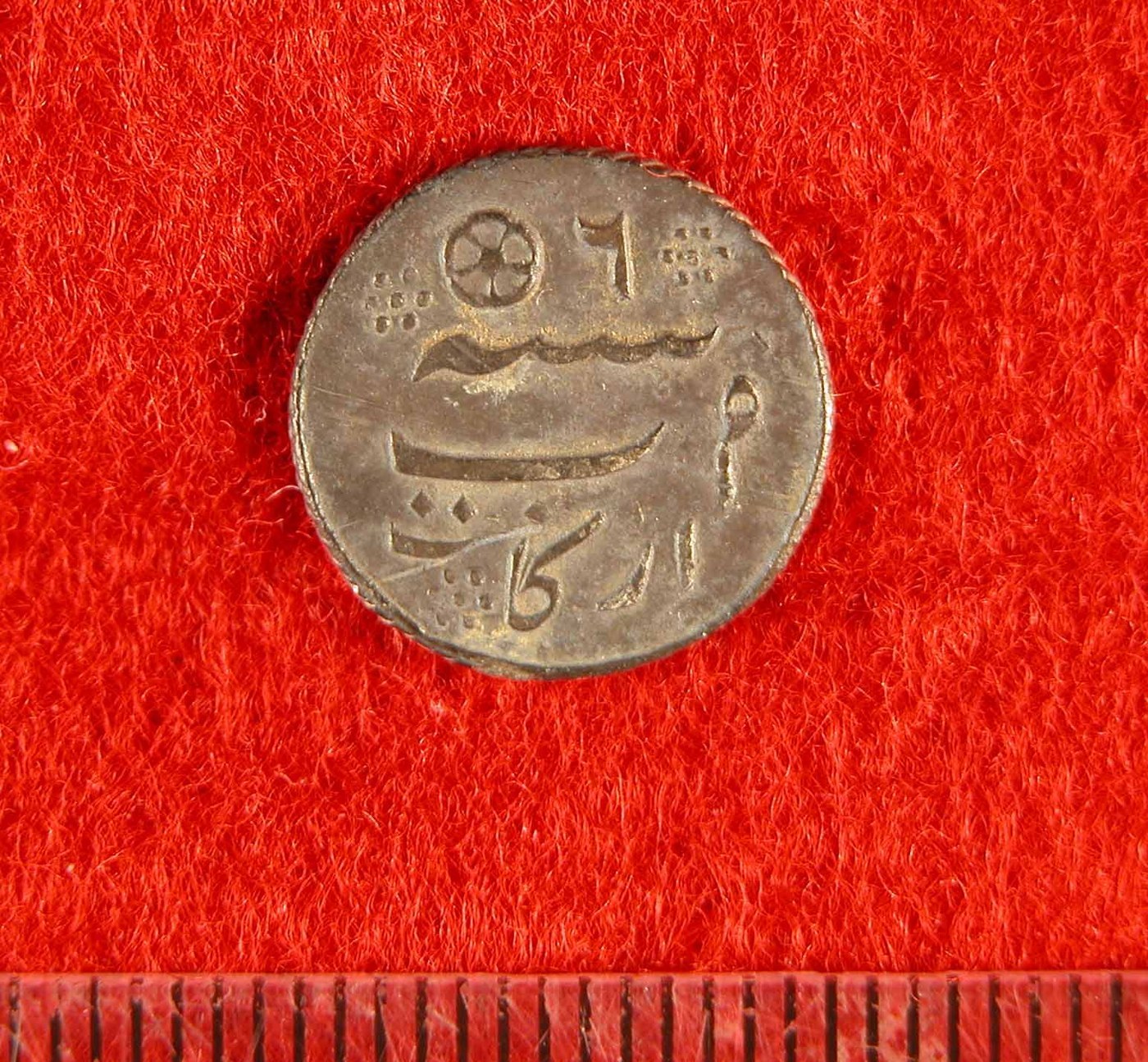
Begin with what the coin plainly shows. This is a silver piece whose face is covered in Persian/Urdu calligraphy and carries a mint mark, with no portrait and no Latin lettering. That immediately separates it from the later British India series that shows a monarch's bust and English inscriptions. A fully calligraphic silver coin in Indian hands is almost always from the Mughal-derived Company-era coinage rather than the imperial portrait period.
Next, work on the denomination through physical measurement. Weigh the coin to a tenth of a gram and measure its diameter, then compare against known standards for the silver rupee and its fractions. A full-size, heavier piece points to a rupee; smaller, lighter flans indicate half, quarter, or minor fractions. Do this before trying to price the coin, since denomination is the single biggest driver of both catalogue identity and value.
Then read the legends for mint and date. The Persian text names a mint and usually carries a Hijri or regnal year, and the mint mark reinforces that attribution. If you cannot read Persian, photograph both faces clearly and match the legend against catalogue plates or ask a specialist; the reverse, which is not visible in this image, often carries the mint formula and year that complete the identification.
Finally, weigh authenticity and look-alikes. Genuine pieces are hand-struck, so expect uneven centering, variable flan shape, and off-flan lettering; these are normal. Be cautious of cast copies, which show seams, soft mushy calligraphy, and incorrect weight, and of gilt or base-metal fakes that fail a weight-and-metal check. This calligraphic style is shared by Mughal, princely-state, and Company silver, so do not assume British India from script alone. Confirm the issuing authority from the legend before cataloguing.
Frequently asked questions
How do I tell this from a Mughal or princely-state silver coin?
The calligraphic style is shared across all three, so script alone is not decisive. The issuing authority and mint are established by reading the full Persian legend on both faces; match it to catalogue plates or a specialist rather than assuming British India from appearance.
What measurements should I take first?
Weigh the coin to a tenth of a gram and measure its diameter. Comparing these to rupee and fractional-rupee standards is the quickest way to narrow the denomination before you attempt mint and date attribution.
What are warning signs of a fake?
Look for casting seams, soft or blurry calligraphy, incorrect weight, and any sign of gilding or base metal beneath a silver wash. Hand-struck unevenness and off-center legends, by contrast, are normal for genuine coins of this type.
The reverse isn't shown here. Does that matter?
Yes. The reverse often carries the mint formula and the Hijri or regnal year needed to pin down mint and date. A complete identification needs clear images of both faces.