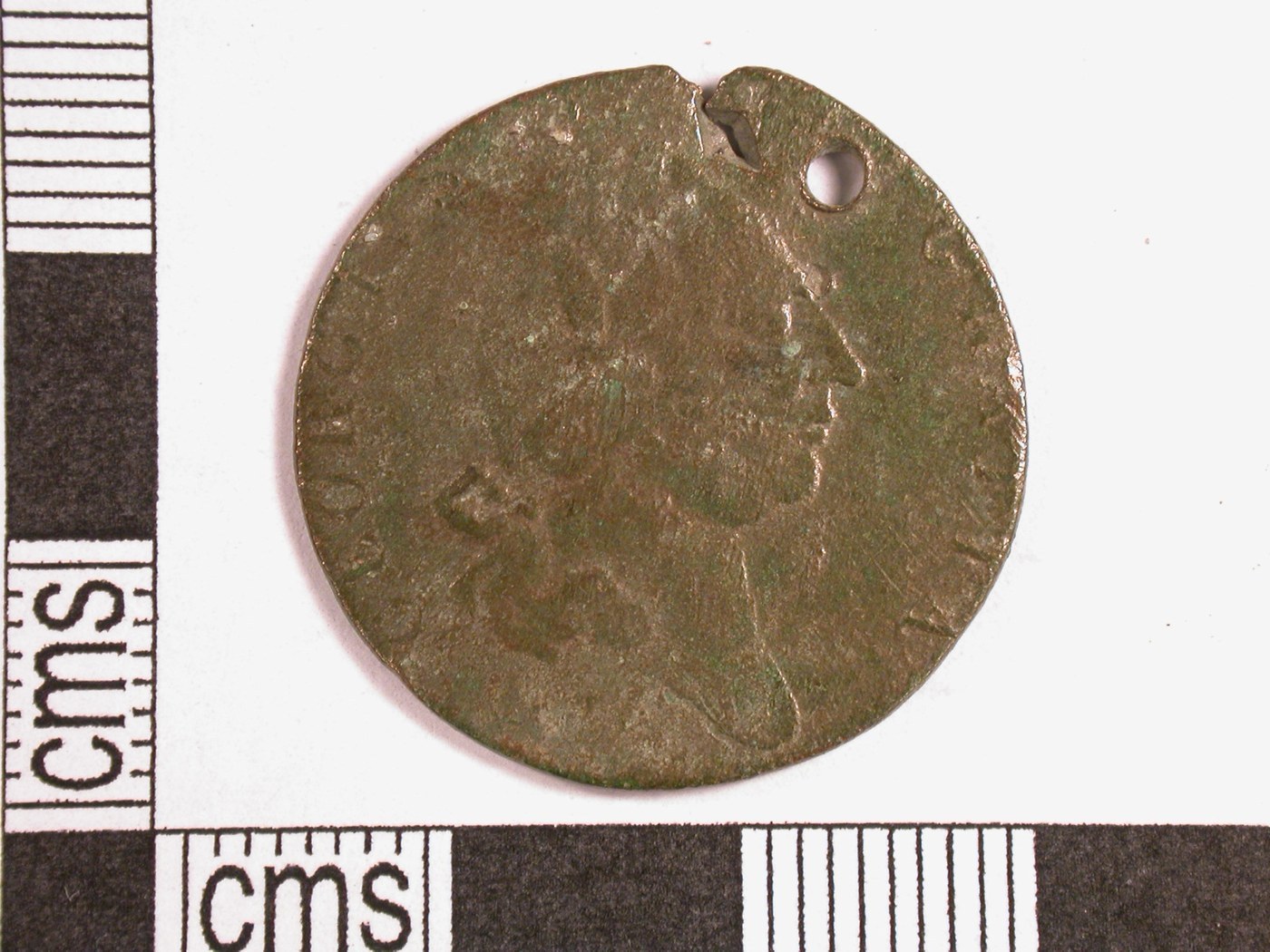
Guinea Counter (Imitation)
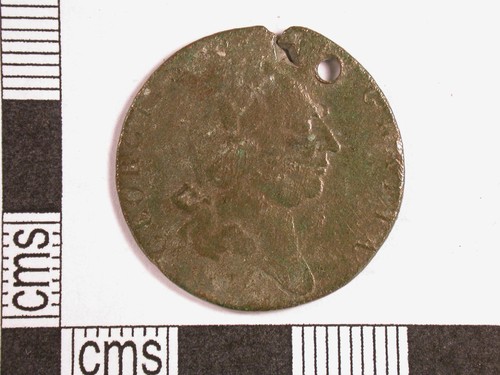
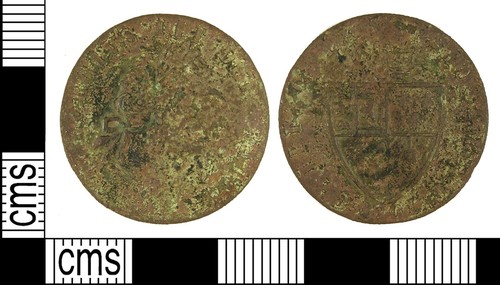
A brass or bronze gaming counter made to imitate a George III guinea, showing a faint male profile and a shield reverse; a token, not money.
- Country
- United Kingdom
- Denomination
- N/A
- Metal
- Bronze
Got a coin like this?
Identify any coin from a photo, free.
Overview
This is a guinea counter, a small brass or bronze token made to imitate a George III gold guinea rather than to serve as money. The photographed piece shows a faint male profile on the obverse and a shield-style design on the reverse, echoing the layout of the real coin it copies. Pieces like this are tokens or gaming counters, not legal-tender coins, and were never intended to pass as genuine gold.
Counters of this kind were produced in large numbers to be used in card games and other pastimes, where they stood in for money at the table, and as advertising or novelty pieces. Because they mimic a recognisable royal coin, they are commonly mistaken for real guineas by people who find them, but the base metal, the wording, and the general fabric mark them out as imitations.
The example here is described broadly as a George III era guinea counter. Without clear legends it cannot be tied to a single maker or exact date, so it is best understood as a member of the wide family of imitation guineas and gaming counters produced during and after that reign.
History & Background
The gold guinea was a major English and British coin, and under George III the so-called spade guinea, named for the spade-shaped shield on its reverse, became especially familiar. Its distinctive look made it a natural model for imitation. From the later 18th century onward, makers produced brass and bronze counters that copied the guinea's portrait and shield so closely that they could be used as convenient stand-ins for the coin.
These counters served several everyday purposes. Many were gaming pieces, used to keep score or represent stakes in card games such as whist without risking real gold. Others were made as toys, advertising novelties, or trade pieces, often carrying mottoes, a maker's name, or slogans in place of the genuine royal legend. They were cheap to strike and widely available, which is why they survive in quantity today.
Because a base-metal piece made to resemble a gold coin can be misused, imitations of current coin were a legal concern, and later counters frequently carried wording to make clear they were not money. The piece photographed belongs to this broad tradition of guinea imitations from the George III period and the years that followed.
How to Identify
The obverse shows a male profile, here faint from wear or a soft strike, imitating the laureate head of George III that appears on the real guinea. On genuine counters the surrounding lettering is usually not the true royal legend; instead it may give a motto, a maker's name, or wording such as an assertion that the piece is a token or counter rather than coin. Any legible lettering is the single most useful clue to what the piece actually is.
The reverse carries a shield design, mirroring the crowned or spade-shaped shield of arms on the guinea it copies. As with the obverse, the accompanying inscription on a counter typically differs from the genuine coin's legend, and reading it is the key to separating an imitation from the real thing.
In hand the piece is a base-metal token, brass or bronze in tone rather than the yellow of gold, and it is generally lighter than a true guinea of the same size. It is usually close to guinea diameter, which is what makes the imitation convincing at a glance. The combination of a base-metal fabric, non-royal or motto legends, and a design that only approximates the coin is what identifies it as a guinea counter rather than a genuine guinea.
Value & Collectibility
Guinea counters are collectable tokens rather than precious-metal coins, so their value comes from interest, condition, and legend rather than bullion. Common, worn, or anonymous brass and bronze counters are inexpensive and trade for modest sums, while cleaner examples, or pieces with a legible maker's name, an unusual motto, or a scarce type, can attract more from token and gaming-piece collectors.
Because the piece is base metal and not gold, it has no bullion value as a guinea; its worth is purely as a historical token. Condition, sharpness of the portrait and shield, and any readable inscription drive the price more than the fact that it resembles a coin.
These counters are often mistaken for genuine guineas, which can lead to inflated expectations. Anyone hoping a find is real gold should first confirm the metal and read the legends. For a realistic figure, compare recent sales of similar counters and, for an unusual or well-preserved piece, seek an opinion from a specialist in tokens or British coins. Treat any single price as broad context only.
Frequently asked questions
Is this a real guinea?
No. It is a guinea counter, a brass or bronze token made to imitate a George III guinea for use in games or as a novelty. It is base metal, not gold, and was never legal-tender money.
Why does it look like a coin?
It deliberately copies the guinea's design, with a royal-style male profile and a shield reverse, so it could stand in for the coin at the card table. That resemblance is exactly why counters are often mistaken for genuine guineas.
How can I tell it apart from a genuine guinea?
Check the metal and the wording. A counter is brass or bronze rather than gold, is usually lighter, and its legends typically give a motto or maker's name, or state that it is a token, rather than the true royal legend.
Is it worth anything?
As a token it has collector value rather than bullion value. Common worn examples are inexpensive, while pieces with a legible maker's name, unusual motto, or good condition can be worth more to token collectors.
What is the shield on the back?
It imitates the shield of arms on the reverse of the George III guinea, including the spade-shaped shield of the spade guinea. On a counter the surrounding inscription usually differs from the genuine coin's legend.
Guinea Counter (Imitation) guides
In-depth guides for identifying, valuing, and collecting Guinea Counter (Imitation).