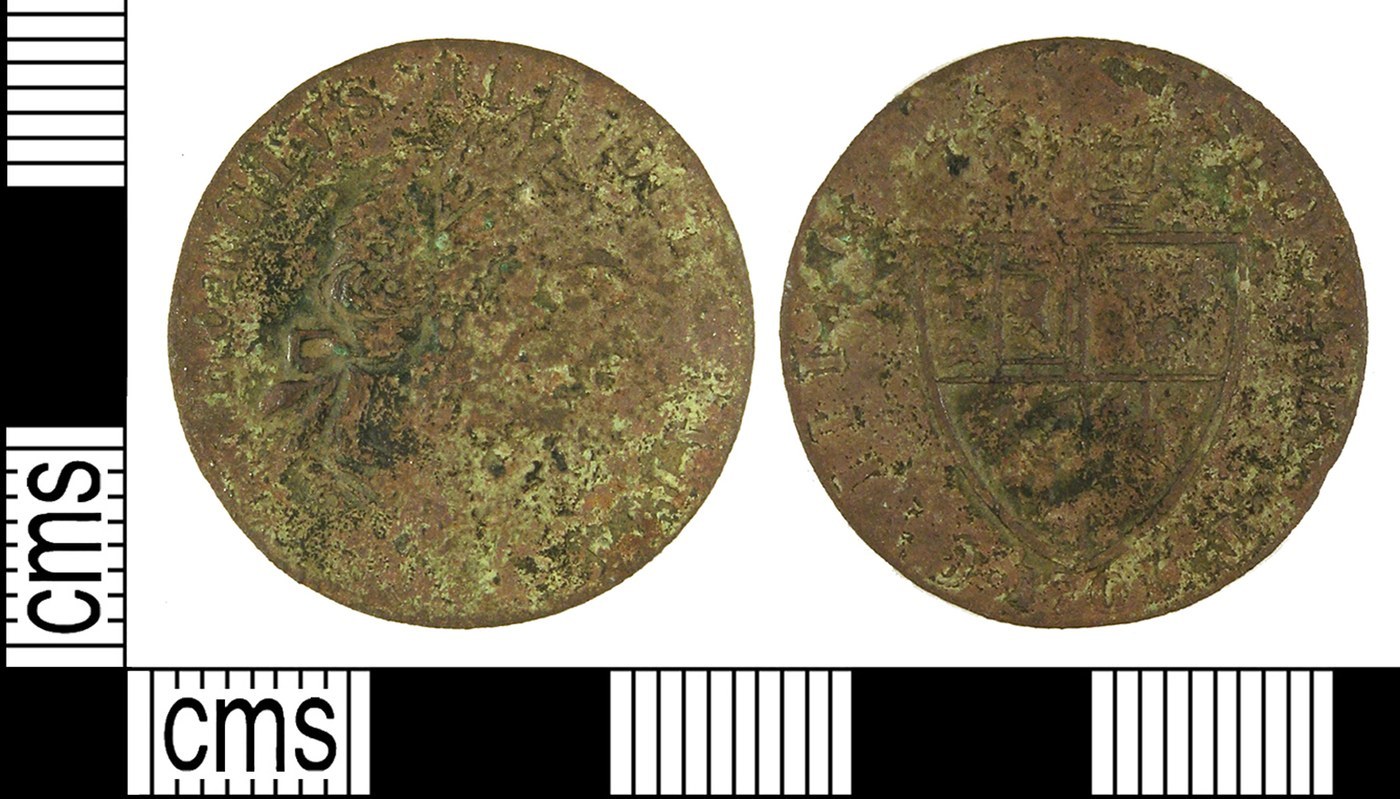
Spade Guinea Token
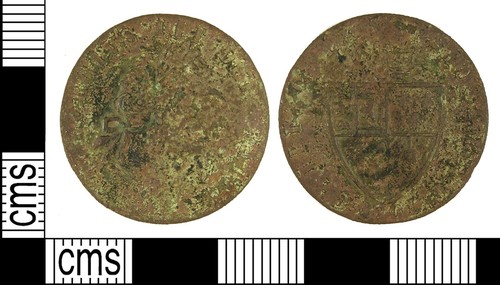
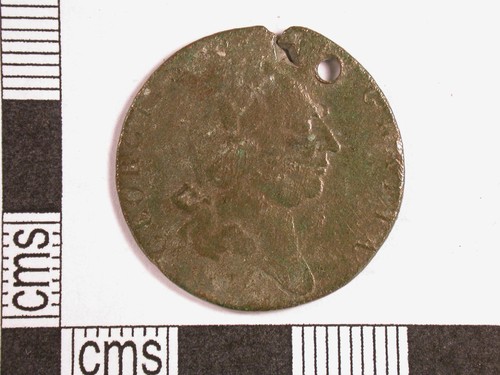
A base-metal imitation of the George III spade guinea, made as a gaming counter or advertising token, with a male profile obverse and a spade-shaped shield reverse.
- Country
- United Kingdom
- Denomination
- Guinea
- Metal
- Copper
Got a coin like this?
Identify any coin from a photo, free.
Overview
This is a base-metal token modelled on the British spade guinea, the gold guinea of George III whose reverse carried a distinctive spade-shaped heraldic shield. The photographed piece follows that familiar design — a male profile in period dress on the obverse and a shield with heraldry on the reverse — but it is a copper or brass imitation rather than a struck gold coin. Pieces like this were never legal tender.
Tokens of this kind were produced in large numbers as gaming counters, card-table markers, and later as advertising or novelty pieces. They copy the look of the popular spade guinea closely enough to be mistaken for it at a glance, which is exactly why the design was chosen, but they are lighter, made of base metal, and usually carry altered or invented legends rather than a genuine royal inscription.
Because the type imitates a real coin, correct identification rests on recognising it as a token: the metal, the weight, and the wording around the portrait and shield are what separate it from the gold original it imitates.
History & Background
The genuine spade guinea was a gold coin of King George III, issued in the late eighteenth century, and took its nickname from the pointed, spade-like shape of the arms on its reverse. It became one of the most recognisable British coins of its era, and its design lived on in the popular imagination long after the guinea itself was replaced.
That familiarity made the spade guinea a natural model for base-metal imitations. Brass and copper copies were produced as gaming counters for card games and as counters used in place of money at the table, as well as for advertising, souvenirs, and toy money. Rather than reproduce the royal legend exactly, many of these tokens carry playful or commercial inscriptions, or blundered versions of the original wording, which openly mark them as imitations.
Such counters and tokens were made over a long span and in many varieties, so the type as a whole spans the early modern period and beyond rather than a single year. They survive today in quantity and are collected as a distinct class of imitation and token, separate from the gold coin that inspired them.
How to Identify
The obverse shows a male head in profile with period dress, imitating the laureate portrait of George III used on the spade guinea. On a token the surrounding legend is often altered, abbreviated, invented, or replaced with an advertising or novelty inscription, so the wording should be read carefully rather than assumed to match the genuine coin.
The reverse carries the characteristic spade-shaped shield with heraldic arms, the feature that gives the type its name. Again the details and any legend may differ from the gold original, and some pieces add slogans, a maker's name, or nonsense lettering that confirm the piece is a token.
Metal and weight are decisive. This is a copper or brass piece, yellow to reddish or brown in tone and comparatively light, whereas the coin it imitates was struck in gold and is heavier and denser. Testing the metal, weighing the piece, and reading the legends together will distinguish a base-metal token from a genuine gold guinea.
Value & Collectibility
As a base-metal imitation, a spade guinea token is worth far less than the gold coin it copies. Common brass and copper counters typically trade for modest sums, with value driven by condition, the appeal of the legend or advertisement, and the specific variety rather than by any precious-metal content.
More desirable examples — well-preserved pieces, unusual or datable advertising inscriptions, or scarcer varieties — can bring more from collectors of tokens and gaming counters, but these remain inexpensive relative to genuine guineas. There is no bullion premium, since the metal is copper or brass rather than gold.
The main practical caution is not to overpay for a token in the belief that it is a gold coin. Because the design deliberately mimics the spade guinea, any piece being offered as genuine gold should be weighed, tested, and examined by a dealer before purchase; treat any single figure as broad context and compare recent sales of similar tokens.
Frequently asked questions
Is this a real gold guinea?
No. It is a base-metal token in copper or brass that imitates the George III spade guinea. It was made as a gaming counter or advertising piece, was never legal tender, and contains no gold.
Why is it called a spade guinea?
The name comes from the spade-like shape of the heraldic shield on the reverse of the genuine George III gold guinea. Tokens copy that shield, so they borrow the same nickname.
What was it used for?
Pieces like this served as gaming and card-table counters, and as advertising, souvenir, or novelty tokens. They stood in for money at play or promoted a business rather than circulating as coinage.
How can I tell it from the gold coin?
Check the metal and weight and read the legends. The token is light copper or brass, while the genuine guinea is heavier gold, and tokens often carry altered, invented, or advertising inscriptions instead of the true royal legend.
Is it valuable?
Generally it is inexpensive, since it is base metal with no gold content. Value depends on condition, variety, and the interest of any advertisement or legend, and remains well below that of a genuine spade guinea.
Spade Guinea Token guides
In-depth guides for identifying, valuing, and collecting Spade Guinea Token.