
How to Identify the Spade Guinea Token
A collector's guide to telling a base-metal spade guinea token from the gold coin it imitates — using metal, weight, legends, and the spade-shaped shield.
Read the full Spade Guinea Token encyclopedia entry →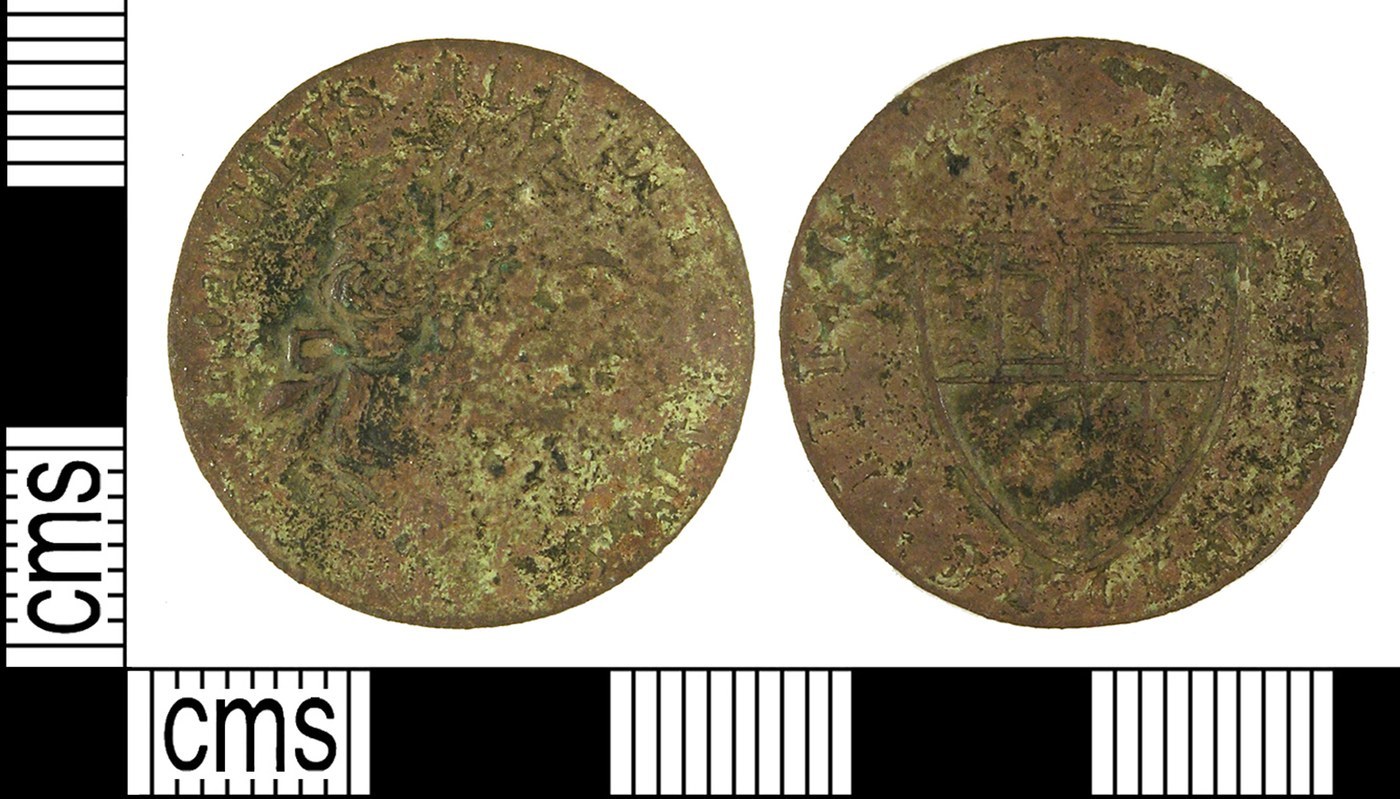
Start by recognising the type: a male profile in period dress on one side and a spade-shaped heraldic shield on the other, copying the George III spade guinea. Seeing this design is the first clue, but on its own it does not prove the piece is gold — the same design was widely reproduced in base metal, so the goal of identification is to decide whether you are holding the coin or a token that imitates it.
Read the legends closely on both sides. A genuine guinea carries a specific royal Latin legend and titles, whereas tokens frequently show altered spelling, abbreviated or invented wording, advertising slogans, a maker's or shop name, or plain nonsense lettering. Any departure from the correct royal inscription, or any commercial or novelty text, marks the piece as a token rather than a coin.
Judge the metal and weight, which are the most reliable tests. This is a copper or brass piece: yellowish, reddish, or brown, and noticeably lighter than gold. A genuine gold guinea is dense and heavy for its size and has the warm colour of gold. Weighing the piece and comparing it against the published weight of the coin it imitates, together with a careful look at the colour and surfaces, will usually settle the question quickly.
Beware the deliberate look-alike problem. The whole point of these tokens was to resemble the spade guinea, so a worn or gilded example can fool a casual eye. Gilt-brass counters in particular can look convincingly golden until weighed or tested. Do not rely on appearance alone, and treat any "gold guinea" offered cheaply, or lacking the correct weight and legend, with caution.
Authenticate before assuming value. If there is any suggestion the piece is genuine gold, have it weighed and metal-tested and, ideally, examined by a coin dealer; specific-gravity or professional testing distinguishes gold from gilt base metal without damage. For the token itself, note the exact legends and any advertisement, since these identify the variety and drive what modest value it has.
Frequently asked questions
Which side shows the spade shield?
The reverse carries the spade-shaped heraldic shield that gives the type its name. The obverse shows the male profile in period dress copied from the George III portrait.
What is the quickest way to know it is a token, not gold?
Weigh it and check the metal. A light copper or brass piece is a token; a heavy, dense, gold-coloured piece may be genuine and should be professionally tested. Odd or advertising legends also confirm a token.
Can a token be gilded to look like gold?
Yes. Some brass counters were gilt to imitate gold and can look convincing when worn. Gilding wears through at high points and the piece stays light, so weight and metal testing remain the reliable checks.
Where do the odd inscriptions come from?
Token makers replaced the royal legend with abbreviated, invented, advertising, or novelty wording. These inscriptions both mark the piece as an imitation and help identify its specific variety.