
How to Identify the Guinea Counter (Imitation)
A collector's guide to telling a brass or bronze guinea counter from a real George III guinea, using metal, weight, legends, and the shield reverse.
Read the full Guinea Counter (Imitation) encyclopedia entry →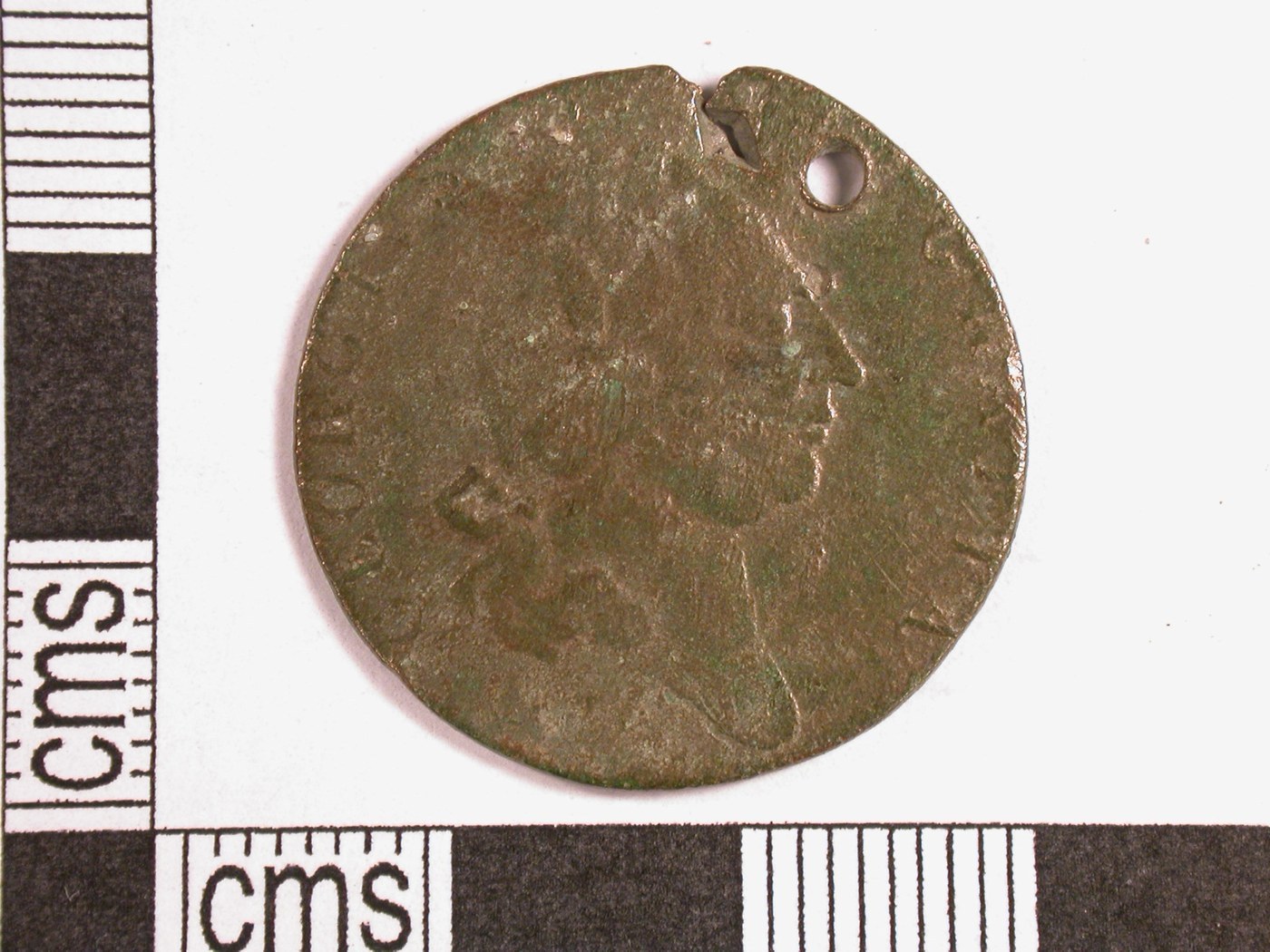
Start with the metal and weight, because this is what most quickly separates a counter from a genuine guinea. A guinea counter is struck in base metal, brass or bronze, and reads yellow-brown or coppery rather than the rich yellow of gold; it is also typically lighter than a true guinea of the same diameter. If a piece the size of a guinea feels light and does not have the colour and heft of gold, it is almost certainly a counter or other imitation.
Read the legends carefully, letter by letter, on both sides. This is the decisive test. A genuine guinea carries the true royal Latin legend naming the king; a counter usually does not. Instead its lettering may give a maker's name, a motto or slogan, or an explicit statement that the piece is a token, counter, or 'in memory of the good old days' style novelty rather than money. Any wording that is not the correct royal legend, or that openly describes the piece as a token, confirms an imitation.
Examine the obverse profile and the reverse shield as design clues. The counter copies the laureate male head of George III, here faint, and the crowned or spade-shaped shield of arms on the reverse. On imitations the portrait and shield are often slightly simplified, softened, or stylised compared with the coin, and the overall engraving can be cruder. Note the shape of the shield: a spade-form shield points to a copy of the spade guinea specifically.
Measure the diameter and compare it to guinea specifications. Counters were made close to guinea size to be convincing, so a matching diameter alone does not prove authenticity; it must be read together with metal, weight, and legend. Do not rely on size or design resemblance by itself, since that is precisely what the counter was made to imitate.
Rule out other look-alikes and take care with authentication. Similar brass and bronze pieces include spade guinea gaming counters, advertising and card counters, and later novelty tokens, some of which are very close in appearance. Because a base-metal piece can be gilded to fool the eye, be cautious of any counter that has been plated or polished to resemble gold. For a genuine guinea the metal must actually be gold, confirmed by weight and, if needed, by a specialist; if the metal, weight, or legend does not match, treat the piece as an imitation counter and, for anything unusual, seek an opinion from a dealer in British coins or tokens.
Frequently asked questions
What is the quickest way to spot a guinea counter?
Check the metal and weight. A counter is base metal, brass or bronze, and is lighter than a gold guinea of the same size. If it lacks the colour and heft of gold, it is an imitation, not a coin.
What should the lettering say on a real guinea versus a counter?
A genuine guinea carries the correct royal Latin legend naming the king. A counter usually shows a motto, a maker's name, or wording stating it is a token, so any non-royal or 'token' lettering points to an imitation.
Does matching the size of a guinea mean it is real?
No. Counters were deliberately made close to guinea size to be convincing. Size must be read together with metal, weight, and legend; on its own it proves nothing about authenticity.
Could a counter be mistaken for gold?
Yes, especially if it has been gilded or polished. Confirm the metal by weight and colour, and for any piece that seems to be gold rather than base metal, have it checked by a specialist before assuming it is a genuine guinea.