
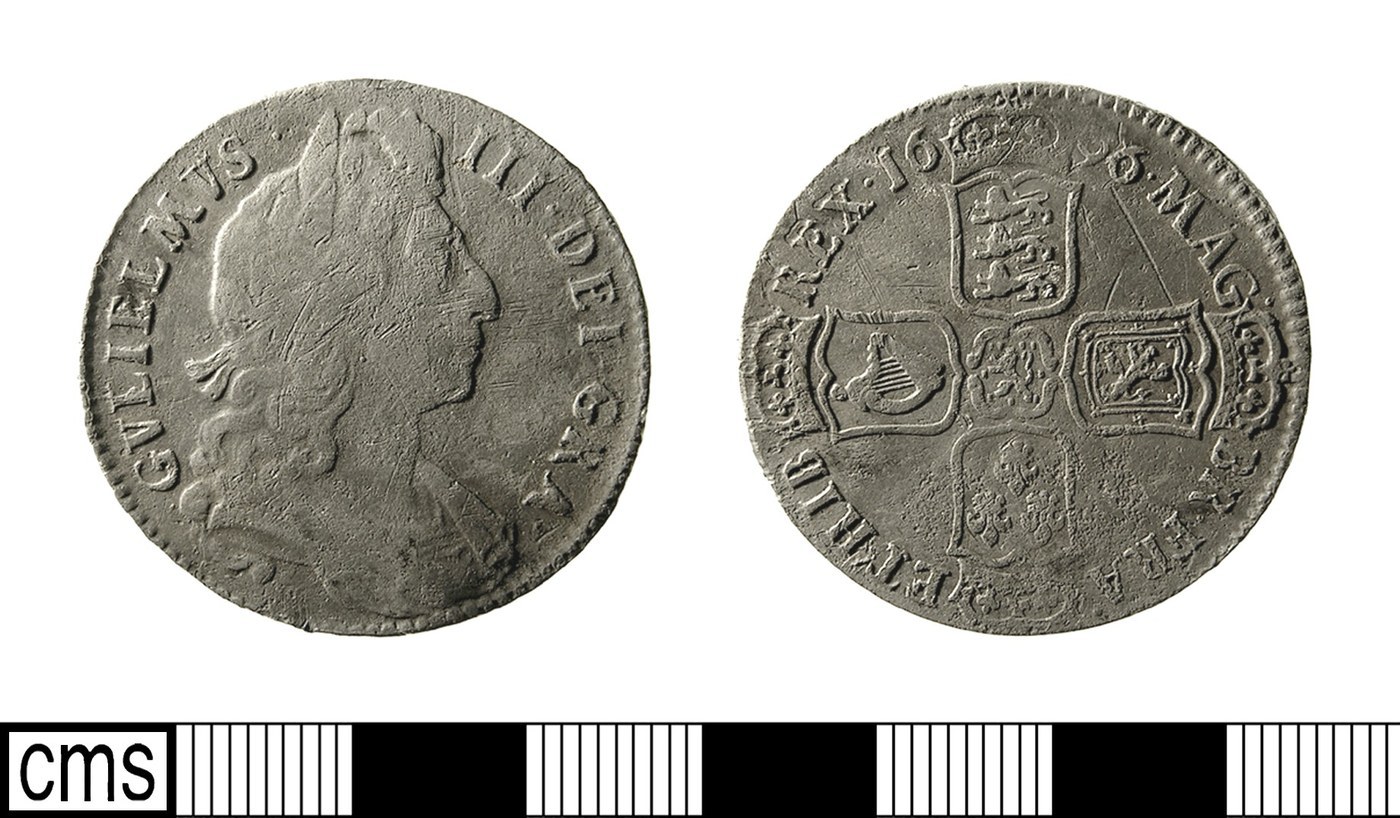
Halfcrown of William III
A silver two-shilling-and-sixpence coin of William III showing his laureate profile facing right and crowned cruciform shields of arms, dated 1696.
- Country
- Great Britain
- Denomination
- Halfcrown
- Metal
- Silver
Got a coin like this?
Identify any coin from a photo, free.
Overview
The Halfcrown of William III is a large milled silver coin worth two shillings and sixpence, or half of a crown. The photographed example is dated 1696 and shows the king's laureate, draped bust facing right on the obverse, with a Latin royal legend, and crowned shields of arms arranged in cruciform on the reverse.
As a milled coin it was struck by machinery rather than by hand, giving it a rounder flan and more uniform strike than the hammered coins that preceded it. The halfcrown was among the higher silver denominations in circulation, sitting below the crown and above the shilling and sixpence.
The 1696 date places this coin firmly within the Great Recoinage of that year, a major national effort to replace the worn and clipped hammered silver then circulating. Halfcrowns of this issue are a familiar and much-studied type among collectors of late seventeenth-century British silver.
History & Background
William III reigned from 1689 to 1702, ruling jointly with his wife Mary II until her death in 1694 and alone thereafter. The 1696 halfcrown belongs to the sole reign, after Mary's death, when coins bore only William's portrait.
The year 1696 was dominated by the Great Recoinage, a sweeping government operation to withdraw the debased, clipped and worn hammered silver that had undermined confidence in the currency. New milled silver was produced in enormous quantity, and to speed the work temporary branch mints were opened in provincial cities including Bristol, Chester, Exeter, Norwich and York, alongside the Tower Mint in London.
Because so much silver was struck in this single push, halfcrowns dated 1696 survive in reasonable numbers today, though provincial-mint pieces and finer grades are scarcer. The type is a tangible product of one of the most important currency reforms in English monetary history.
How to Identify
The obverse shows William III as a laureate, draped bust facing right, surrounded by a Latin legend naming him king — typically read as GVLIELMVS III DEI GRA (William III, by the grace of God). The right-facing laureate head is the primary diagnostic and distinguishes this coin from the conjoined busts of the earlier William and Mary joint coinage.
The reverse carries four crowned shields of arms arranged in a cross, bearing the arms of England, Scotland, France and Ireland, with the date 1696 in the legend and a small badge at the center of the cross. A mint-mark letter may appear below the bust on the obverse (for example B, C, E, N or Y) indicating a provincial branch mint; London-struck coins carry no such letter.
The coin is a substantial piece of sterling silver, larger than a shilling and smaller than a crown, with a milled or lettered edge as befits a machine-struck issue. The combination of the right-facing laureate bust, the cruciform crowned shields and the 1696 date confirms the type.
Value & Collectibility
As a widely struck product of the 1696 Great Recoinage, the William III halfcrown is one of the more available large silver coins of its era, and worn examples are affordable relative to rarer Stuart silver. Value is driven mainly by grade, eye appeal, the presence and location of a provincial mint mark, and any scarcer die or bust variety.
Heavily circulated London coins sit at the modest end of the market, while sharp, well-preserved pieces and desirable branch-mint issues command significantly more. Clipping, tooling, cleaning or damage — common on coins of this age — reduce value, and an unblemished original surface is prized.
Anyone valuing a specific coin should compare recent auction and dealer records for the matching mint mark and grade, and treat any single figure as broad context rather than a firm price. Because these coins vary so much by condition and variety, examination in hand is important.
Frequently asked questions
What is a halfcrown of William III worth in shillings?
A halfcrown was worth two shillings and sixpence, or half of a crown. It was one of the larger silver denominations in everyday circulation during William III's reign.
Why are so many William III halfcrowns dated 1696?
1696 was the year of the Great Recoinage, when the government struck vast quantities of new milled silver to replace worn and clipped hammered coin. Halfcrowns were produced in large numbers that year.
What do the letters under the bust mean?
A letter such as B, C, E, N or Y below the bust marks a provincial branch mint — Bristol, Chester, Exeter, Norwich or York — opened to help with the recoinage. Coins with no letter were struck at the Tower Mint in London.
Is a William III halfcrown made of real silver?
Yes. It was struck in sterling silver, the standard for British coinage of the period, and is a substantial coin larger than a shilling and smaller than a crown.
Are 1696 halfcrowns rare?
Common London examples in worn condition are fairly available thanks to the huge recoinage output. High grades and certain provincial-mint or variety coins are considerably scarcer and more valuable.
Halfcrown of William III guides
In-depth guides for identifying, valuing, and collecting Halfcrown of William III.
Other coins you may enjoy
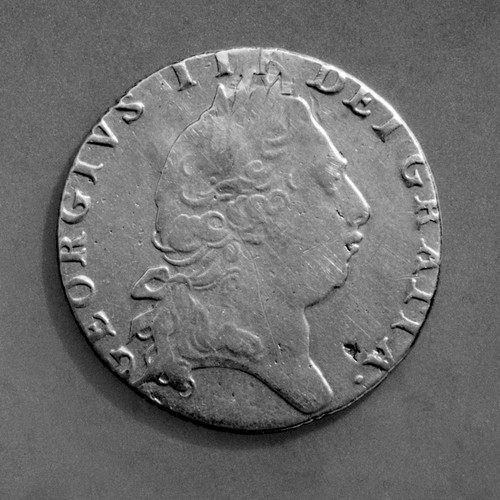
Spade Guinea
1760-1820
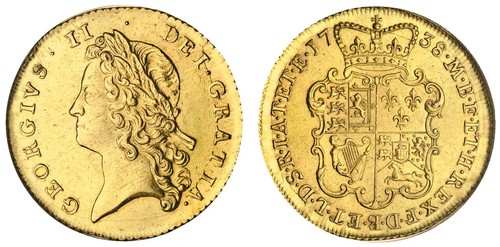
Two Guineas of George II
1738–1753
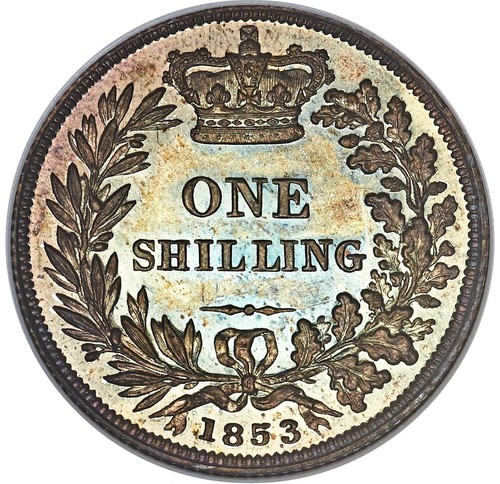
Shilling of Victoria
1838-1901
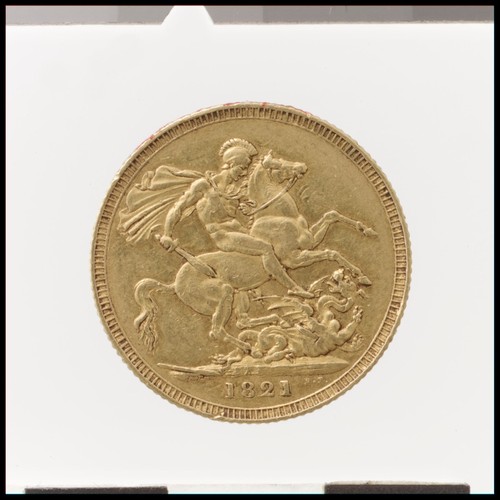
Sovereign of George IV
1821-1830
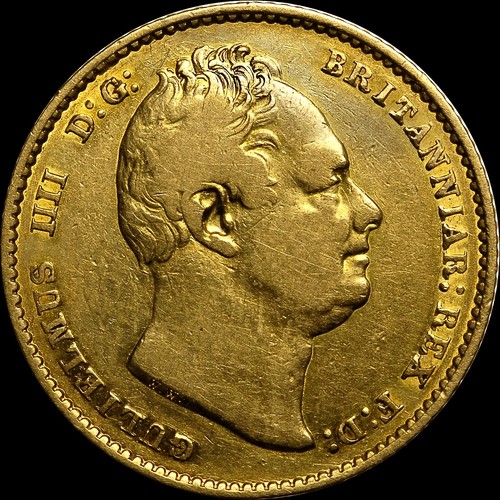
Sovereign of William IV
1831–1837
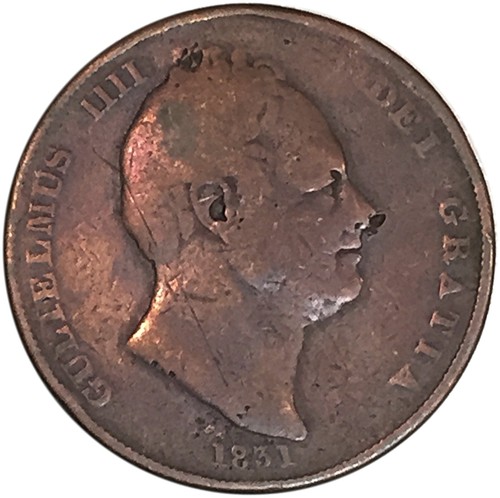
Penny of William IV
1831-1837
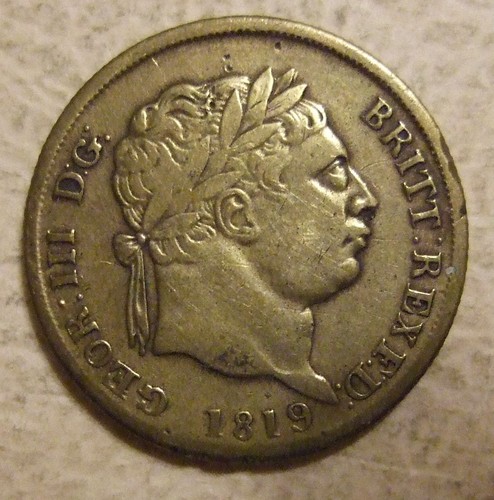
Shilling of George III
1816-1820
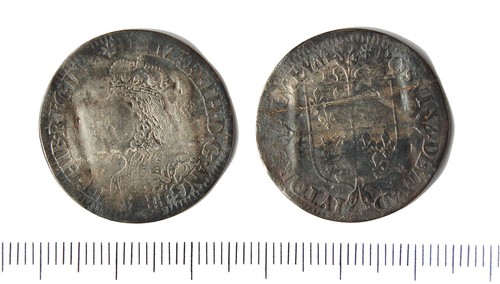
Milled Sixpence of Elizabeth I
1561-1571
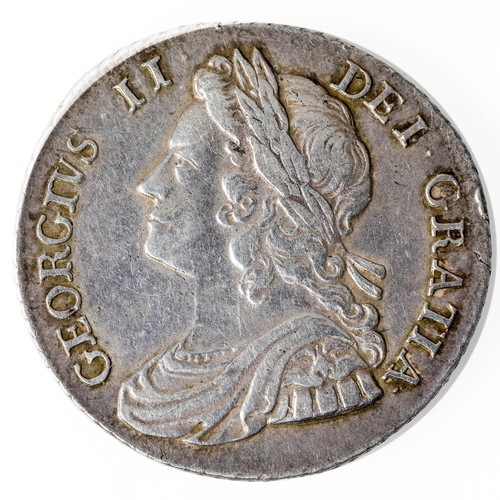
Shilling of George II
1727-1758
Shilling of Anne
1702-1714
Charles II Twopence
1660-1685
Charles II Half Crown
1660–1685