
How to Identify the Halfcrown of William III
A collector's guide to recognizing the William III silver halfcrown by its right-facing laureate bust, cruciform shields, mint marks and 1696 date.
Read the full Halfcrown of William III encyclopedia entry →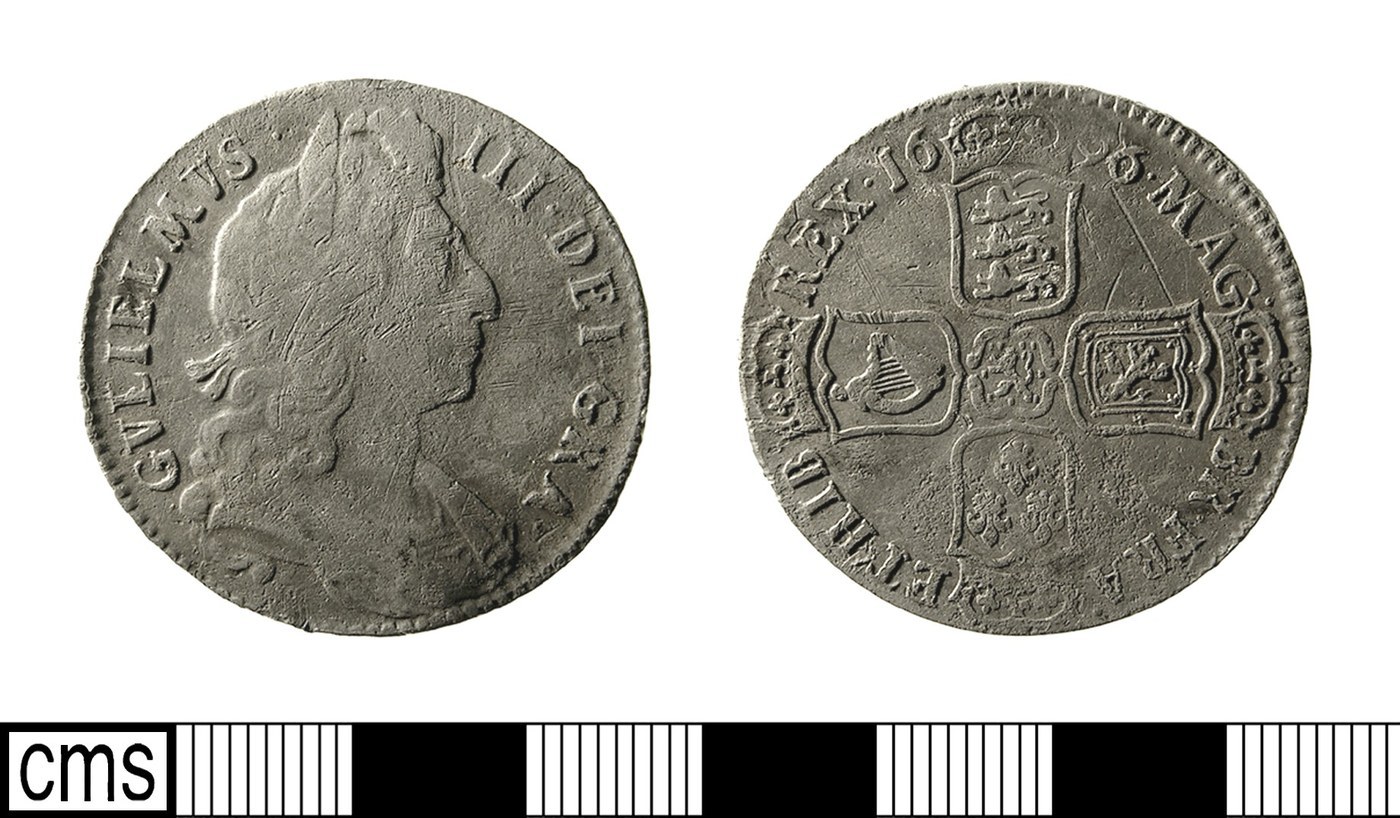
Begin with the portrait. The obverse of a William III halfcrown shows the king as a laureate, draped bust facing right, encircled by a Latin legend beginning GVLIELMVS III DEI GRA. A single right-facing head is important: it separates this sole-reign coinage from the earlier William and Mary joint issues, which show two conjoined busts. Confirm the profile and legend before going further.
Read the reverse. Look for four crowned shields arranged in a cross, carrying the arms of England, Scotland, France and Ireland, with a small central badge and the date — 1696 on the photographed example — worked into the surrounding legend. This cruciform-shield layout is the standard reverse of the type and should be read together with the obverse to confirm attribution.
Check for a mint mark and note the fabric. Examine the space below the bust for a single letter: B (Bristol), C (Chester), E (Exeter), N (Norwich) or Y (York) marks a provincial branch mint, while London coins have no letter. The coin should be sterling silver, larger than a shilling and smaller than a crown, with the round flan and lettered or milled edge of a machine-struck piece; weigh and measure it against published specifications for the denomination.
Separate it from look-alikes. Do not confuse the halfcrown with the larger crown or the smaller shilling and sixpence, which share similar designs but differ in size and weight, and distinguish it from William and Mary halfcrowns by the single bust. The date and bust style also matter, as William III halfcrowns appear with more than one bust and shield variety across the reign.
Authenticate with care. Coins of this age are frequently clipped, worn, cleaned or tooled, and cast copies and later fakes exist. Watch for casting seams, bubbles, unnaturally smooth fields, incorrect weight or diameter, and lettering or edge detail that looks soft or wrong. For any coin of meaningful value, seek an opinion from a specialist in British milled silver or a reputable grading service before purchase.
Frequently asked questions
Which side is the obverse?
The side with the right-facing laureate bust of William III and the GVLIELMVS III DEI GRA legend is the obverse. The crowned cruciform shields with the 1696 date form the reverse.
How do I tell it from a William and Mary halfcrown?
A William III halfcrown shows a single right-facing bust of the king alone. William and Mary coins show two conjoined busts facing right, reflecting their joint reign before Mary's death in 1694.
Where is the mint mark and why does it matter?
Look for a single letter below the bust. B, C, E, N or Y indicates a Bristol, Chester, Exeter, Norwich or York branch mint; no letter means London. Provincial-mint coins are often scarcer and can be worth more.
How can I spot a fake or altered coin?
Check weight and diameter against published figures and look for casting seams, bubbles, smoothed fields, or soft lettering and edges. Clipping and harsh cleaning also devalue genuine coins; specialist authentication is advised for valuable pieces.