Irish Gun Money Sixpence
A base-metal emergency sixpence struck for James II in Ireland during the Williamite War, its brass alloy cast from melted guns, bells, and scrap.
- Country
- Ireland
- Denomination
- Sixpence
- Metal
- Copper alloy
Got a coin like this?
Identify any coin from a photo, free.
Overview
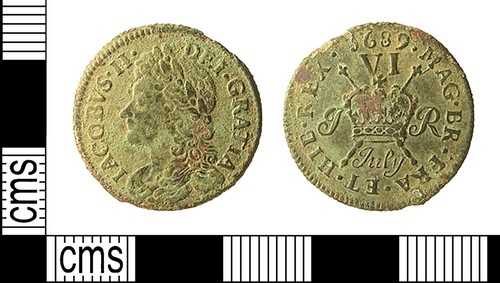
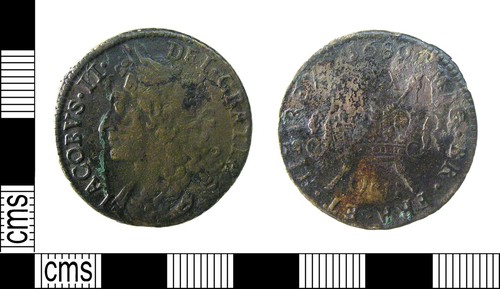
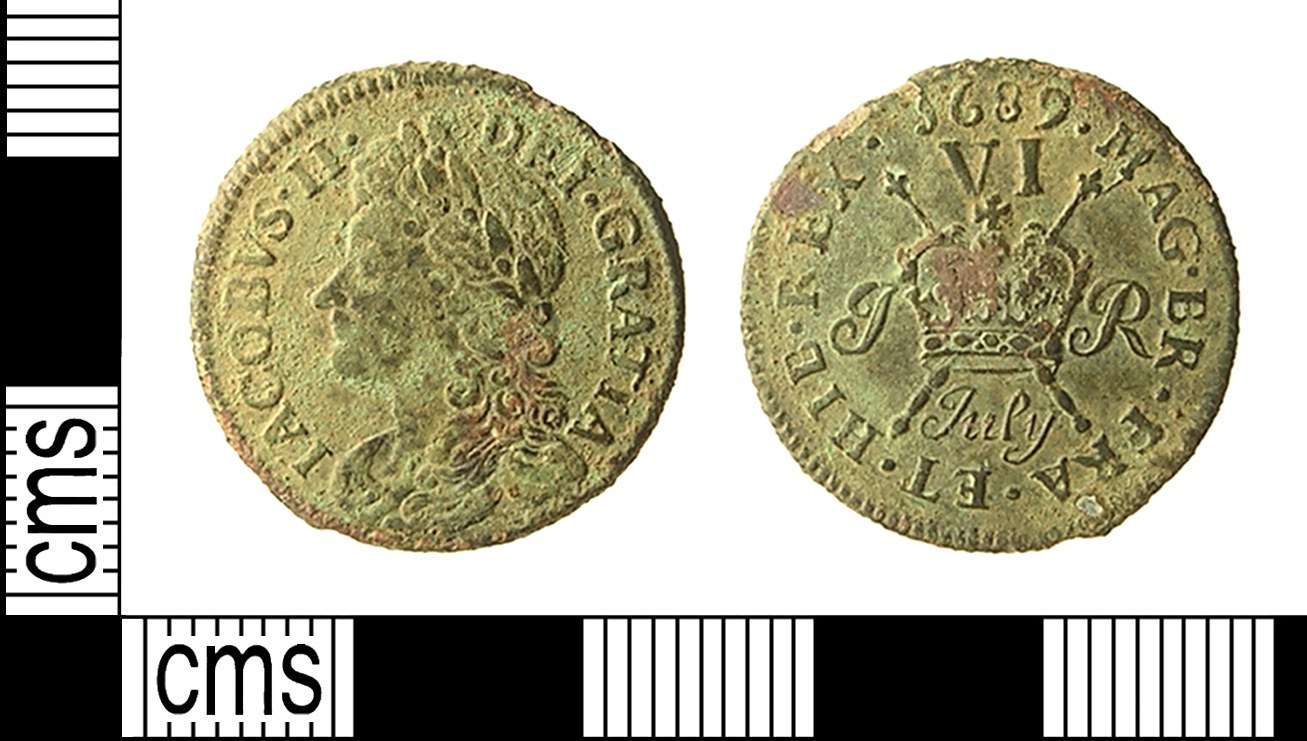
The Irish Gun Money Sixpence is a base-metal emergency coin issued in the name of James II during his campaign to regain the throne in Ireland (1689-1691). The observed example, dated 1689, carries a profile bust of James II on the obverse and a crown above a heraldic shield of arms on the reverse. It belongs to the celebrated series known as "gun money," so called because the copper and brass alloy was said to have been reclaimed from old cannon, church bells, cooking pots, and other scrap metal melted down when silver ran short.
As the smallest of the main gun money denominations, the sixpence was struck in a yellowish copper alloy rather than silver, and it was intended only as a wartime substitute. James promised that each piece would be exchanged for its face value in good silver once he was restored to power, a promise that was never kept after his defeat.
Many gun money coins are unusual in bearing not just a year but the month of striking, a feature tied to the plan for their eventual redemption. The result is one of the most historically evocative issues of the British Isles, a token coinage born directly out of the War of the Two Kings.
History & Background
James II lost the English and Scottish thrones in the Glorious Revolution of 1688 and fled to France, then landed in Ireland in 1689 with French backing to fight William III for his crowns. Cut off from the silver and the mints of England, his Irish administration urgently needed money to pay and supply its army. The answer was gun money: an emergency coinage struck at Dublin, and for a time at Limerick, from whatever base metal could be gathered and melted down.
The coinage was explicitly a promise rather than true value. The pieces circulated at face value on the understanding that the crown would redeem them in silver once James triumphed. To manage that redemption, and to allow production to be scheduled, many denominations were marked with the month as well as the year, so gun money of 1689 and 1690 can often be dated to a particular month of striking.
James was defeated at the Battle of the Boyne in 1690 and the Jacobite cause in Ireland collapsed soon after. The victorious Williamite government demonetised gun money, revaluing the coins down to a tiny fraction of their stated worth, so the promised silver redemption never came. What survives today is prized precisely because it is a tangible relic of that failed campaign.
How to Identify
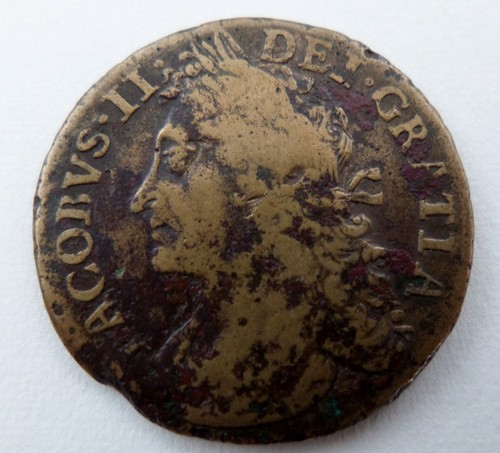
Start with the obverse, which shows a profile bust of James II, typically laureate and draped, facing left, surrounded by a Latin legend naming him as king (a contracted form of IACOBVS II DEI GRATIA). The reverse of the observed coin shows a large royal crown above a heraldic shield bearing the arms used on the series, with the surrounding legend and a mark of value. The denomination is indicated by a numeral, VI for the sixpence, distinguishing it from the shilling (XII) and the larger crown and half crown.
The date 1689 appears on the coin, and on many gun money pieces a month abbreviation is placed near the date or below the bust, reflecting the scheduled striking of the series. The fabric is the surest clue to the type: gun money is struck on base copper alloy, often yellowish or brassy, not on silver, and worn or corroded pieces frequently show a rough, slightly porous surface consistent with the recycled scrap metal used.
Because the sixpence is a small denomination, confirm the size and weight are appropriate for a sixpence rather than the larger shilling or half crown. The combination of the James II bust, the crown-and-shield reverse, the VI value mark, an Irish gun money date, and the distinctive base-metal alloy together identify the coin; matching the exact month and die variety normally relies on a specialist reference to the series.
Value & Collectibility
Value depends heavily on condition, because gun money was struck quickly in soft base metal and then circulated hard, so many survivors are worn, corroded, or weakly struck. A clean, evenly struck sixpence with a clear James II portrait, a legible crown-and-shield reverse, and a readable date and month is worth considerably more than a rough, pitted, or partly illegible example of the same type.
Gun money is a widely collected and historically important series, and demand is steady among collectors of Irish, Stuart, and emergency coinage. Common dates in low grades remain an affordable way to own a genuine piece of the War of the Two Kings, while sharply detailed coins, scarcer months, and rarer die varieties command a premium.
Because the alloy is prone to corrosion and because month varieties affect desirability, it is worth confirming the exact type and condition against published references or with a specialist dealer before paying a premium. As always, eye appeal, surface quality, and legibility matter as much as technical grade.
Frequently asked questions
Why is it called "gun money"?
The name comes from the tradition that the base metal was reclaimed from old cannon, along with bells, cooking pots, and other scrap, melted down when James II's Irish administration ran short of silver. The coins are emergency money made from whatever metal was available.
Is the sixpence made of silver?
No. Despite standing in for a silver denomination, the gun money sixpence is struck in a base copper alloy, often yellowish or brassy in appearance. It was meant to be exchanged for real silver later, a promise that was never fulfilled.
Why do some gun money coins show a month?
Many gun money pieces carry the month of striking as well as the year. This was tied to the plan to redeem the coins in silver by date once James was restored, and it lets collectors assign many coins to a specific month of 1689 or 1690.
What happened to the promise to redeem gun money in silver?
It was never honoured. After James II was defeated at the Boyne in 1690, the Williamite government demonetised gun money and revalued it to a tiny fraction of its face value, so holders were left with base-metal tokens rather than silver.
Irish Gun Money Sixpence guides
In-depth guides for identifying, valuing, and collecting Irish Gun Money Sixpence.