Irish Gun Money Halfcrown (30 Pence)
Emergency base-metal halfcrown struck for James II in Ireland during 1689–1690, valued at 30 pence and carrying his portrait and, on many issues, the month of striking.
- Country
- Ireland
- Denomination
- 30 Pence
- Metal
- Copper alloy
Got a coin like this?
Identify any coin from a photo, free.
Overview
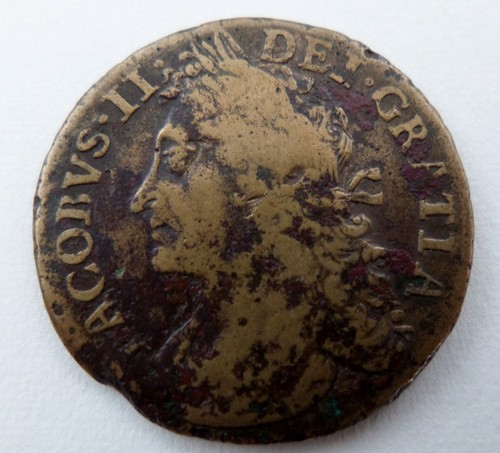
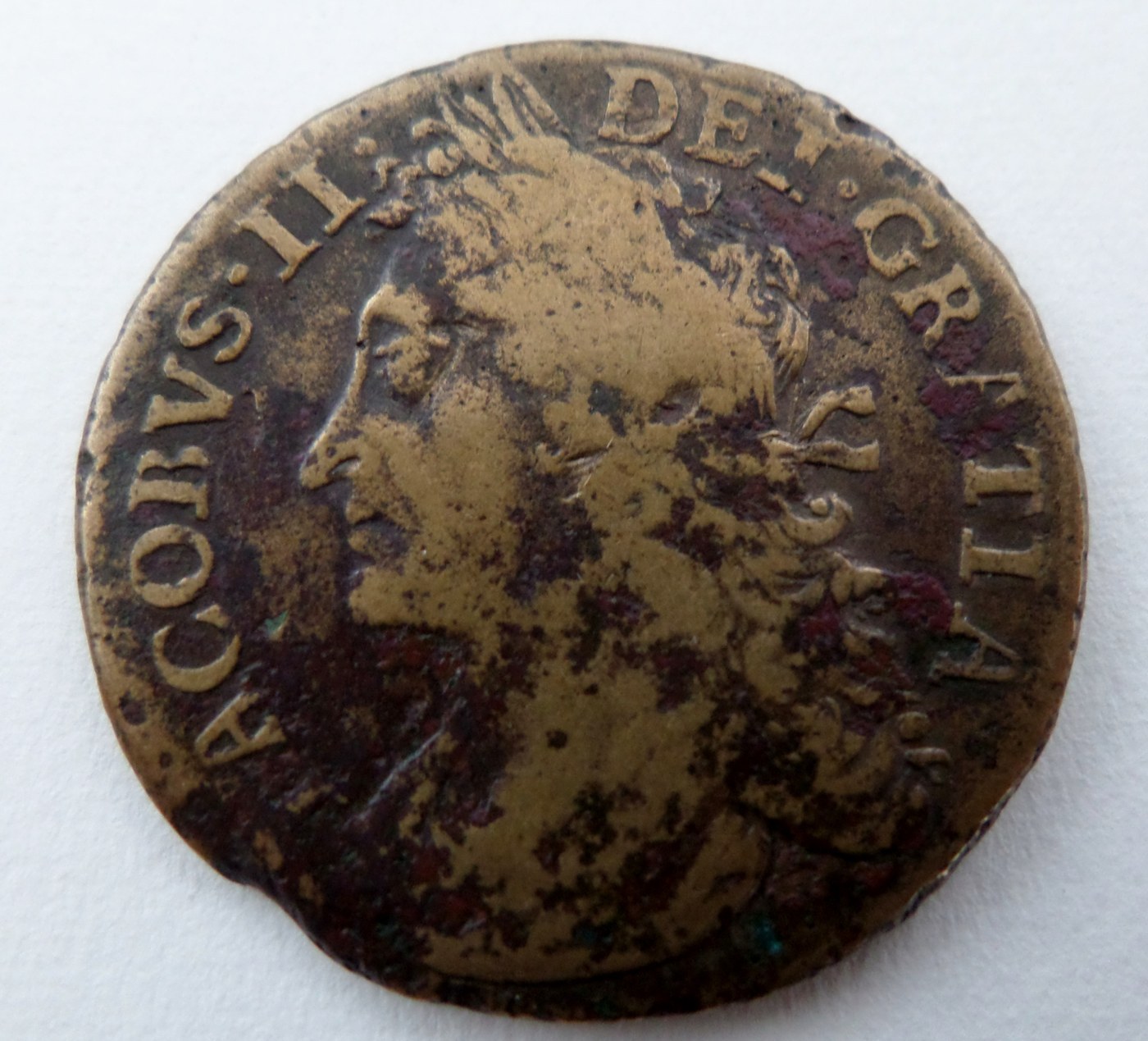
The Irish Gun Money Halfcrown is an emergency coin struck for the exiled king James II in Ireland during the Williamite War of 1689–1690. Because it was valued at two shillings and sixpence — thirty pence — it is often catalogued by that denomination. The photographed example is dated 1689 and shows the king's laureate profile within an encircling Latin legend, bordered by edge beading.
"Gun money" refers to the base metal from which the coinage was made: with silver and gold unavailable to the Jacobite cause, the coins were struck from copper alloy said to have been drawn from melted-down brass and bronze items such as old cannon, bells, and domestic metalware. The halfcrown was the largest of the Gun Money denominations, above the shilling and sixpence.
The issue is unusual among historical coins in that many pieces carry not just a year but the month of striking, a feature intended to allow orderly redemption for good money once James recovered his throne — a restoration that never came.
History & Background
James II lost the English throne in the Glorious Revolution of 1688 and came to Ireland in 1689 seeking to regain his kingdoms with French and Irish support. Short of precious metal to pay his army, his administration authorised a token coinage struck in base copper alloy, with the promise that the coins would later be exchanged for silver at face value once the war was won.
These pieces were produced in Dublin (and for a period Limerick) from 1689 into 1690, in denominations including the sixpence, shilling, and halfcrown. To manage the eventual redemption, dies were often engraved with the month as well as the year, so coins bearing dates such as 1689 and running through the months into 1690 are known. Larger and smaller versions of the halfcrown were produced as metal grew scarcer.
James's cause collapsed after his defeat at the Battle of the Boyne in 1690 and the subsequent Williamite victory. The promised silver redemption never happened, so the coins circulated at a fraction of their nominal value or were demonetised. Surviving Gun Money is prized today as a tangible relic of this brief, dramatic episode in Irish and British history.
How to Identify
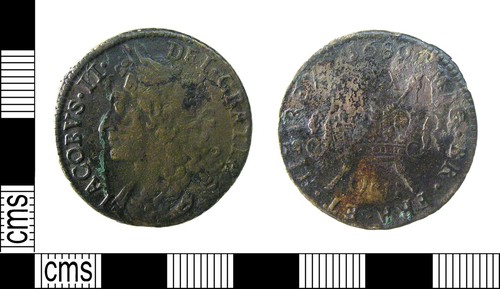
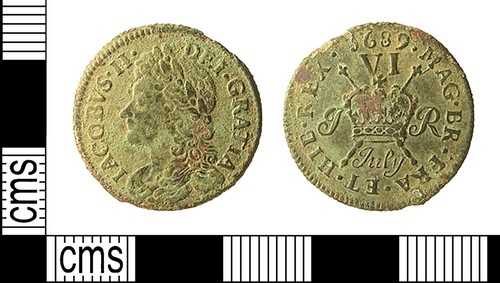
The obverse shows James II in profile, typically laureate and facing left, surrounded by a Latin royal legend and enclosed by a beaded border, exactly as seen on the photographed 1689 piece. The reverse — not visible in this view — normally carries a crown above crossed sceptres, with the denomination expressed as a Roman-numeral value and, on many issues, the month and year of striking.
The defining diagnostic of Gun Money is its base-metal fabric: it is a copper alloy coin, not silver, despite standing in for a silver halfcrown. This, together with the crowned crossed-sceptre reverse and the month-and-year dating, separates Gun Money from ordinary contemporary silver coinage. The halfcrown is the largest module of the series, so size helps distinguish it from the smaller shilling and sixpence.
Collectors distinguish "large" and "small" halfcrowns, the smaller pieces struck later as metal supplies tightened. The exact month in the date, the size, and legend details are the keys to close attribution, and standard references on Irish coinage catalogue the many month-and-size combinations.
Value & Collectibility
Gun Money survives in reasonable numbers, so worn but genuine halfcrowns are among the more attainable of historically important emergency coins. Value is driven chiefly by condition, sharpness of the portrait and legend, the specific month and year, and whether the piece is a large or small halfcrown, since some month-and-size combinations are considerably scarcer than others.
Heavily worn or corroded examples — common because the alloy is prone to environmental damage — sit at the lower end, while well-detailed coins with clear dates and legends command a premium. Scarce months, overdates, and unusual varieties are actively sought by specialists and can rise well above the price of ordinary pieces.
Because values depend so heavily on grade, date, and variety, any single figure should be treated as context rather than a fixed price. Comparing a specific coin against recent auction results for the matching size, month, and year gives the most reliable guide.
Frequently asked questions
Why is it called "Gun Money"?
The name refers to the base metal used to strike it. Lacking silver and gold, James II's administration made the coins from copper alloy said to have been sourced from melted-down brass and bronze objects such as old cannon, bells, and scrap metalware.
Why does it say 30 pence for a halfcrown?
A halfcrown was worth two shillings and sixpence. Since a shilling is twelve pence, that equals thirty pence, so the coin is catalogued as the 30-pence Gun Money halfcrown.
Is this coin made of silver?
No. Despite standing in for a silver halfcrown, Gun Money is a copper alloy (base metal) emergency issue. It was meant to be redeemed for silver later, but that redemption never happened.
Why do some of these coins show a month as well as a year?
The month was engraved so the coins could be redeemed in an orderly sequence once James regained his throne. It also helps collectors distinguish the many issues struck across 1689 and 1690.
What happened to the value of Gun Money after 1690?
After James was defeated at the Battle of the Boyne, the promised silver redemption never occurred. The coins were demonetised or passed at a small fraction of their face value.
Irish Gun Money Halfcrown (30 Pence) guides
In-depth guides for identifying, valuing, and collecting Irish Gun Money Halfcrown (30 Pence).