
How to Identify the Irish Gun Money Halfcrown (30 Pence)
A collector's guide to attributing James II's base-metal Irish halfcrown by its portrait, base-metal fabric, crowned-sceptre reverse, and month-and-year dating.
Read the full Irish Gun Money Halfcrown (30 Pence) encyclopedia entry →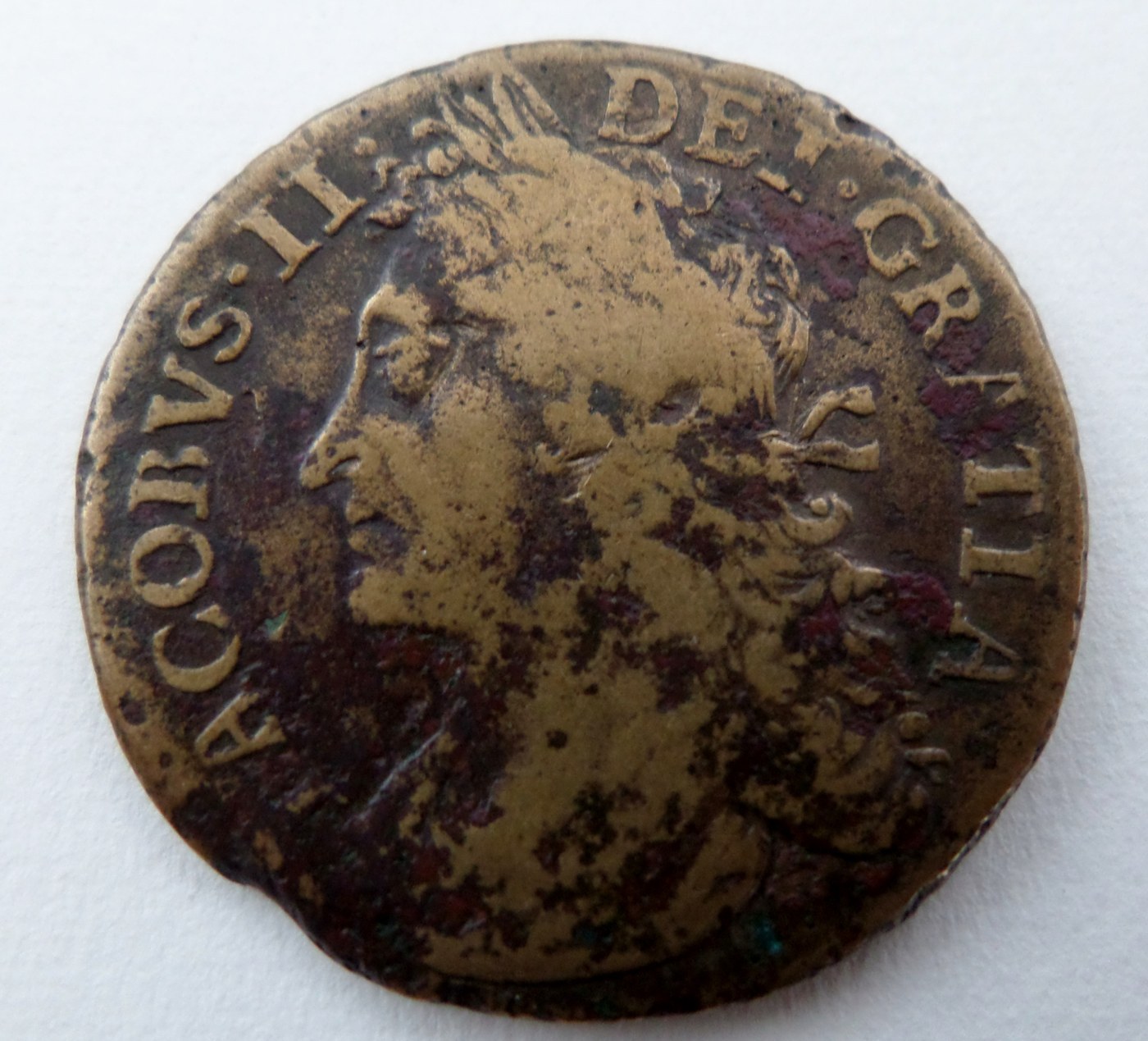
Start with the metal. Gun Money is a copper alloy coin, not silver, so a halfcrown-sized piece that is clearly base metal — often with a brassy or brown tone and, frequently, some corrosion — is the first sign you are looking at Gun Money rather than an ordinary silver halfcrown. Genuine silver coins of the period ring differently, resist corrosion, and show a grey patina.
Read the obverse. Expect James II in profile, usually laureate and facing left, inside a Latin royal legend and a beaded border, as on the 1689 example here. Confirm the king's name in the legend, since the portrait style resembles other Stuart coinage; the combination of a base-metal flan and James II's titles is what points to Gun Money.
Turn to the reverse for the clinching details. Gun Money halfcrowns typically show a crown above crossed sceptres, a Roman-numeral value, and — critically — a month alongside the year. That month-and-year dating is a hallmark of the series and rarely appears on other coins, so it is one of the strongest confirmations you can find. Note the month, as it feeds directly into cataloguing the variety.
Judge the size and module. The halfcrown is the largest Gun Money denomination, well above the shilling and sixpence, and collectors further divide it into larger and smaller halfcrowns struck as metal grew scarce. Weigh and measure the coin against published specifications for each module to place it correctly and to flag any piece that is badly underweight or altered.
Authenticate with care. Because Gun Money is popular and historically charged, cast copies and modern reproductions exist. Watch for casting seams, bubbles, unnaturally smooth fields, or soft, lifeless lettering, and be wary of pieces where the date or month appears tooled or re-engraved. For scarce months, overdates, or high-grade coins, seek an opinion from a specialist in Irish coinage or a reputable grading service before purchase.
Frequently asked questions
How do I tell a Gun Money halfcrown from a real silver halfcrown?
Check the metal and the reverse. Gun Money is base copper alloy rather than silver and usually shows a crowned crossed-sceptre reverse with a month as well as a year. Silver halfcrowns of the era are grey-patinated silver without the month dating.
What is the single most reliable diagnostic?
The month-and-year dating combined with the base-metal fabric. Very few coins carry the month of striking, so its presence on a copper-alloy, James II halfcrown strongly confirms Gun Money.
What is the difference between a large and small halfcrown?
The smaller halfcrowns were struck later, as metal became scarcer, on a reduced module. Measuring diameter and weight against published figures for each size is the way to tell them apart.
How can I spot a fake or cast copy?
Look for casting seams, surface bubbles, mushy or lifeless lettering, and any sign the date or month has been tooled. When a coin is scarce or valuable, have it examined by a specialist or grading service.