
Coin Encyclopedia
Search and identify coins from around the world — with country, denomination, metal, mint, history, and how to tell them apart.
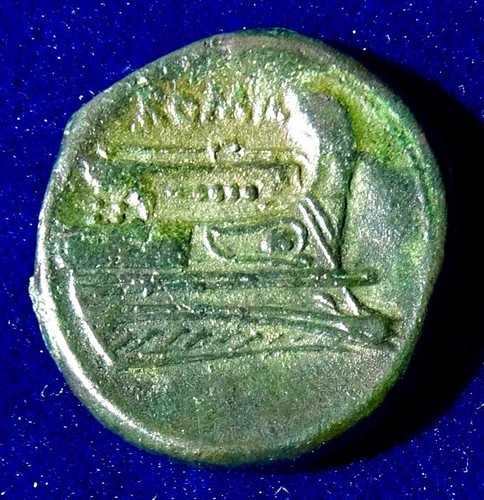
Roman Republic Semuncia
Smallest Roman Republican bronze denomination, worth half an uncia, struck around 217-215 BC with a Mercury head and a galley prow.
Ancient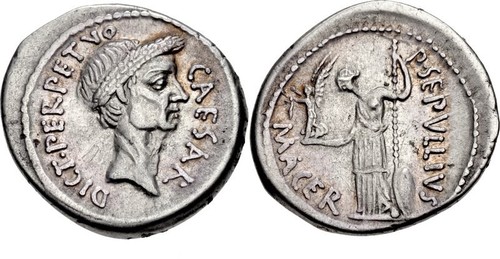
Julius Caesar Denarius
Silver Roman denarius of 44 BC bearing the bareheaded portrait of Julius Caesar, among the first Roman coins to show a living statesman's likeness.
Ancient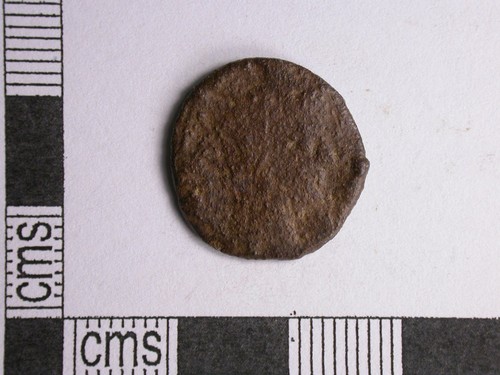
Caesar Elephant Denarius
Silver denarius of Julius Caesar (49–48 BC) showing an elephant trampling a serpent above CAESAR, paired with priestly pontifical emblems.
Ancient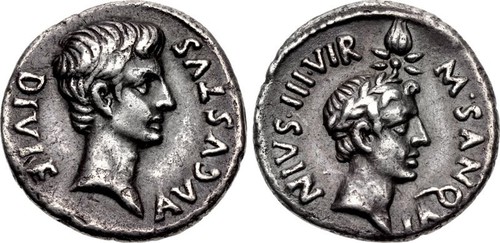
Denarius of Octavian and Caesar
A Roman Imperatorial silver denarius pairing the young Octavian with his adoptive father Julius Caesar, struck around 43–42 BC.
Ancient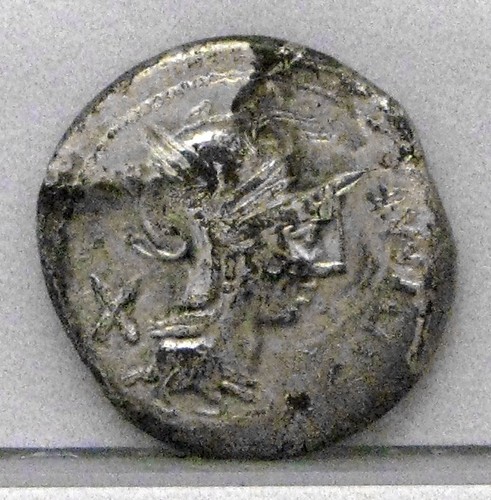
Roman Republican Denarius (Unidentified)
A silver Roman Republican denarius of about 115-114 BC: helmeted Roma on the obverse, Victory driving a two-horse chariot on the reverse.
Ancient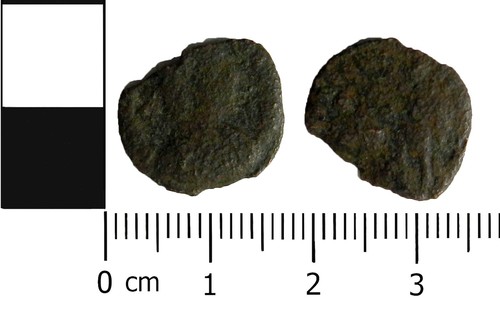
Roman Centenionalis
A small fourth-century Roman bronze coin, part of the reformed low-value currency struck across the empire's mints during a period of frequent monetary change.
Ancient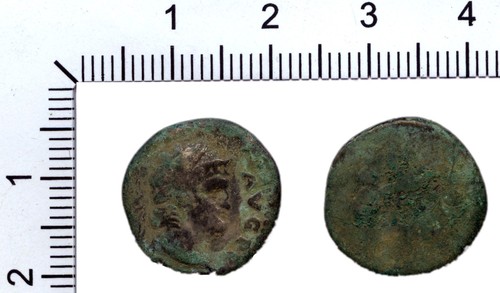
Denarius of Nero
Silver denarius of the emperor Nero (AD 54-68), the last Julio-Claudian ruler, shown with a laureate portrait and a military-standards reverse.
Ancient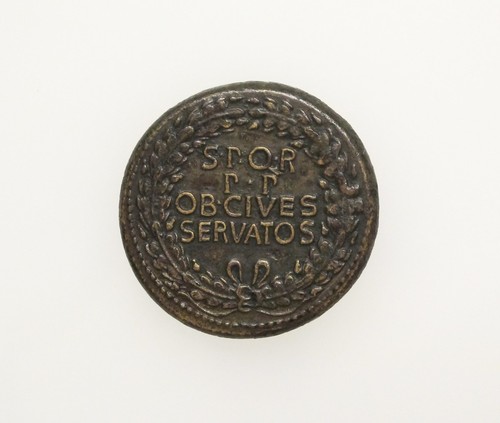
Sestertius of Caligula
Large Roman imperial bronze sestertius bearing the head of Gaius, better known as Caligula, struck during his short reign from 37 to 41 AD.
Ancient Coins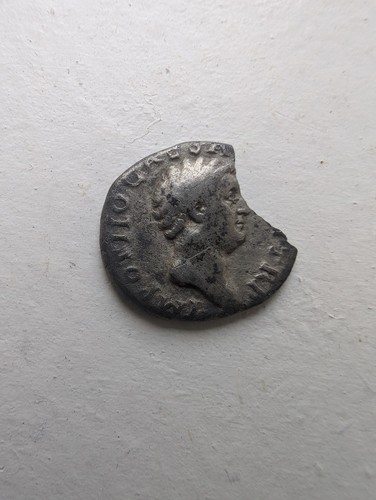
Denarius of Otho
Silver denarius of the emperor Otho, struck at Rome during his brief AD 69 reign, showing his bare head right with the legend IMP OTHO CAESAR.
Ancient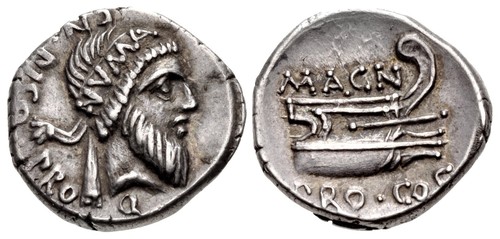
Numapis Denarius
A silver denarius of the Roman Republic (1st century BC) pairing a male portrait facing right with a ship or galley and lettering on the reverse.
Ancient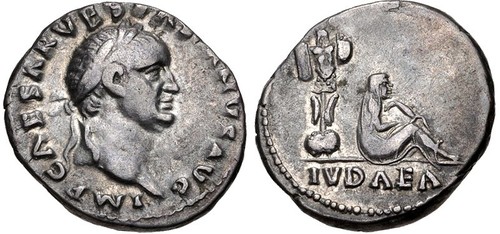
Denarius of Vespasian
Silver denarius struck under the emperor Vespasian (AD 69-79), founder of the Flavian dynasty, with his laureate portrait on the obverse.
Ancient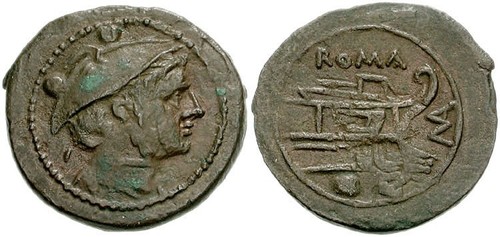
Manlius Vulso Æ Sextans
Small Roman Republican bronze sextans signed by the moneyer Manlius Vulso, with a capped male head and the classic prow reverse marked ROMA.
Ancient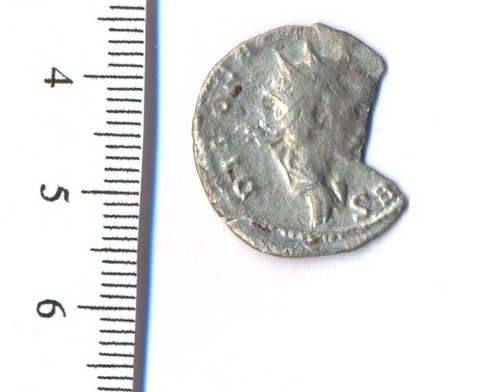
Antoninianus of Valerian II
Roman radiate coin of Valerian II, the young Caesar (c. 253-260 AD), showing his spiked crown and a standing figure on the reverse.
Ancient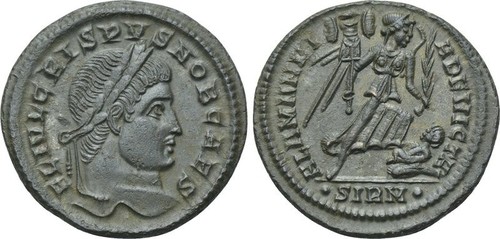
Follis of Crispus
A small bronze follis of Crispus, eldest son of Constantine the Great, with his diademed bust and a winged Victory reverse (317-326 AD).
Ancient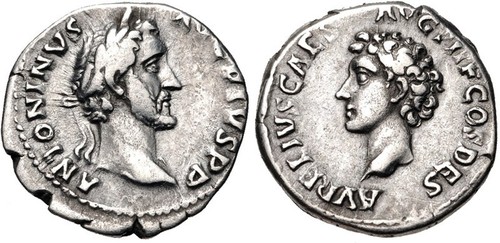
Denarius of Antoninus Pius and Marcus Aurelius
Roman silver denarius of Antoninus Pius (138–161 AD), a dynastic type showing the emperor and the two young Caesars, Marcus Aurelius and Lucius Verus.
Ancient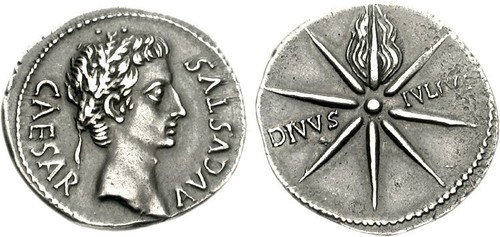
Denarius of Augustus
Silver denarius of Augustus (c. 19-18 BC) with his bare head and a comet-star of the deified Julius Caesar, inscribed DIVVS IVLIVS.
Ancient Coins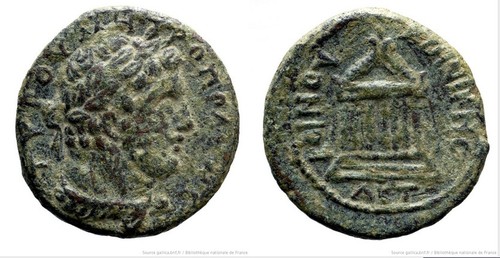
Bronze Coin of Septimius Severus (Tyre)
Roman provincial bronze struck at Tyre (Phoenicia) under Septimius Severus, 193-211 AD, with the emperor's bust on the obverse and a temple or deity reverse.
Ancient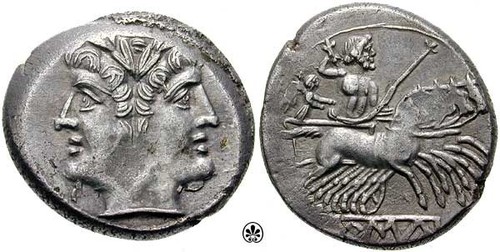
Roman As
A base-metal As of ancient Rome, showing the double-faced head of Janus on one side and a chariot with ROMA on the other.
Ancient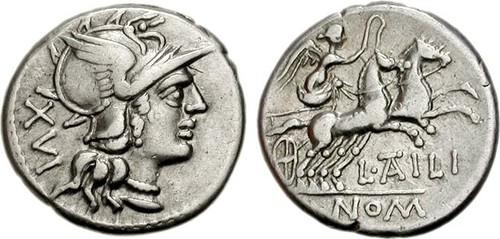
Atilia Denarius
Roman Republican silver denarius struck by a moneyer of the gens Atilia, with a helmeted head on the obverse and a deity or figure with the family name on the reverse.
Ancient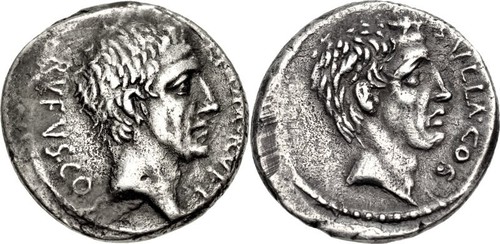
Denarius of the Pompeia Family
Silver Roman Republican denarius of the Pompeia family, with a male portrait head and a Victory driving a chariot on the reverse.
Ancient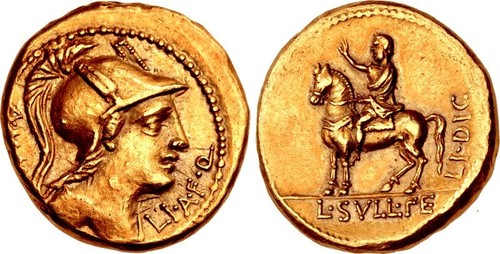
Aureus of A. Manlius Vulso
A rare late-Republican Roman gold aureus of the moneyer A. Manlius Vulso, c. 80 BC, showing a capped head and a horseman carrying a military ensign.
Ancient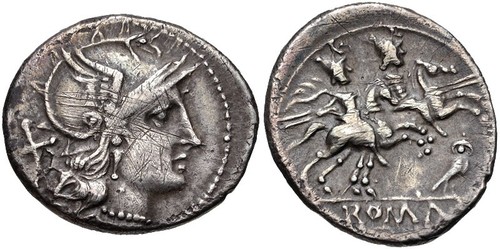
Caecidius Noctua Denarius
A silver Roman Republican denarius of the owl (noctua) symbol series, catalogued RRC 135/1 and dated c. 194–190 BC.
Ancient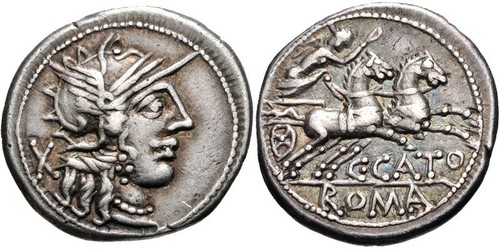
Denarius of C. Cato
Silver Roman Republican denarius struck at Rome in 123 BC by the moneyer C. Cato, with a helmeted head of Roma and Victory driving a chariot.
Ancient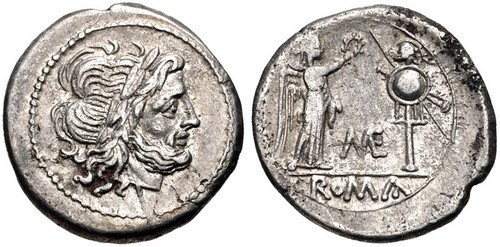
Roman Victoriatus
Silver Roman Republican victoriatus of the late 3rd–2nd century BC, with the laureate head of Jupiter and a Victory crowning a trophy above ROMA.
Ancient