
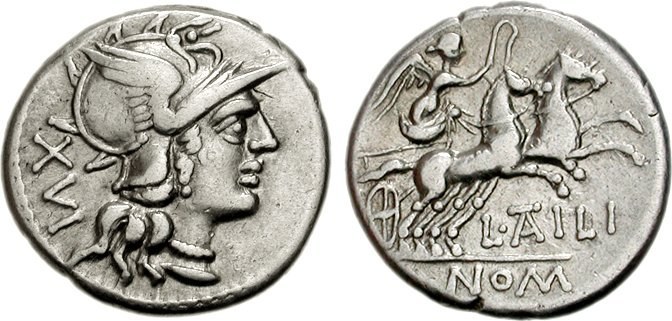
Atilia Denarius
Roman Republican silver denarius struck by a moneyer of the gens Atilia, with a helmeted head on the obverse and a deity or figure with the family name on the reverse.
- Country
- Roman Republic
- Denomination
- Denarius
- Metal
- Silver
Got a coin like this?
Identify any coin from a photo, free.
Overview
The Atilia Denarius is a Roman Republican silver coin issued under a moneyer of the gens Atilia, one of the families that supplied the annual officials responsible for striking Rome's coinage. The example shown here follows the standard Republican pattern: a male-styled helmeted head facing right on the obverse and a figure on the reverse accompanied by an inscription naming the moneyer.
The denarius was the backbone of Republican silver, a small hand-struck coin roughly the size of a modern dime. On issues of the Atilia family the reverse legend carries the family name — most often in the abbreviated forms ATILI or SARAN (for the cognomen Saranus) — which is the key to attributing the coin to this gens rather than to one of the many other Republican moneyers.
Because every Republican denarius was cut by hand from individually engraved dies, no two are identical, and centering, wear, and strike vary widely from coin to coin.
History & Background
Under the Roman Republic, coinage was produced by a small board of junior magistrates, the tresviri monetales (moneyers), who each held office for about a year. It became customary for these young officials to place their own family name on the coins they struck, turning the denarius into a vehicle for advertising a clan's ancestry and achievements. The Atilia issues belong to this tradition.
The gens Atilia was an old Republican family that produced consuls and other magistrates, and its moneyers signed denarii during the middle and later Republic. The best-known bear the cognomen Saranus, with names rendered on the coins as forms of M. ATILI SARAN or SEX. ATILI SARAN. Their types follow the conventions of the day, pairing a divine head with a reverse scene such as a deity driving a chariot.
The denarius itself had been introduced in the later 3rd century BC and remained Rome's principal silver coin for centuries. Republican issues like this one circulated widely across Italy and the growing Roman world, and survive today as tangible records of the families who governed the Republic.
How to Identify
Identify the coin first as a Roman Republican denarius: a small silver piece about 17-20 mm across and typically 3.5-4.0 grams, hand-struck so that the flan is often slightly irregular and off-center. The obverse shows a helmeted head facing right, the standard Republican device (usually the helmeted head of Roma), which on a worn coin can read as a stern male-styled profile.
Attribute it to the gens Atilia by the reverse legend. Look for the family name in abbreviated Latin capitals — commonly ATILI, often combined with the cognomen SARAN (Saranus) and a praenomen such as M. or SEX. The reverse figure is typically a deity or personification, frequently shown driving a two-horse chariot (a biga), with the moneyer's name in the exergue or field.
Many Republican types also carry a mark of value such as X (or a monogram) near the head, and control symbols or letters that vary die to die. The metal should look like toned silver, not the brassy tone of a base-metal cast; genuine strikes show crisp die detail rather than the soft, blurry surfaces of a mould copy.
Value & Collectibility
As a widely collected but not individually rare series, the Atilia denarius is valued mainly on condition, strike, and eye appeal rather than scarcity. Worn, off-center, or corroded examples are common and affordable, while well-centered coins with full legends and sharp detail command a clear premium.
Grade and surfaces matter most: a coin with clear portrait detail, a complete readable ATILI / SARAN legend, and pleasant old toning is worth considerably more than a low-grade piece with weak strike or cleaning marks. Certain scarcer varieties, control-mark combinations, or exceptionally high-grade specimens can bring substantially higher prices.
Because Roman Republican silver is frequently forged and because prices swing with condition, confirm value against recent auction results for the same type and grade. For any coin of significant value, certification by a recognized ancient-coin grading service reduces both authenticity and grade risk.
Frequently asked questions
Who made the Atilia denarius?
It was struck by a moneyer of the gens Atilia, a Roman Republican family whose officials produced silver denarii. Several bear the cognomen Saranus, with names on the coin such as forms of M. ATILI SARAN or SEX. ATILI SARAN.
How can I tell it belongs to the Atilia family?
Read the reverse legend. Republican denarii carry the moneyer's family name, so look for the abbreviated forms ATILI or SARAN in Latin capitals, usually with a praenomen. That inscription is what ties the coin to the gens Atilia.
Is the head on the obverse male or female?
The standard Republican obverse is the helmeted head of Roma. On a worn coin the stern, helmeted profile can read as male, but on this type it is the conventional helmeted head facing right rather than an individual portrait.
Is the Atilia denarius made of real silver?
Yes. The Republican denarius was struck in good silver, about 17-20 mm across and roughly 3.5-4.0 grams. Genuine examples show toned silver and crisp die detail, not the brassy color or soft surfaces of a base-metal cast.
Is it rare or valuable?
The series is collectible but generally not rare, so value depends heavily on condition and strike. Common worn pieces are affordable, while sharply struck, well-centered coins and scarcer varieties bring higher prices.
Atilia Denarius guides
In-depth guides for identifying, valuing, and collecting Atilia Denarius.
Other coins you may enjoy
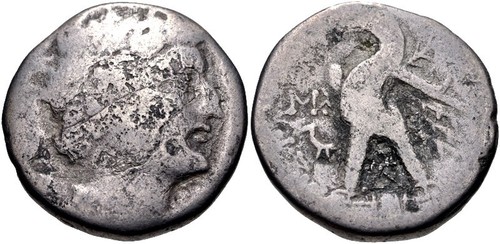
Tetradrachm of Ptolemy XII
80-51 BC
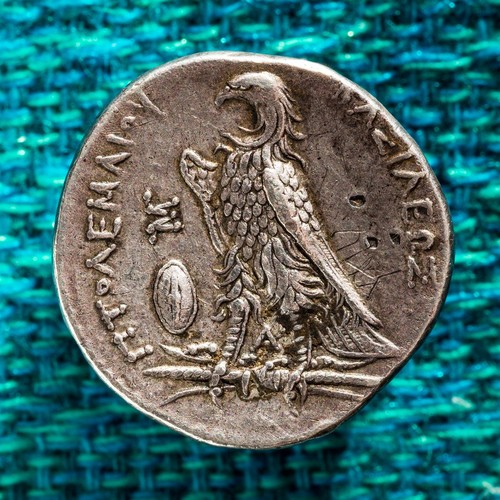
Tetradrachm of Ptolemy I
305-283 BC
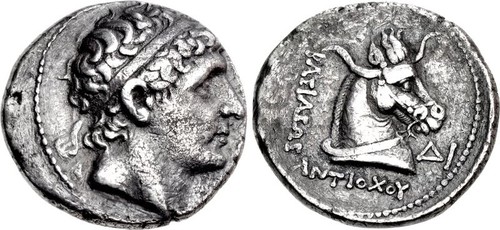
Tetradrachm of Antiochos I Soter
281-261 BC
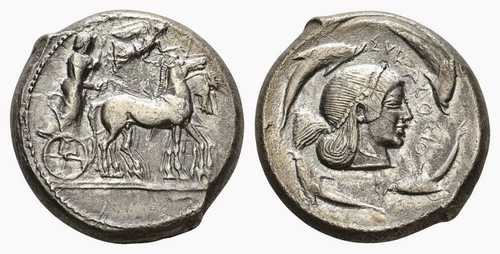
Syracuse Tetradrachm
c. 5th-4th century BC (Classical period)
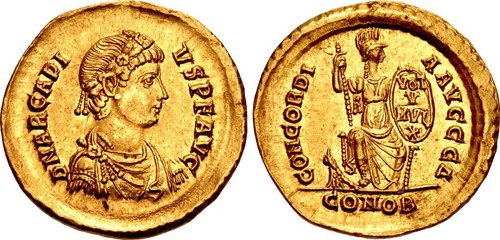
Solidus of Arcadius
AD 395-402
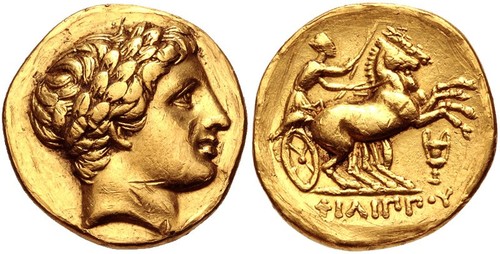
Philip III Gold Stater
323-317 BC
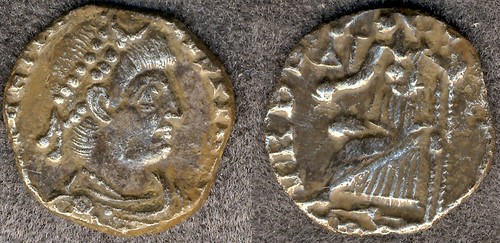
Siliqua of Gratian
AD 367-383
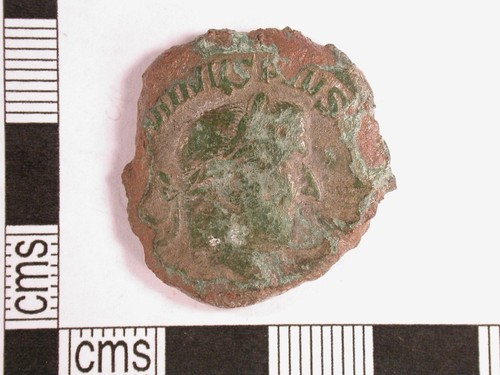
Sestertius of Maximinus Thrax
235-238 AD
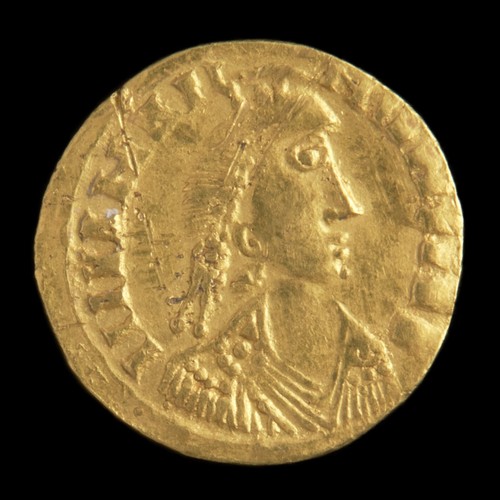
Solidus of Valentinian III
AD 425-455
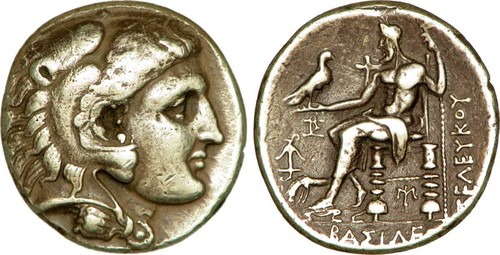
Seleucus I Nicator Tetradrachm
Late 4th-3rd century BC
Nummus of Magnentius
AD 350-353
Follis of Galerius
AD 308-310