
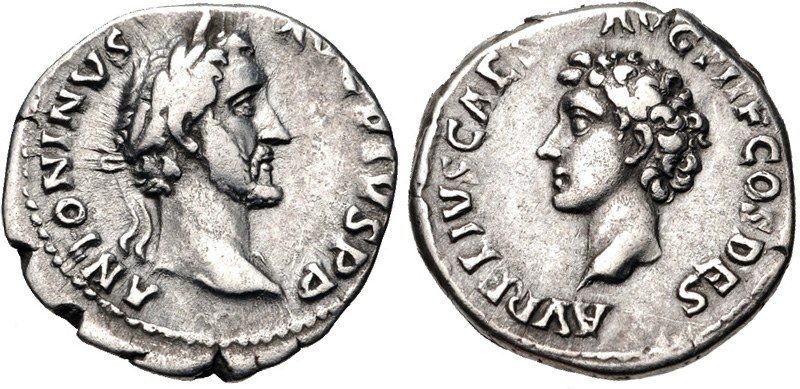
Denarius of Antoninus Pius and Marcus Aurelius
Roman silver denarius of Antoninus Pius (138–161 AD), a dynastic type showing the emperor and the two young Caesars, Marcus Aurelius and Lucius Verus.
- Country
- Roman Empire
- Denomination
- Denarius
- Metal
- Silver
Got a coin like this?
Identify any coin from a photo, free.
Overview
This is a Roman silver denarius struck during the reign of the emperor Antoninus Pius (AD 138–161). The obverse carries his laureate bust facing right, the standard portrait format for a reigning emperor, accompanied by an abbreviated Latin legend giving his imperial titles. The coin shown here is a dynastic issue, meaning it advertises the imperial succession.
The reverse pairs the confronted or jugate heads of the two young heirs, Marcus Aurelius and Lucius Verus, both of whom Antoninus Pius had adopted as Caesars. Presenting the emperor on one side and his designated successors on the other was a deliberate piece of state messaging that promised continuity of the dynasty. As a denarius, it was the workhorse silver coin of the Roman monetary system and would have circulated widely across the empire.
History & Background
Antoninus Pius came to power in AD 138 after being adopted by Hadrian, on the condition that he in turn adopt both Marcus Aurelius and Lucius Verus to secure the line of succession. His long reign is remembered as one of the most stable and prosperous phases of the Roman peace, with relatively few wars and a well-managed treasury, which is one reason his silver coinage was struck in large quantities.
Dynastic denarii like this one served a political purpose beyond commerce. By depicting the two adopted Caesars on the reverse, the mint at Rome broadcast the arrangement Hadrian had set in motion and reassured the empire that a clear line of heirs stood ready. Marcus Aurelius would succeed Antoninus Pius on the latter's death in AD 161 and, unusually, immediately elevated Lucius Verus as co-emperor, fulfilling the promise these coins had advertised for years.
The denarius of this era was still a substantial silver coin, though its fineness had gradually declined from the near-pure standard of the early Empire. It remained the principal medium for soldiers' pay, taxes, and everyday larger transactions throughout the second century.
How to Identify
Look first at the obverse for a single laureate male bust facing right, encircled by a Latin legend that abbreviates the name and titles of Antoninus Pius (commonly forms such as ANTONINVS AVG PIVS P P with tribunician and consular titles). The laurel wreath and mature adult features distinguish the reigning emperor from the younger heirs.
The reverse is the key diagnostic for this specific type: it shows two facing or paired youthful heads rather than a single deity, personification, or standing figure. These are the Caesars Marcus Aurelius and Lucius Verus, and the accompanying legend names them and their rank as designated successors. A reverse with two young busts, combined with an Antoninus Pius obverse, marks the dynastic issue.
Physically the coin is a small silver denarius, roughly 17 to 19 mm across and typically around 3 to 3.5 grams, struck on a hand-made flan. Expect slightly irregular edges, some off-center striking, and toning or surface wear consistent with an ancient coin, rather than the machine-perfect roundness of a modern piece.
Value & Collectibility
Denarii of Antoninus Pius are among the more available second-century Roman silver coins, so common single-portrait types are affordable in collector terms. Dynastic issues showing the two young Caesars are more sought after because of their historical narrative and comparatively limited output, and they generally command a premium over ordinary reverse types.
Value is driven mainly by condition, portrait quality, centering, and the sharpness of the two reverse heads. Worn or off-center examples sit at the lower end, while pieces with clear portraits, good silver surfaces, and attractive toning bring markedly more. As with all ancient coins, exact prices vary widely by grade and demand, so ranges rather than fixed figures are the realistic guide.
Because ancient silver is widely faked and altered, provenance and authentication meaningfully affect what a piece is worth. A coin with a credible pedigree or a reputable dealer's or grading service's attribution will typically realize more than an otherwise similar but unattributed example.
Frequently asked questions
Who are the two people on the reverse?
They are Marcus Aurelius and Lucius Verus, the two young Caesars whom Antoninus Pius adopted as his heirs. Showing them together advertised the secured line of imperial succession.
Is this a real ancient coin?
Genuine examples are authentic Roman denarii struck between AD 138 and 161. Because ancient silver is frequently copied, an uncertain piece should be checked for correct size, weight, style, and ideally a credible provenance or expert attribution.
What metal is it made of?
It is silver. The denarius was the standard Roman silver coin, though by the mid-second century its fineness had declined somewhat from the near-pure standard of the early Empire.
How much is it worth?
Common Antoninus Pius denarii are relatively affordable, but dynastic types showing the two Caesars usually carry a premium. Value depends heavily on condition, portrait clarity, and authentication, so it is best expressed as a range rather than a fixed price.
Why does the emperor's portrait look different from the two heads?
The obverse shows the mature, laureate reigning emperor Antoninus Pius, while the reverse shows his younger adopted heirs. The contrast in age and the laurel wreath help separate the emperor from the Caesars.
Denarius of Antoninus Pius and Marcus Aurelius guides
In-depth guides for identifying, valuing, and collecting Denarius of Antoninus Pius and Marcus Aurelius.
Other coins you may enjoy
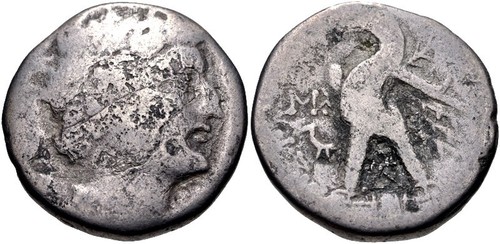
Tetradrachm of Ptolemy XII
80-51 BC
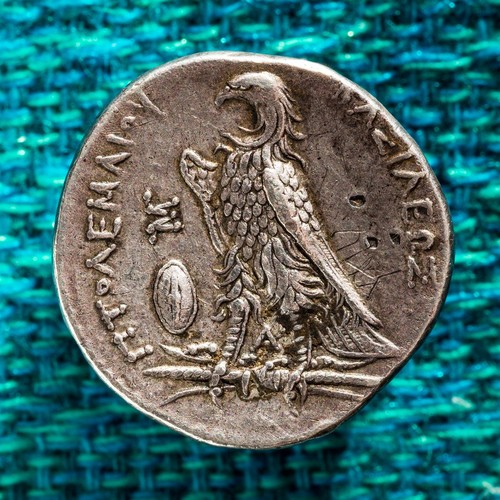
Tetradrachm of Ptolemy I
305-283 BC
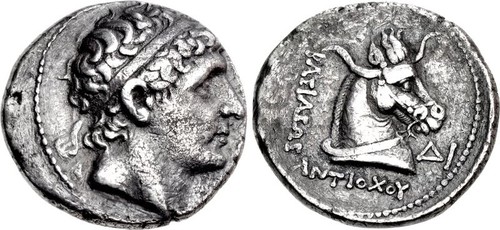
Tetradrachm of Antiochos I Soter
281-261 BC
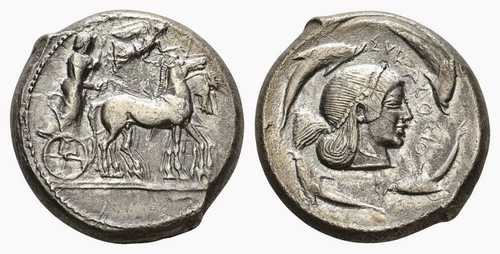
Syracuse Tetradrachm
c. 5th-4th century BC (Classical period)
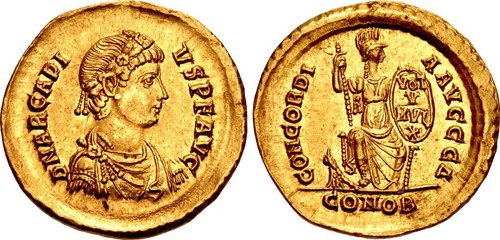
Solidus of Arcadius
AD 395-402
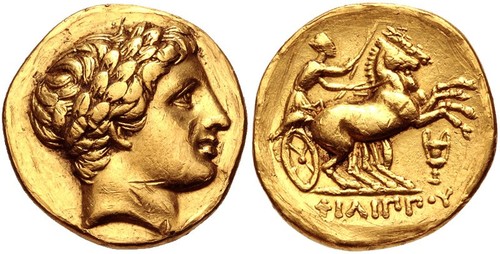
Philip III Gold Stater
323-317 BC
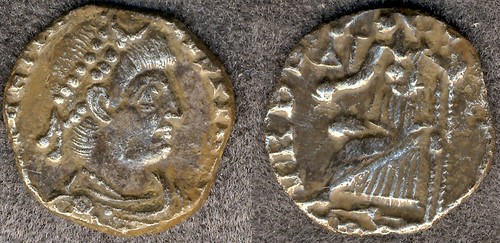
Siliqua of Gratian
AD 367-383
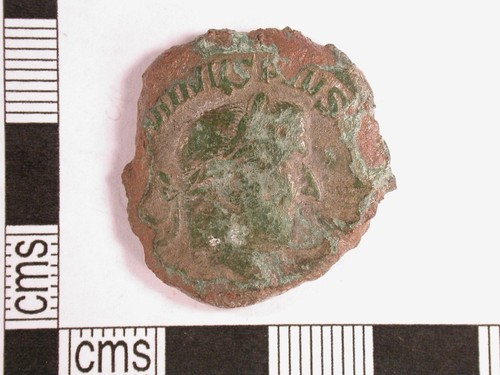
Sestertius of Maximinus Thrax
235-238 AD
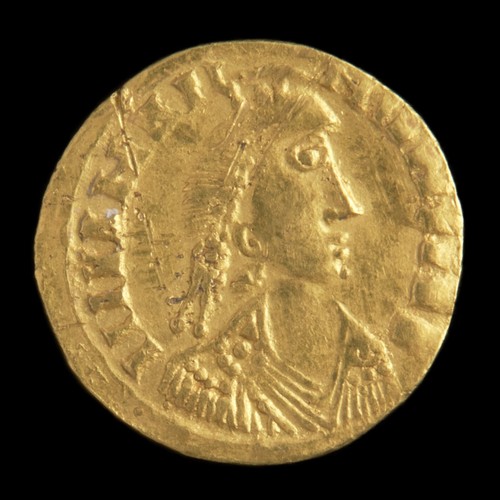
Solidus of Valentinian III
AD 425-455
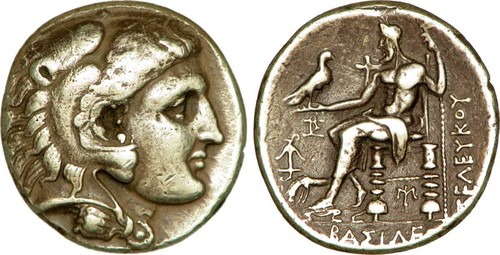
Seleucus I Nicator Tetradrachm
Late 4th-3rd century BC
Nummus of Magnentius
AD 350-353
Follis of Galerius
AD 308-310