
How to Identify the Denarius of Antoninus Pius and Marcus Aurelius
A collector's guide to recognizing this dynastic Roman silver denarius by its emperor portrait, twin-Caesar reverse, size, and legends.
Read the full Denarius of Antoninus Pius and Marcus Aurelius encyclopedia entry →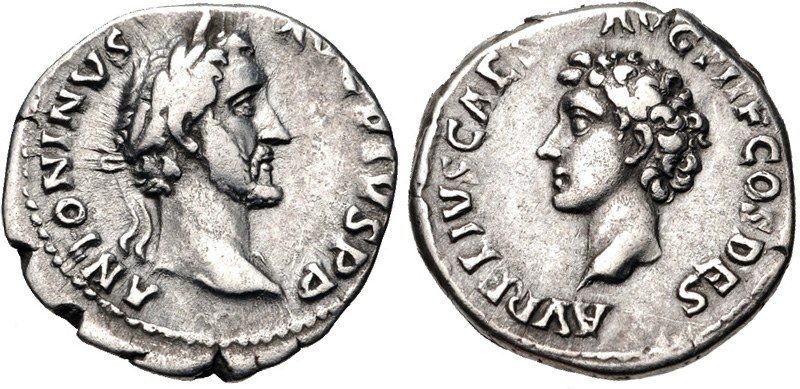
Begin with the obverse portrait. This type shows a single laureate male bust facing right: an adult with a laurel wreath, which marks the reigning emperor Antoninus Pius. Read the surrounding Latin legend, which abbreviates his name and titles in forms built around ANTONINVS AVG PIVS with the title P P and tribunician or consular numerals. A mature, wreathed head with a Pius-based legend is your first confirmation.
The reverse is the decisive feature. Instead of a single standing deity or personification, this dynastic issue shows two youthful heads, the Caesars Marcus Aurelius and Lucius Verus, with a legend naming them. If your coin has an Antoninus Pius obverse but a single-figure reverse, it is a different and far more common type; the paired young busts are what make this the dynastic denarius. Study whether the heads are jugate (overlapping) or confronted, and check that both portraits are youthful and unwreathed compared with the emperor.
Confirm the physical profile. A genuine denarius of this period is small, roughly 17 to 19 mm in diameter and usually about 3 to 3.5 grams, struck in silver on a hand-cut flan. Expect a slightly irregular shape, possible off-centering, and honest toning or wear. A coin that is unusually large, heavy, perfectly round, or made of a base metal that only looks silvery should raise immediate doubt.
Watch for look-alikes and reproductions. Later Roman silver was debased, and modern replicas, tourist copies, and cast forgeries of popular emperors are common; cast fakes often show a seam, bubbly surfaces, or soft, mushy detail rather than the crisp relief of a struck coin. Style matters too, since second-century Roman engraving is confident and consistent, and clumsy or lifeless portraiture is a warning sign. For anything you intend to buy or sell at value, seek a credible provenance or an attribution from a reputable dealer or grading service before relying on the identification.
Frequently asked questions
How do I know it is the dynastic type and not an ordinary Antoninus Pius denarius?
Check the reverse. The dynastic type shows two young heads, the Caesars Marcus Aurelius and Lucius Verus. Ordinary denarii of Antoninus Pius usually show a single deity, personification, or standing figure instead.
What size and weight should a genuine example be?
Roughly 17 to 19 mm across and about 3 to 3.5 grams in silver, struck on a hand-made flan. Significant deviations in size, weight, or metal are a reason to be cautious.
How can I spot a fake or a modern copy?
Cast forgeries often show a mold seam, pitted or bubbly surfaces, and soft detail, while replicas may be too round or too heavy. Crisp struck relief and confident second-century style are good signs, but valuable pieces still warrant expert authentication.
Are there mint marks to look for?
Imperial denarii of this era were struck at Rome and do not carry modern-style mint marks. Identification relies on the obverse and reverse legends and portraits rather than a mint letter.