
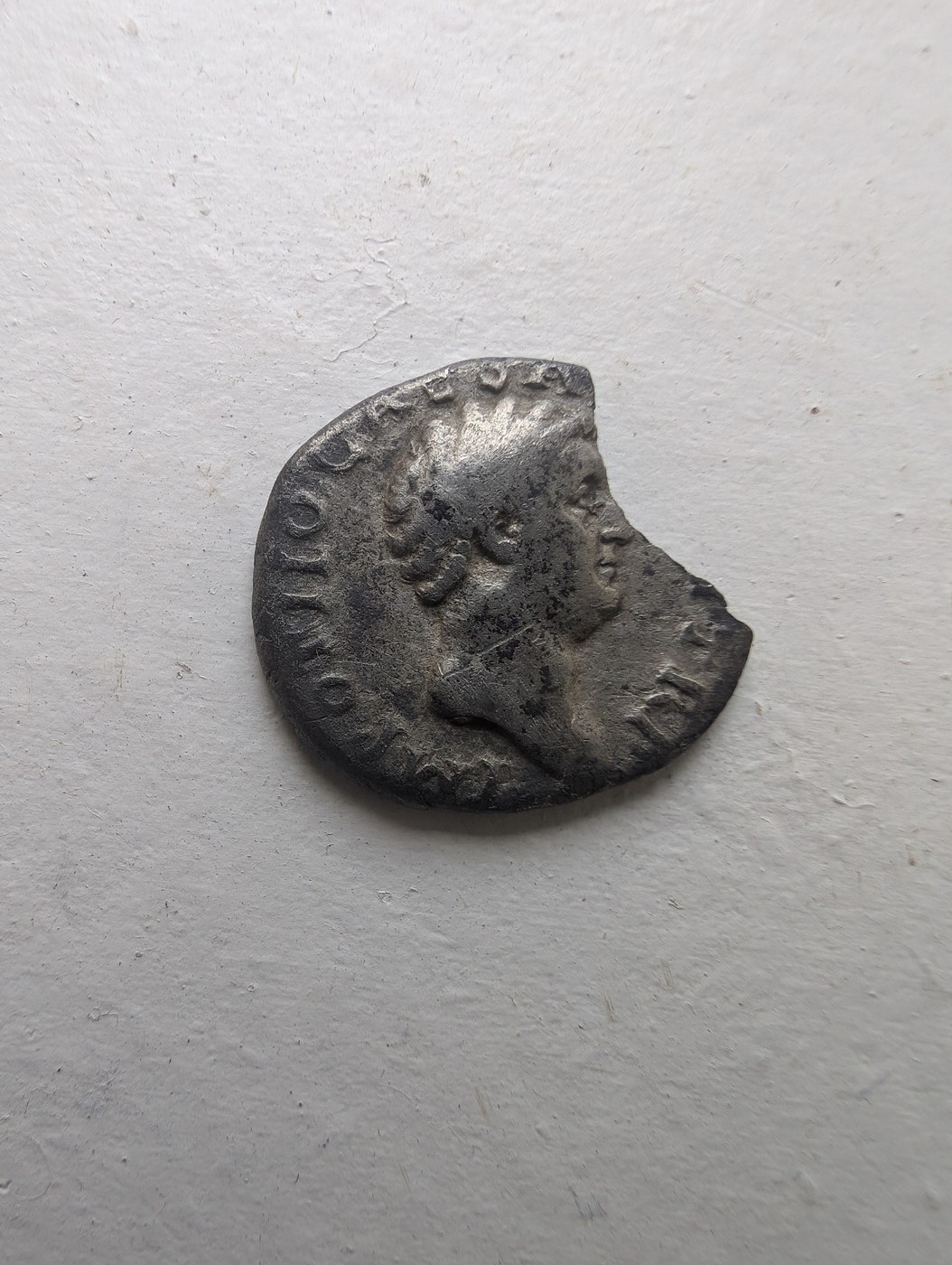
Denarius of Otho
Silver denarius of the emperor Otho, struck at Rome during his brief AD 69 reign, showing his bare head right with the legend IMP OTHO CAESAR.
- Country
- Roman Empire
- Denomination
- Denarius
- Metal
- Silver
Got a coin like this?
Identify any coin from a photo, free.
Overview
The Denarius of Otho is a Roman silver coin issued during the three-month reign of the emperor Otho (Marcus Salvius Otho) in AD 69, the turbulent "Year of the Four Emperors." The example shown presents a right-facing bare-headed portrait of Otho with the imperial legend beginning IMP OTHO CAESAR.
Because Otho ruled for only a matter of weeks, his coinage was struck within a very short window and survives in relatively small numbers. All of his silver was produced at the mint of Rome, and the denarius is the workhorse silver denomination of the early Roman Empire — a small, hand-struck disc a little under 19 mm across.
Otho is one of the short-lived emperors whose portraits are prized by collectors of the "Twelve Caesars," and a genuine denarius bearing his name is among the more coveted — and frequently counterfeited — imperial silver coins.
History & Background
Otho seized power in January AD 69 after conspiring in the murder of the emperor Galba, and was himself proclaimed by the Praetorian Guard at Rome. His position was immediately challenged by Vitellius, whose legions on the Rhine marched into Italy. After defeat at the first battle of Bedriacum, Otho took his own life in April AD 69, having reigned roughly three months.
Within that brief period the Rome mint struck gold aurei and silver denarii in his name. Otho apparently issued no imperial bronze coinage from Rome — the large brass and copper pieces (sestertii and the like) bearing his portrait that circulate today are almost universally Renaissance-era "Paduan" medals or later fabrications, not ancient coins.
His reverse types carried conventional messages of stability and legitimacy for a new and insecure regime, including personifications such as Securitas (Security), Pax (Peace), and Victoria (Victory). The obverse of the piece illustrated here is photographed on its own, so its specific reverse design is not recorded, but it would have belonged to this small family of Otho types.
How to Identify
The defining feature is the obverse legend naming Otho. On the coin shown it begins IMP OTHO CAESAR; full Rome-mint denarius legends typically read IMP OTHO CAESAR AVG TR P (sometimes with an additional M for Marcus). The portrait is a bare head facing right — not laureate or radiate — with a distinctive, elaborately arranged coiffure that ancient sources describe as a carefully styled wig, a hallmark of Otho's likeness.
As a silver denarius of the Neronian weight standard, the coin should measure roughly 17–19 mm in diameter and weigh in the vicinity of 3.0–3.6 g. It is hand-struck, so the flan is slightly irregular and the strike is often off-center; genuine wear is soft and even rather than crisp.
The reverse of this particular photograph is not visible, so identification here rests on the obverse portrait and legend. On complete coins, the reverse legend and standing personification confirm the specific type.
Value & Collectibility
Otho's denarii are genuinely scarce because of his very short reign, and even well-worn authentic examples command strong prices relative to more common Roman emperors. Typical circulated denarii often trade from the high hundreds into the low thousands of US dollars, with attractive, well-centered, sharply portrayed pieces reaching several thousand dollars or more at auction.
Condition, portrait quality, and centering drive value heavily, since collectors buy Otho chiefly for the face. Certified and provenanced examples bring premiums, while problem coins — cleaned, tooled, holed, or lightly corroded — sell for less.
These are broad guides, not fixed prices. Because Otho is a high-demand, high-forgery target, value is meaningful only for a coin whose authenticity has been established; consult recent auction records and specialist dealers for a specific piece.
Frequently asked questions
Who was Otho?
Marcus Salvius Otho was a Roman emperor during the Year of the Four Emperors in AD 69. He came to power after the murder of Galba, reigned about three months, and died by suicide after military defeat by Vitellius.
Is a denarius of Otho made of real silver?
Yes. The denarius was the standard Roman silver coin. Otho's denarii were struck in silver at the Rome mint on the reduced weight standard introduced under Nero, at roughly 3.0 to 3.6 grams.
Why are Otho coins so rare?
Otho ruled for only about three months in AD 69, so his coinage was produced in a very short window. He also issued no genuine imperial bronze from Rome, leaving silver denarii and gold aurei as his authentic coins.
What does the inscription IMP OTHO CAESAR mean?
It is the start of his imperial titulature in Latin: IMP for Imperator, followed by his name Otho and the title Caesar. Full denarius legends often continue AVG TR P for Augustus and Tribunicia Potestas.
Are there bronze coins of Otho?
Not genuine ones from Rome. Large bronze sestertii bearing Otho's portrait are almost always Renaissance Paduan medals or later fabrications. Authentic Otho coins are silver denarii and gold aurei.
Denarius of Otho guides
In-depth guides for identifying, valuing, and collecting Denarius of Otho.
Other coins you may enjoy
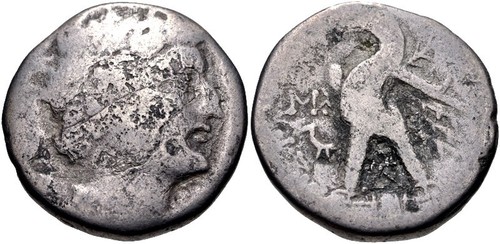
Tetradrachm of Ptolemy XII
80-51 BC
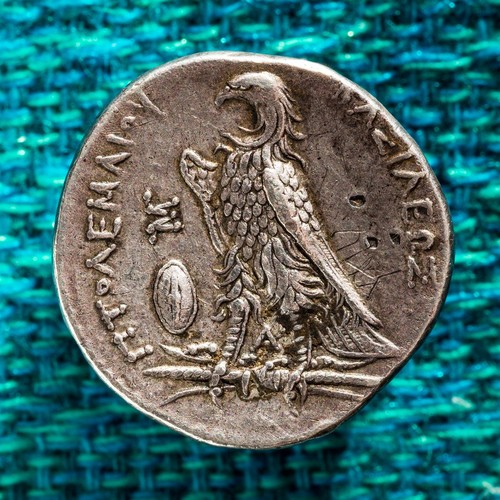
Tetradrachm of Ptolemy I
305-283 BC
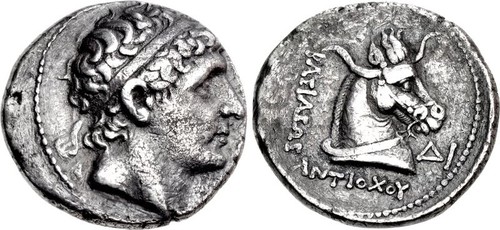
Tetradrachm of Antiochos I Soter
281-261 BC
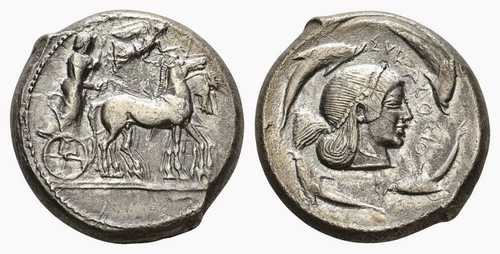
Syracuse Tetradrachm
c. 5th-4th century BC (Classical period)
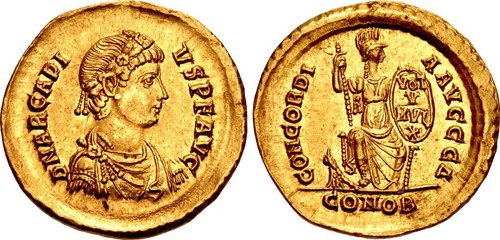
Solidus of Arcadius
AD 395-402
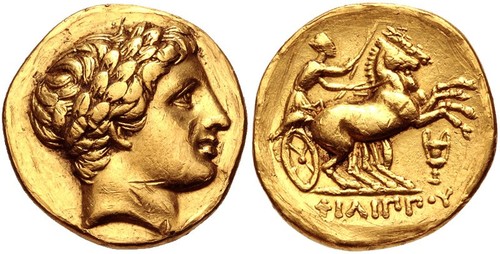
Philip III Gold Stater
323-317 BC
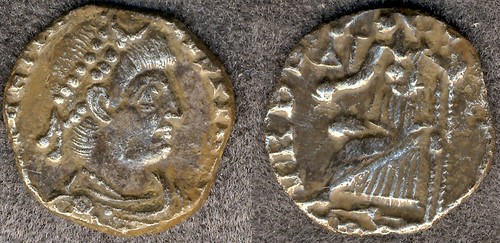
Siliqua of Gratian
AD 367-383
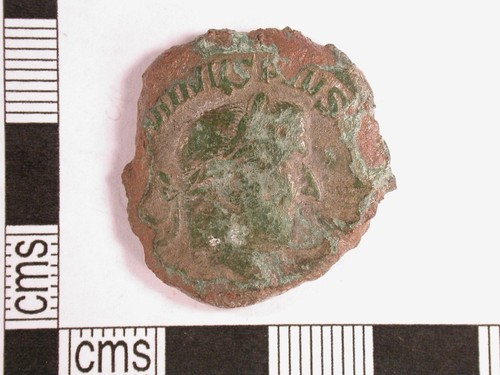
Sestertius of Maximinus Thrax
235-238 AD
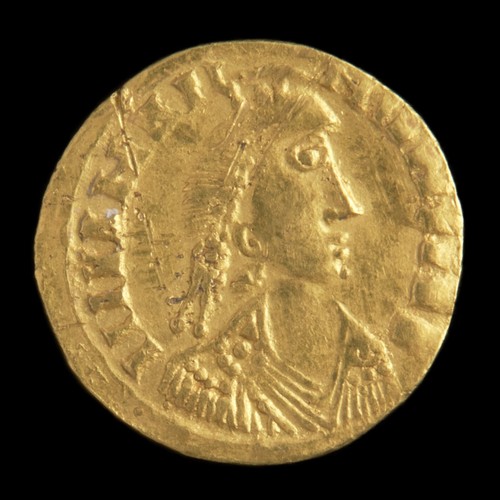
Solidus of Valentinian III
AD 425-455
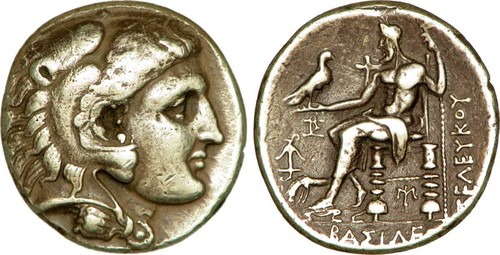
Seleucus I Nicator Tetradrachm
Late 4th-3rd century BC
Nummus of Magnentius
AD 350-353
Follis of Galerius
AD 308-310