
How to Identify the Denarius of Otho
A collector's guide to recognizing a genuine silver denarius of Otho by its portrait, legend, size, and the forgery cautions that surround this scarce emperor.
Read the full Denarius of Otho encyclopedia entry →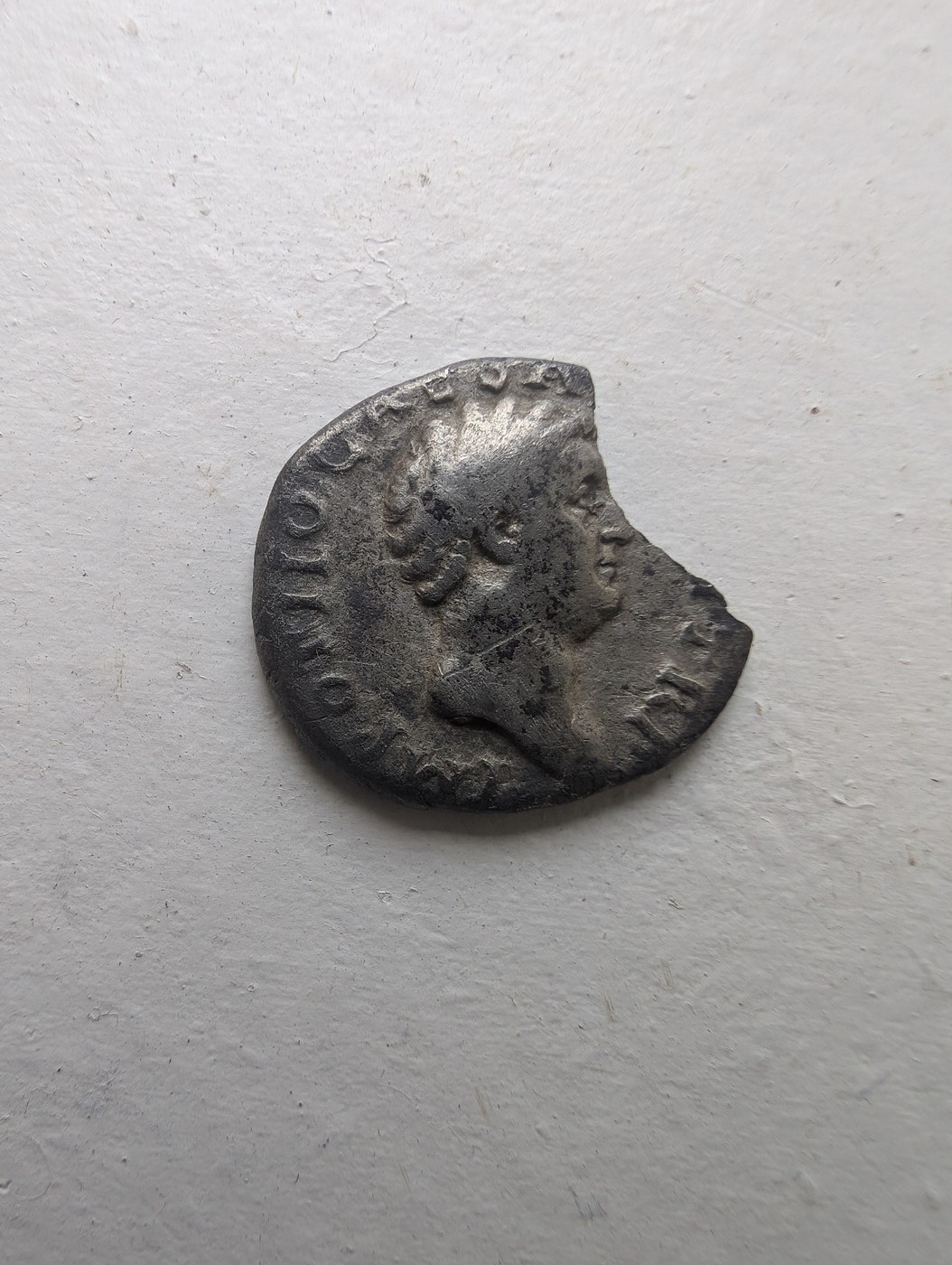
Begin with the legend and portrait together. A denarius of Otho shows a bare head facing right and an obverse inscription that names him, beginning IMP OTHO CAESAR and usually continuing AVG TR P. The head is neither laureate nor radiate; instead look for the characteristic tightly styled, wig-like hair that is a well-known feature of Otho's likeness. If the coin is laureate, radiate, or names a different emperor, it is not an Otho denarius.
Confirm size and metal. This should be a silver disc about 17–19 mm across, weighing roughly 3.0–3.6 g, hand-struck on a slightly irregular flan. It should be non-magnetic and show the soft, even wear of ancient circulation rather than machine-sharp, uniform surfaces.
Read the reverse when it is present. Otho's Rome-mint denarii carry standing personifications such as Securitas, Pax, or Victoria, with a matching Latin reverse legend that pins down the exact type. The example photographed here is obverse-only, so identification relies on the portrait and obverse legend alone — note that a missing reverse limits how precisely a type can be attributed.
Mind the mint. Otho's silver was struck only at Rome, so there is no provincial mint mark to look for; attribution rests on legend and style. Watch for the classic look-alikes and traps: Renaissance "Paduan" bronzes and cast copies bearing his image, tooled or re-engraved portraits meant to sharpen a worn face, and modern struck forgeries. Because Otho is scarce and valuable, he is a favorite target for fakes.
For authentication, weigh and measure the coin, examine the surfaces and edge under magnification for casting seams, bubbles, or file marks, and compare the portrait style and letterforms against published references. Given the values involved, a genuine Otho denarius is best bought with a credible provenance or third-party authentication.
Frequently asked questions
How do I tell an Otho denarius from another emperor's?
Read the obverse legend, which must name Otho (IMP OTHO CAESAR ...), and check the portrait: a bare head facing right with distinctive styled hair. A laureate or radiate head, or a different name, points to another ruler.
How big and heavy should a genuine one be?
A real Otho denarius is silver, roughly 17 to 19 mm in diameter and about 3.0 to 3.6 grams, hand-struck on a slightly irregular flan. It should be non-magnetic with natural, even wear.
Does an Otho denarius have a mint mark?
No. His silver was struck at the mint of Rome and carries no mint mark. Identification depends on the obverse legend, the portrait style, and, when present, the reverse type and its Latin legend.
Why should I be extra cautious about fakes?
Otho is scarce and in high demand, so his coins are heavily forged. Paduan bronzes, cast copies, tooled portraits, and modern struck fakes all circulate. Buy with provenance or professional authentication before paying an Otho price.