
Coin Encyclopedia
Search and identify coins from around the world — with country, denomination, metal, mint, history, and how to tell them apart.
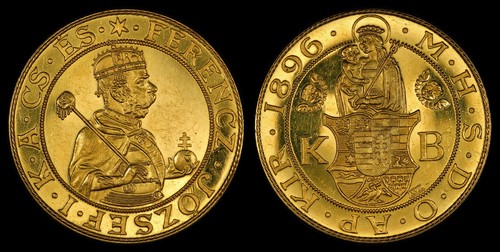
Hungarian 9 Ducats
A large gold multiple-ducat piece of Hungary dated 1896, showing a bearded crowned figure with sword and shield and the crowned Hungarian arms.
Bullion/gold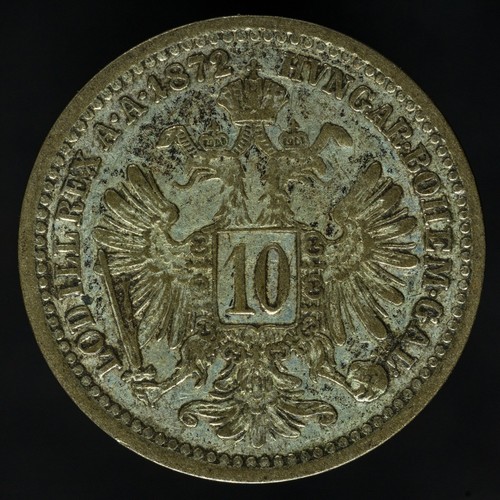
Austria-Hungary 10 Kreuzer
A small low-grade silver 10 Kreuzer of Emperor Franz Joseph I, pairing his laureate portrait with a crowned double-headed imperial eagle and a 10 value shield.
Circulation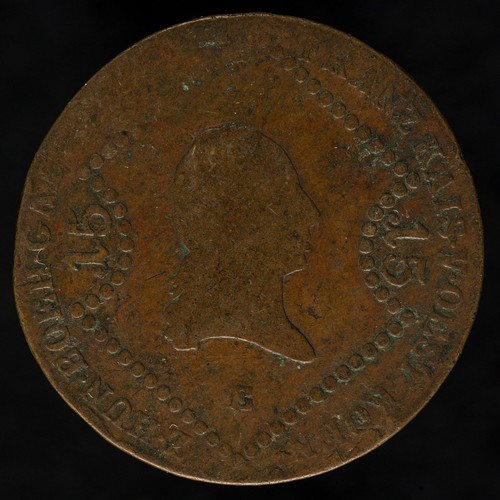
Austria-Hungary 15 Kreuzer
A large copper 15 Kreuzer of 1807 struck under Emperor Franz I, showing his crowned laureate profile on the obverse.
Circulation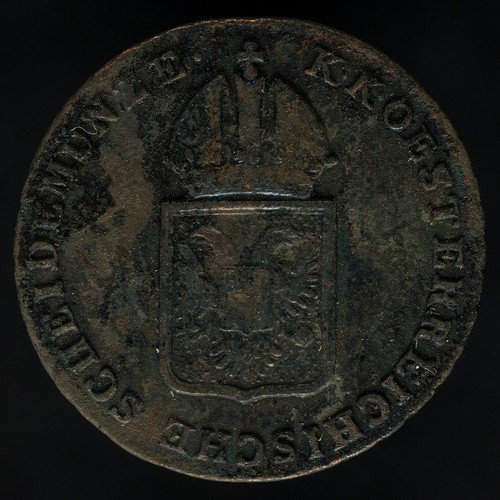
Austria-Hungary 1/4 Kreuzer
A small copper 1/4 Kreuzer of the Austrian Empire dated 1816, showing Emperor Franz I in crowned right-facing profile.
Circulation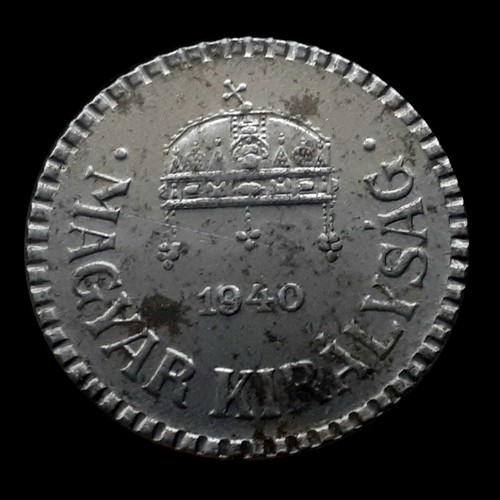
2 Fillér
A small early-20th-century Hungarian 2 fillér in copper-based bronze, showing the crowned Hungarian coat of arms on the obverse and the value with date on the reverse.
Modern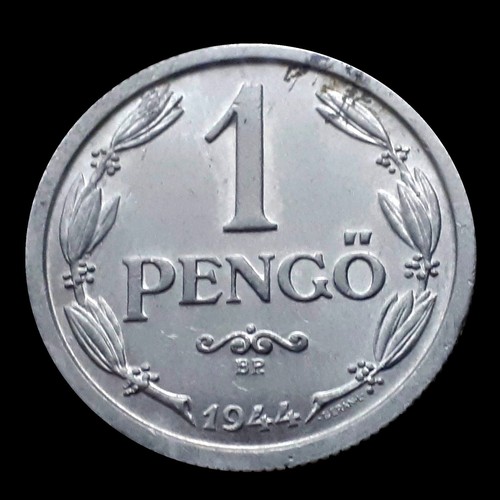
1 Pengő
Wartime Hungarian one pengő struck in lightweight aluminum, with an ornamental laurel-wreath design on one side and the value with the 1944 date on the other.
Modern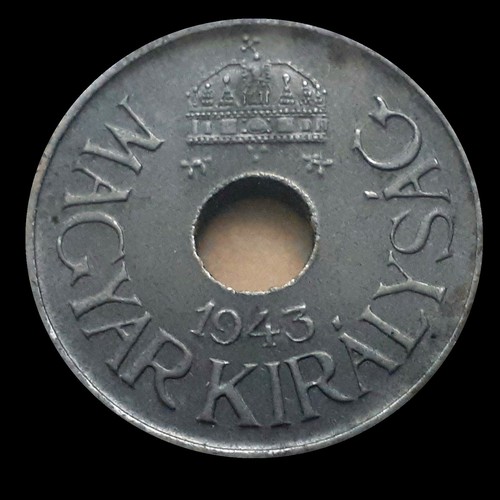
20 Fillér
An early 20th-century Hungarian 20 fillér, a small base-metal coin showing the crowned Hungarian coat of arms and the FILLÉR minor denomination.
Modern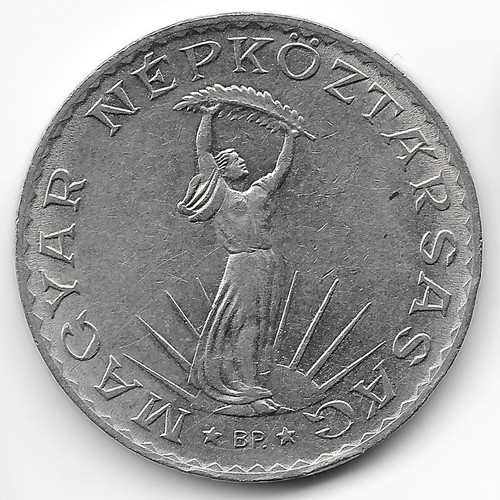
10 Forint
A Hungarian 10 Forint dated 1979, showing a standing allegorical female figure of Liberty holding a palm frond in silver.
Modern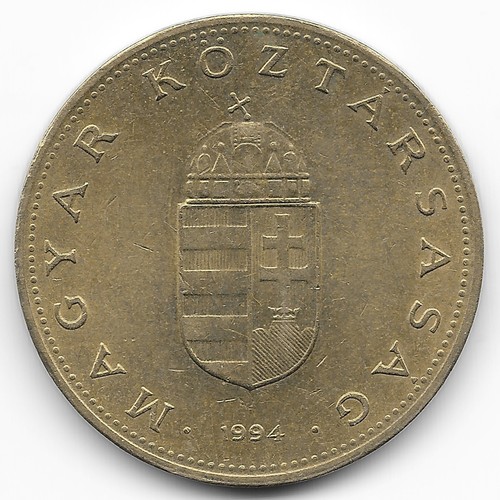
100 Forint (Commemorative)
A Hungarian bi-metallic 100 Forint commemorative pairing the national coat of arms with a bird of prey in flight, struck in a gold-toned ring and pale center.
Commemorative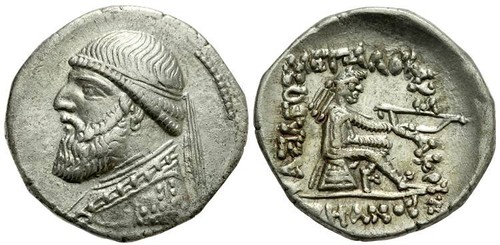
Parthian Drachm
Silver drachm of the Parthian (Arsacid) Empire, pairing a bearded royal profile with a seated archer holding a bow, struck in the era of Mithradates II.
Ancient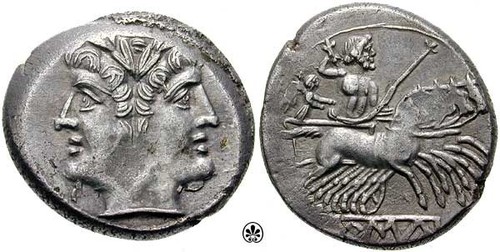
Roman As
A base-metal As of ancient Rome, showing the double-faced head of Janus on one side and a chariot with ROMA on the other.
Ancient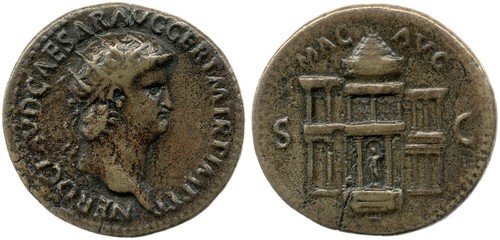
Bronze As of Nero
A Roman bronze as struck under the emperor Nero (54–68 AD), bearing his laureate portrait on the obverse and an imperial reverse type.
Ancient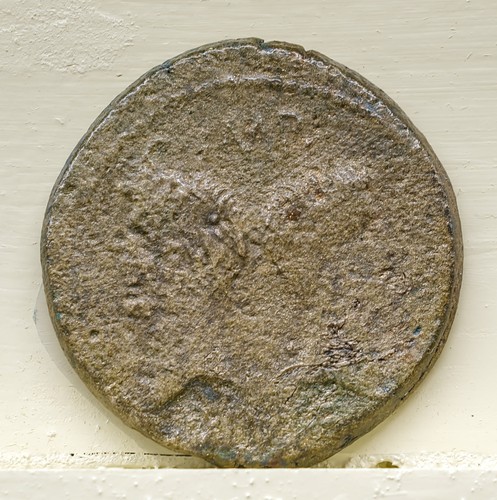
Nemausus As/Dupondius (Crocodile Type)
The famous crocodile of Nimes: a large Roman provincial bronze with paired heads of Agrippa and Augustus and a crocodile chained to a palm.
Ancient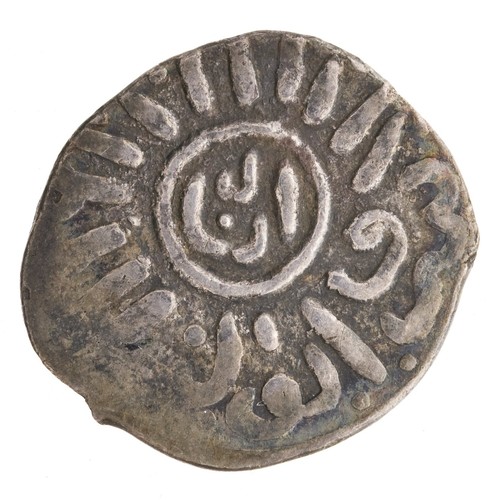
Silver Dirham of Sayf ad-Din Inal
A thin Mamluk silver dirham of Sultan al-Ashraf Sayf ad-Din Inal (r. 1453–1461), covered on both faces with Arabic inscriptions naming the sultan and his titles.
Islamic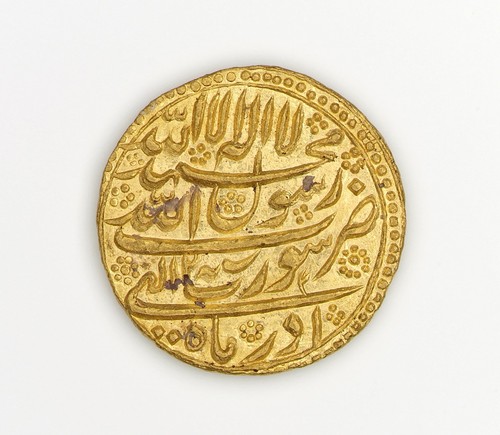
Gold Mohur of Shah Jahan
High-purity gold mohur struck under Mughal emperor Shah Jahan (1628-1658), bearing Persian imperial titles; this example carries the Balkh mint mark.
Mughal India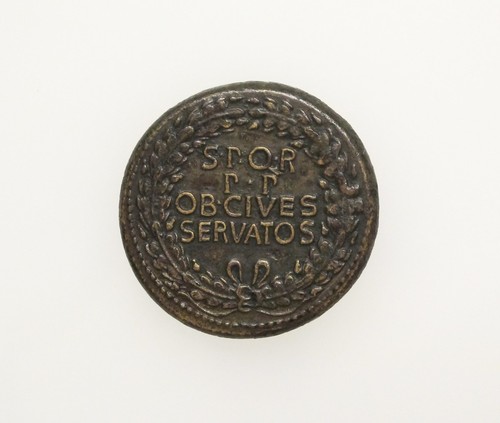
Sestertius of Caligula
Large Roman imperial bronze sestertius bearing the head of Gaius, better known as Caligula, struck during his short reign from 37 to 41 AD.
Ancient Coins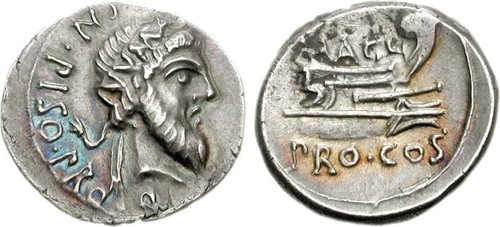
Denarius of Cn. Pompeius Magnus
Silver Roman Republican denarius of the Pompeian party (46–45 BC), with a bearded portrait of Pompey the Great and a galley reverse reading PRO COS.
Ancient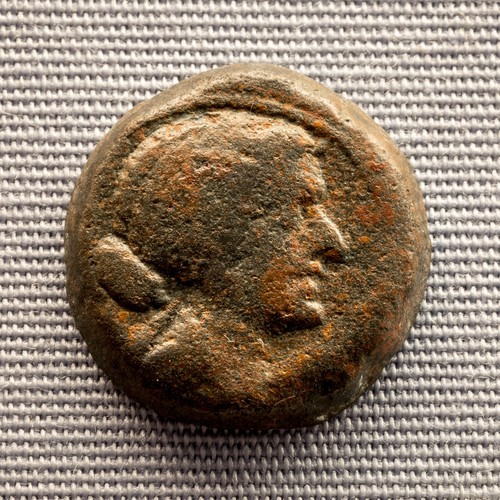
Bronze Coin of Cleopatra VII
Ptolemaic bronze coin of Cleopatra VII of Egypt, 51-30 BC, showing her draped diademed bust in profile as sole named female ruler of the dynasty.
Ancient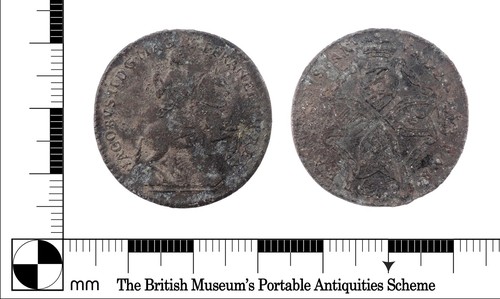
American Plantations Token
A 1688 tin token struck under James II for England's American colonies, valued at 1/24 of a Spanish real — the first regal-authorized coinage for British America.
Colonial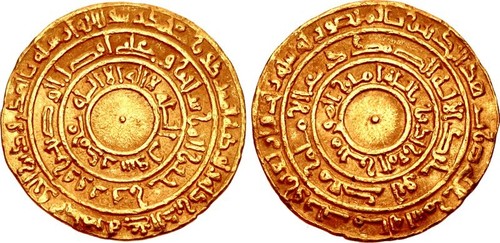
Gold Dinar of al-Mu'izz li-Din Allah
A gold dinar of the Fatimid caliph al-Mu'izz li-Din Allah dated AH 343, struck as concentric Arabic inscriptions with no image on either face.
Islamic (Medieval)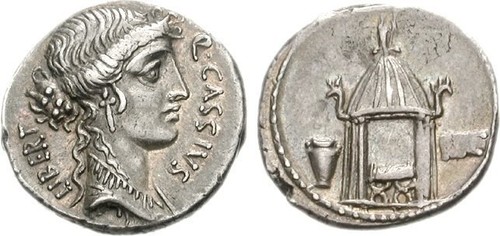
Denarius of Cassius Longinus
Silver denarius struck in 42 BC by Gaius Cassius Longinus, one of Caesar's assassins, to pay his legions before the Battle of Philippi.
Ancient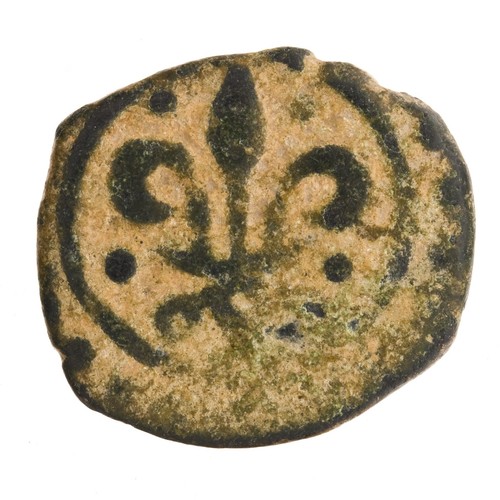
Copper Fals of Muzaffar Hajji
A worn medieval Islamic copper fals bearing Arabic calligraphy and the name of the ruler al-Muzaffar Hajji, an aniconic base-metal coin used as everyday small change.
Islamic (Medieval)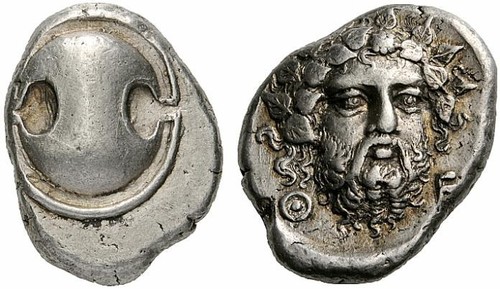
Thebes Stater
Silver stater of Thebes with the Boeotian shield and a bearded head of Dionysos, struck as federal coinage of the Boeotian League, c. 395-338 BC.
Ancient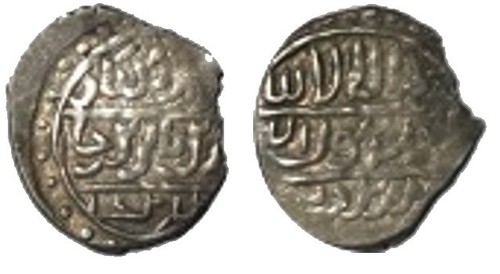
Akçe
The akçe was the tiny silver coin at the heart of the early Ottoman economy, struck with Arabic-script inscriptions and no portrait or figural imagery.
Medieval