
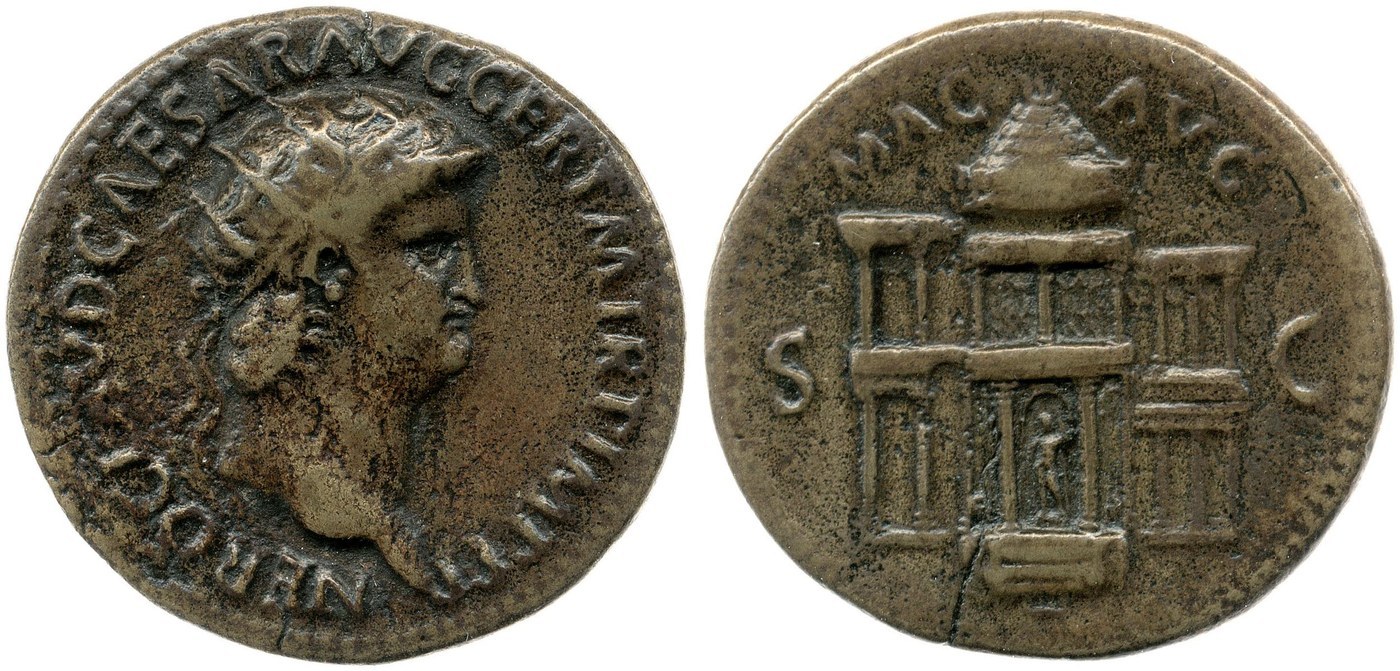
Bronze As of Nero
A Roman bronze as struck under the emperor Nero (54–68 AD), bearing his laureate portrait on the obverse and an imperial reverse type.
- Country
- Roman Empire
- Denomination
- Aes
- Metal
- Bronze
Got a coin like this?
Identify any coin from a photo, free.
Overview
The as was a base-metal Roman coin, and this example was struck during the reign of the emperor Nero, who ruled from 54 to 68 AD. It is a round, hand-struck bronze piece with the emperor's portrait on one side and an allegorical or architectural reverse type on the other. Coins like this circulated as everyday small change across the Roman world.
The obverse shows Nero's head, typically laureate, accompanied by a Latin legend giving his names and titles. The reverse carries an imperial type such as a standing deity, a figure of Victory, or a Roman building or altar, with additional legend and often the letters S C (senatus consulto) marking the coin as an authorized senatorial issue in base metal. As a hand-struck ancient coin, each surviving as varies in centering, wear, and surface color.
History & Background
The as was one of the oldest and most fundamental units of Roman coinage, serving as a low-value base-metal denomination for centuries. Under the imperial system, aes coinage in bronze and copper was issued in the name of the emperor and marked S C to indicate it was struck under the authority of the Senate.
Nero became emperor in 54 AD and reigned until his death in 68 AD. During his rule the Roman mint produced a substantial and artistically notable series of bronze aes, including the as, and Nero's coinage is well known for its detailed and realistic portraiture. A major coinage reform during his reign adjusted the weights and metals of the base-metal denominations, and the mints at Rome and at Lugdunum (modern Lyon) both struck aes in his name.
Because Nero's coins were issued in large volume over roughly fourteen years and circulated widely, bronze asses of Nero survive in reasonable numbers today, though most show the wear and corrosion expected of nearly two-thousand-year-old base-metal coins.
How to Identify
Identify this as an ancient Roman as by its size, metal, and manufacture: it is a thick, round bronze coin, hand-struck rather than machine-milled, so the edges are irregular and the strike is often off-center. Diameter and weight place it among the mid-sized base-metal denominations rather than the smaller as fractions or the larger sestertius.
The obverse bears the portrait of Nero, usually a laureate head, surrounded by a Latin legend containing his name and titles such as NERO and forms of CAESAR and AVG GERM. The reverse shows an imperial type, which may be a standing figure of a deity, Victory, or a personification, or a structure such as a temple or altar, generally with the letters S C prominent in the field indicating a senatorial bronze issue. Corrosion, an earthen or green-brown patina, and softened detail from wear are all normal for a genuine ancient bronze.
Value & Collectibility
Bronze asses of Nero are collectible ancient coins whose value depends heavily on condition, the quality of the portrait, the surface patina, and the specific reverse type. Heavily worn or corroded examples with weak detail are relatively affordable and often trade in the range of a modest hobby purchase, while pieces with a clear portrait, legible legends, and attractive patina command higher prices.
Exceptional examples with sharp strikes, complete legends, desirable reverse types, and smooth even surfaces can be worth substantially more, especially when professionally attributed to a specific mint and catalogue reference. As with all ancient coins, eye appeal and originality of surface matter greatly.
Because exact prices vary widely with the market and with each coin's individual state, any valuation should be treated as an estimate. For a specific piece, comparison with recent auction results for similar Nero asses and, where value is significant, a professional opinion are the best guides.
Frequently asked questions
What is a Roman as?
The as was a low-value Roman base-metal coin used as everyday small change. Under the emperors it was struck in bronze or copper in the ruler's name and usually marked S C to show it was an authorized senatorial issue.
How old is a bronze as of Nero?
It dates to Nero's reign, from 54 to 68 AD, making it roughly nineteen centuries old. Each coin was individually hand-struck at a Roman mint during that period.
What do the letters S C mean on the reverse?
S C stands for senatus consulto, meaning 'by decree of the Senate.' It marks the coin as an official base-metal issue struck under senatorial authority, a standard feature of imperial Roman bronze.
Are asses of Nero rare?
They are collectible but not exceptionally rare, since Nero's bronze coinage was produced in large quantities over about fourteen years. Well-preserved examples with strong portraits are much scarcer than worn ones.
Why does the coin look rough or green?
That is patina and wear from nearly two thousand years in the ground and in circulation. A stable green or brown patina on ancient bronze is normal and generally considered desirable rather than a defect.
Bronze As of Nero guides
In-depth guides for identifying, valuing, and collecting Bronze As of Nero.
Other coins you may enjoy
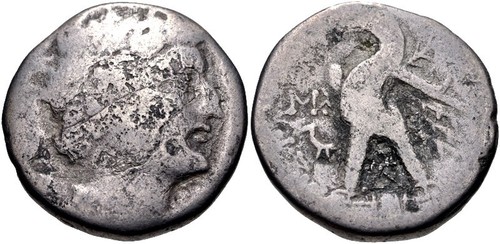
Tetradrachm of Ptolemy XII
80-51 BC
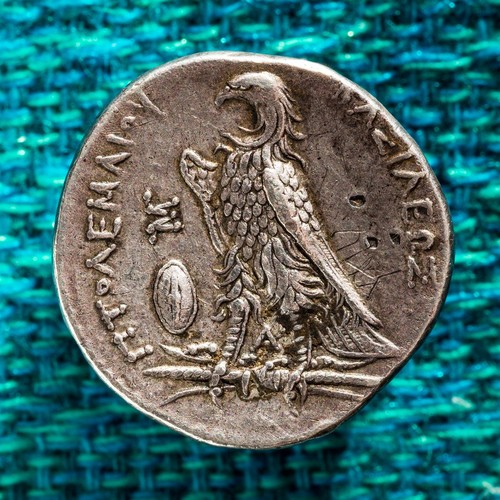
Tetradrachm of Ptolemy I
305-283 BC
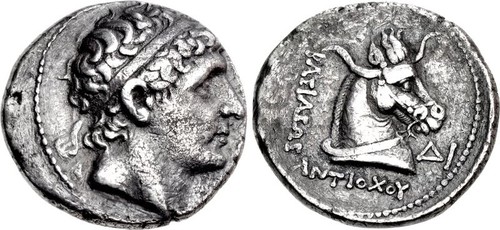
Tetradrachm of Antiochos I Soter
281-261 BC
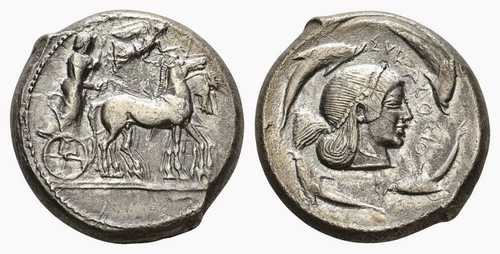
Syracuse Tetradrachm
c. 5th-4th century BC (Classical period)
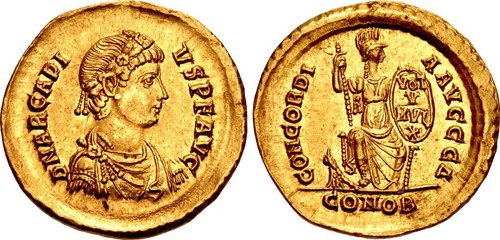
Solidus of Arcadius
AD 395-402
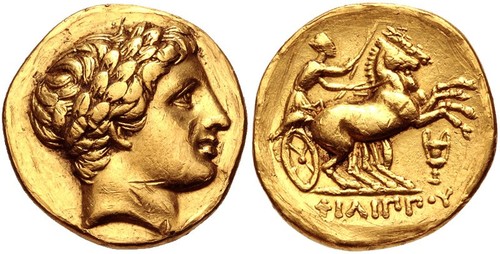
Philip III Gold Stater
323-317 BC
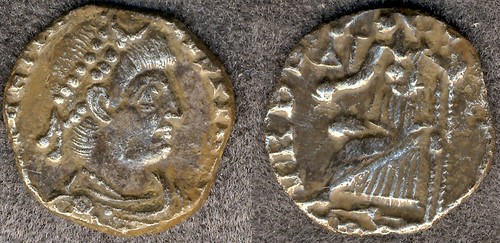
Siliqua of Gratian
AD 367-383
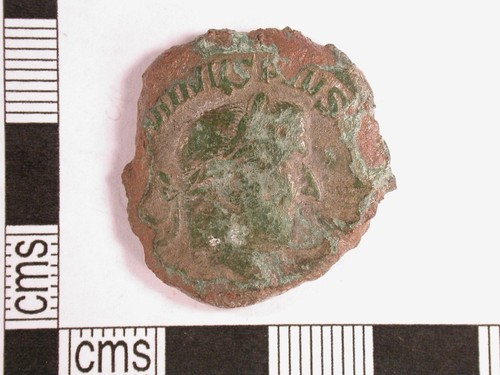
Sestertius of Maximinus Thrax
235-238 AD
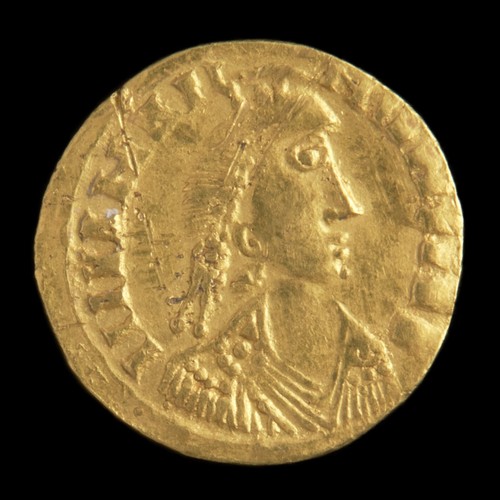
Solidus of Valentinian III
AD 425-455
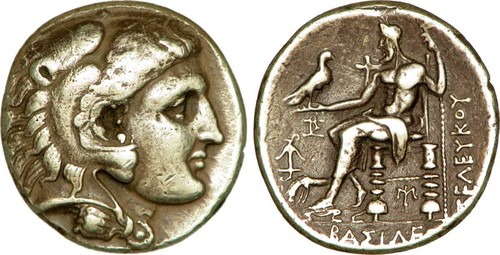
Seleucus I Nicator Tetradrachm
Late 4th-3rd century BC
Nummus of Magnentius
AD 350-353
Follis of Galerius
AD 308-310