
How to Identify the Bronze As of Nero
A collector's guide to recognizing a Roman bronze as of Nero by its portrait, legends, S C reverse, size, and patina.
Read the full Bronze As of Nero encyclopedia entry →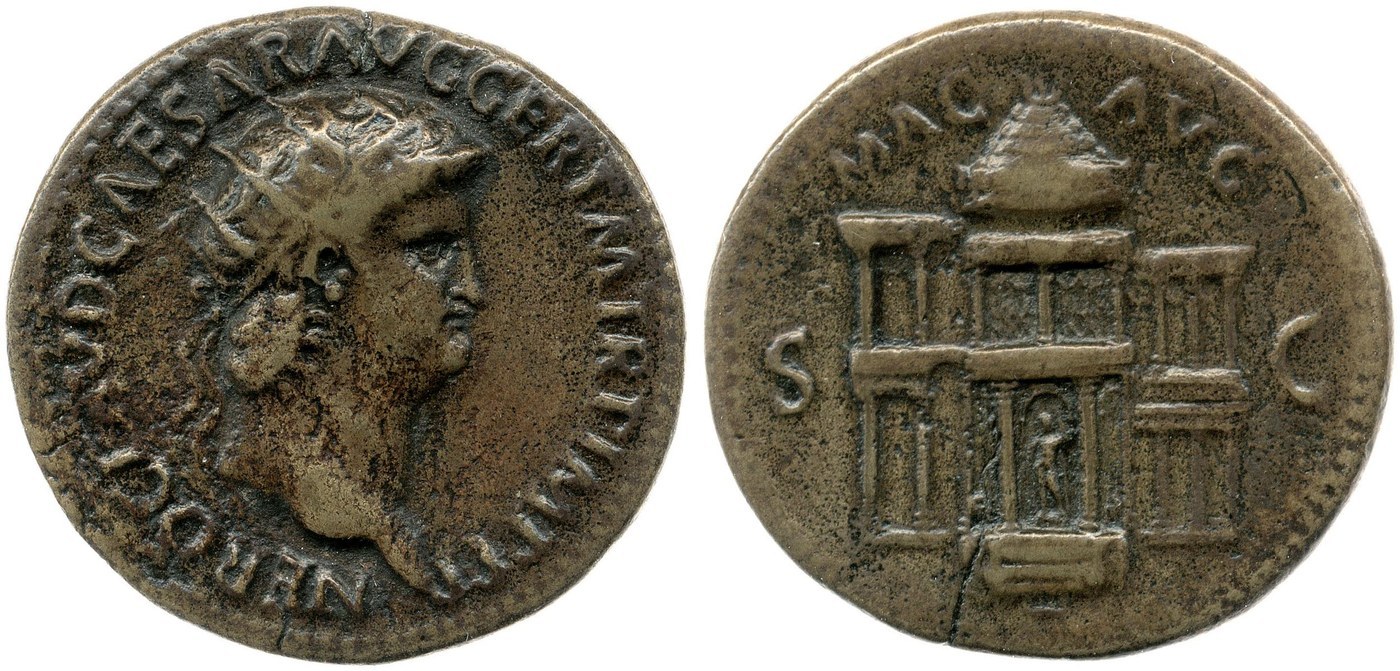
Begin by confirming you have an ancient Roman base-metal coin rather than a later or modern piece. An authentic as is hand-struck bronze: expect a thick, round-ish flan with irregular edges, some off-centering, and a natural green-to-brown patina. Machine-perfect edges, seams, or a shiny cast surface are warning signs. Handle weight and diameter to place it among the mid-sized aes denominations rather than the much larger sestertius or the smaller as fractions.
Read the obverse portrait and legend. The as of Nero shows the emperor's head, most often laureate, with a Latin inscription running around the rim giving his names and titles, including NERO and abbreviated forms such as CAESAR, AVG, and GERM. Nero's portraits are known for a full, distinctive profile, and matching the style of the bust to published Nero types helps confirm the ruler. Worn coins may show only part of the legend, so use the portrait style together with any readable letters.
Examine the reverse for the type and the S C marking. Nero's asses carry various imperial reverses, such as a standing deity or personification, a figure of Victory, or a structure like a temple or altar, usually with the large letters S C in the field. The presence of S C confirms a senatorial bronze issue and helps distinguish an as from provincial or other coinages that lack it. The specific reverse figure, combined with the legend, allows attribution to a catalogue reference and, in some cases, to the mint at Rome or Lugdunum.
Watch for look-alikes and authentication cautions. Other bronze denominations of Nero, and asses of neighboring emperors, share the general format, so verify the name in the obverse legend rather than assuming from the portrait alone. Ancient coins are also widely reproduced: be wary of pieces with unnaturally smooth cast surfaces, mold seams on the edge, or crisp uniform detail that looks too fresh for the wear elsewhere. For any coin of significant value, a professional attribution or a reputable dealer's opinion is worthwhile before purchase.
Frequently asked questions
How can I tell an as from a sestertius or dupondius of Nero?
Compare size and weight: the sestertius is markedly larger and heavier, while the as is a mid-sized bronze. Metal color and denomination legends also differ, so weigh and measure the coin and compare against published specifications for each aes denomination.
How do I know the portrait is Nero and not another emperor?
Read the obverse legend for the name NERO and his titles, and compare the bust style to catalogued Nero portraits. Relying on the face alone is risky, so confirm with any legible letters around the rim.
Is a green crusty surface a problem?
Usually not. A stable green or brown patina is natural on ancient bronze and often desirable. Avoid coins with active, powdery bright-green corrosion, which can indicate bronze disease and ongoing damage.
Should I clean an ancient bronze as?
Generally no. Improper cleaning can strip patina and detail and sharply reduce value. Leave conservation to specialists, and if in doubt about a coin's surfaces or authenticity, seek a professional opinion first.