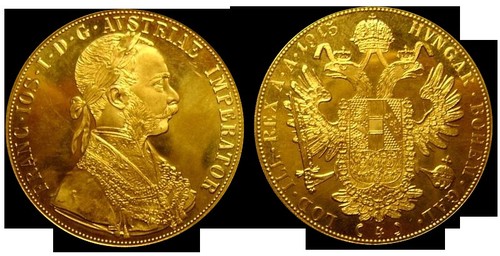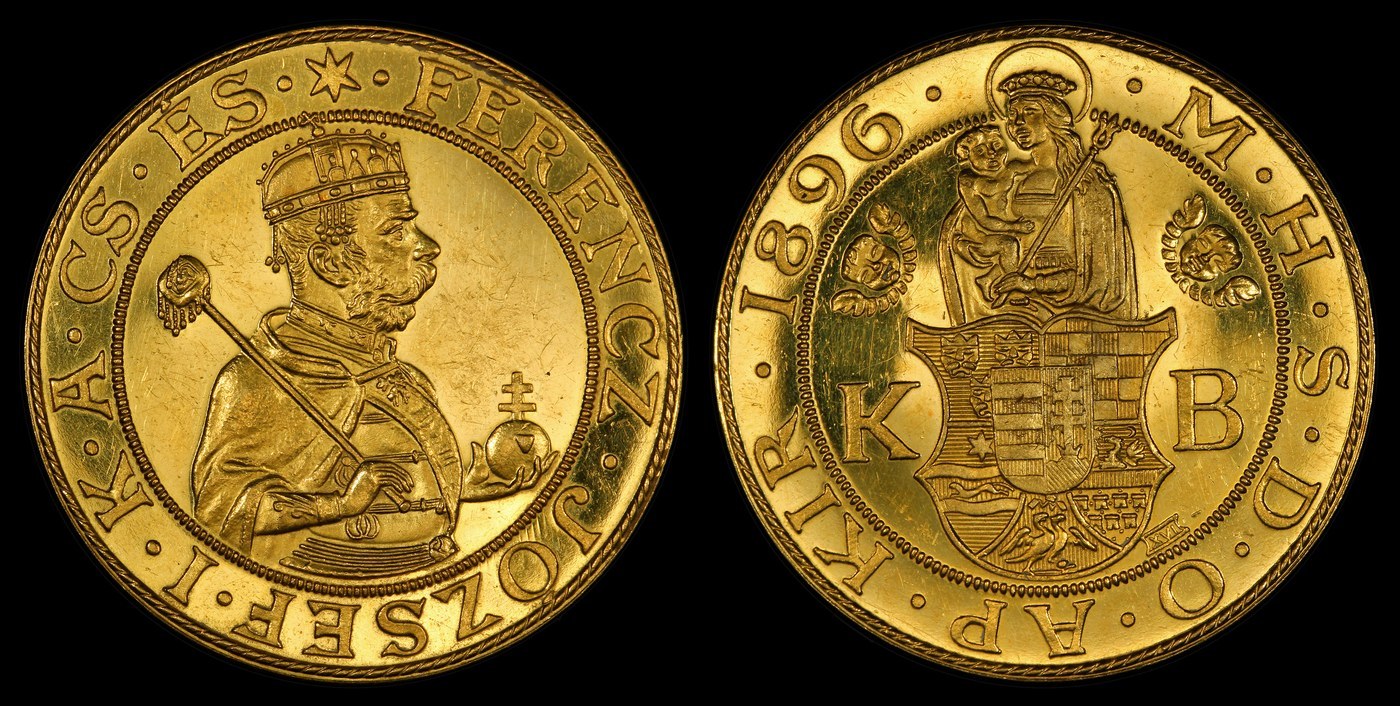
Hungarian 9 Ducats
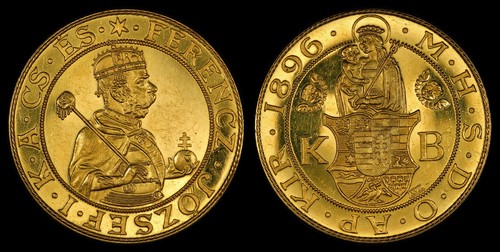
A large gold multiple-ducat piece of Hungary dated 1896, showing a bearded crowned figure with sword and shield and the crowned Hungarian arms.
- Country
- Hungary
- Denomination
- 9 Ducats
- Metal
- Gold
Got a coin like this?
Identify any coin from a photo, free.
Overview
The Hungarian 9 Ducats is a large gold multiple-ducat piece, a heavy show-piece format built on the traditional Hungarian ducat. The example shown is gold and dated 1896, the year of the Hungarian Millennium celebrations marking a thousand years of Magyar settlement.
The obverse presents a bearded figure in royal regalia, standing in a long robe and crown and holding a sword and a decorated shield — the classic standing-king imagery long associated with Hungarian gold. The reverse is dominated by the crowned Hungarian coat of arms, flanked by heraldic double-headed birds and surmounted by a crown, tying the piece to the Habsburg-era Kingdom of Hungary.
Multiple ducats such as this were struck as impressive, high-value gold pieces rather than everyday circulating coins; a 9-ducat module is an unusual, outsized denomination and should be examined carefully as to whether it is a period issue, a later restrike, or a commemorative/fantasy production.
History & Background
Hungary was one of Europe's great gold-coining nations from the medieval period onward, and the ducat — a small, high-purity gold coin — became its signature denomination. Over the centuries Hungarian mints also produced multiple ducats (2, 4, 5, 10 and other multiples) as prestige pieces for presentation, gifts, and stores of value rather than routine commerce.
The 1896 date places this piece in the era of the Austro-Hungarian Monarchy and, specifically, the year of the Millennium (Millennial) celebrations commemorating the founding of the Hungarian state. That anniversary prompted a wave of commemorative and medallic gold, and large multiple-ducat and medal-like strikings were popular as souvenirs of the occasion.
Because outsized denominations like a nine-ducat piece sit outside the common circulating range, examples encountered today may be original prestige strikings, official restrikes produced later, or private/commemorative pieces made to a ducat weight standard. The heraldry — the standing crowned figure and the crowned arms with double-headed eagles — reflects the symbolism of the Kingdom of Hungary within the Habsburg realm.
How to Identify
Obverse: a bearded figure in royal regalia, standing and crowned, holding a sword in one hand and a decorated shield in the other. This standing-monarch composition is the traditional motif of Hungarian gold ducats and their multiples.
Reverse: the crowned Hungarian coat of arms at center, flanked by double-headed heraldic birds (eagles) and topped by a crown — imagery associated with the Habsburg-era Kingdom of Hungary. Look for the date 1896 and Latin or Hungarian legends around the design.
Physical clues: the piece is gold and struck to a multiple-ducat (9 ducats) weight, making it substantially larger and heavier than a single ducat. Confirm the type by the combination of the standing crowned figure, the crowned arms with double eagles, the 1896 date, and the large gold module together — no single feature alone is decisive. Note that the exact size and weight should be checked against ducat-multiple standards.
Value & Collectibility
Value depends heavily on gold content and weight, on whether the piece is an original period striking, a later restrike, or a commemorative/fantasy issue, and on condition and eye appeal. As a large gold item, its bullion value sets a meaningful floor, and genuine, well-documented pieces can trade above melt for their collector and historical interest.
Exact prices vary widely and unusual denominations like a nine-ducat module can be hard to price without comparables, so treat any single figure with caution. Because large gold pieces are frequently copied, gilded, or produced as unofficial fantasy strikings, obtain specialist authentication and compare recent auction results for closely matching Hungarian multiple-ducat gold before buying or selling.
Frequently asked questions
What is the Hungarian 9 Ducats?
It is a large gold multiple-ducat piece of Hungary, built on the traditional ducat weight standard. The example shown is gold, dated 1896, with a standing crowned figure on the obverse and the crowned Hungarian arms on the reverse.
Who or what is shown on the coin?
The obverse shows a bearded crowned figure in royal regalia holding a sword and a decorated shield, the classic standing-king motif of Hungarian gold. The reverse shows the crowned Hungarian coat of arms flanked by double-headed heraldic eagles.
Why is it dated 1896?
1896 was the year of Hungary's Millennium celebrations marking a thousand years of Magyar settlement, which prompted a wave of commemorative and prestige gold. The date appears in the design alongside the heraldry.
Is a 9-ducat denomination unusual?
Yes. Hungary struck ducats and various multiples as prestige pieces, but a nine-ducat module is outsized and uncommon. Such a piece may be an original prestige striking, a later restrike, or a commemorative/fantasy production, so it should be examined carefully.
Is it valuable?
As a large gold piece its metal content sets a floor, and genuine, documented examples can bring more for their collector interest. Because big gold pieces are often copied or made as unofficial strikings, have any example authenticated and compare recent auction results.
Hungarian 9 Ducats guides
In-depth guides for identifying, valuing, and collecting Hungarian 9 Ducats.