
How to Identify the Hungarian 9 Ducats
Identify a Hungarian 9-ducat gold piece by its standing crowned figure with sword and shield, the crowned arms with double eagles, the 1896 date, and its heavy gold module.
Read the full Hungarian 9 Ducats encyclopedia entry →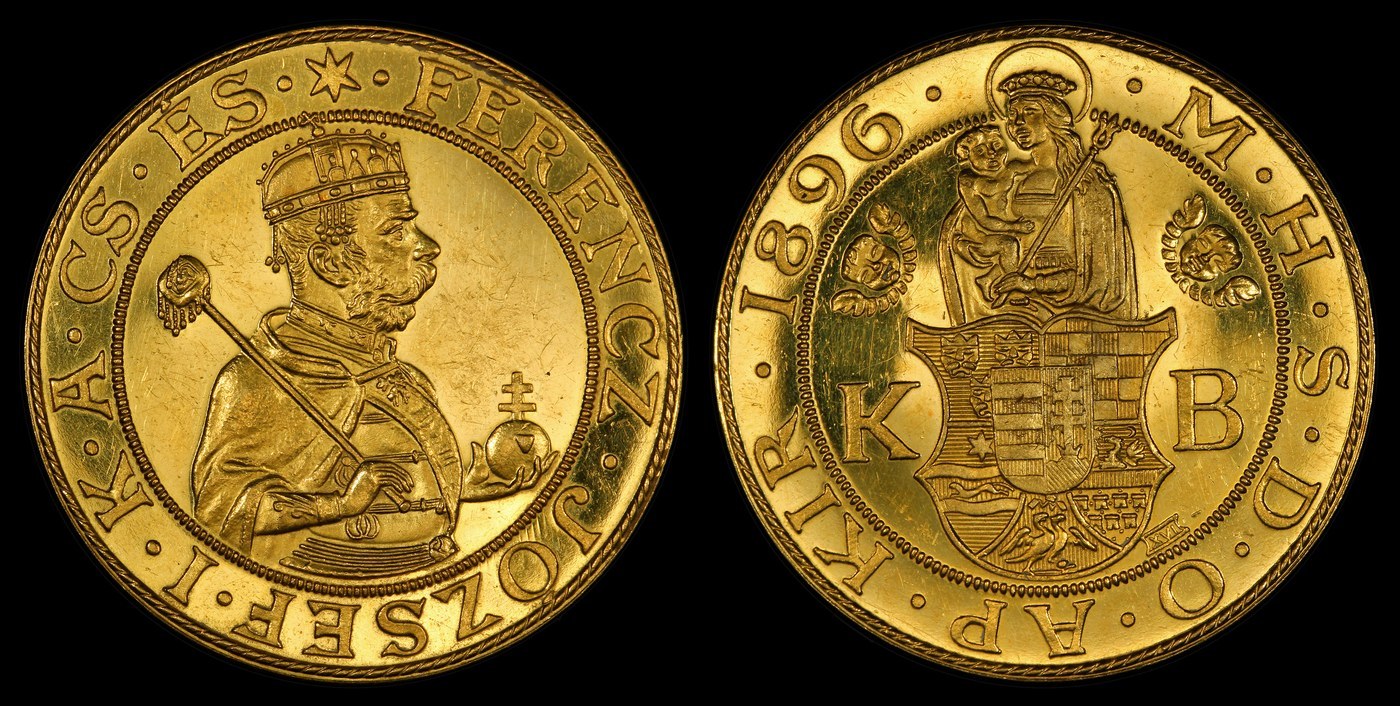
Start with the standing figure. The obverse shows a bearded, crowned figure in royal regalia holding a sword and a decorated shield. This full-length standing-monarch pose is the traditional signature of Hungarian gold ducats and their multiples, so it is the first thing to confirm. Read any surrounding Latin or Hungarian legend for names and titles rather than judging the figure by appearance alone.
Read the reverse heraldry and date. Look for the crowned Hungarian coat of arms at center, flanked by double-headed heraldic eagles and topped by a crown — the symbolism of the Kingdom of Hungary in the Habsburg era. Locate the date 1896, and note that it ties the piece to the year of Hungary's Millennium celebrations. Matching the standing figure to the crowned-arms reverse and a legible 1896 date links both faces to the type.
Weigh and measure it. A 9-ducat piece should be a substantial gold object, far larger and heavier than a single ducat, which weighs only a few grams. Weigh and measure the piece and compare it against a nine-times ducat weight standard; a result well off that figure is a strong warning sign. Genuine gold is dense, warm-toned, and non-magnetic.
Watch for look-alikes and unusual denominations. Because a nine-ducat module is uncommon, be alert to the possibility that the piece is a later restrike, a medal, or a commemorative/fantasy striking made to look like a period coin, rather than an original circulating denomination. Hungarian and Austrian gold shares similar standing-figure and double-eagle imagery, so confirm the specific arms, legends, and 1896 date rather than relying on style.
Authenticate carefully. Large gold pieces are among the most copied items in the market, and gilded base-metal fakes and cast copies are common. Inspect the edge for casting seams, judge whether the figure and lettering are crisp rather than soft, and be wary of pieces whose weight or dimensions do not match a ducat-multiple standard. For any valuable gold example, seek specialist or third-party authentication and compare recent auction records for matching Hungarian multiple-ducat gold.
Frequently asked questions
How do I confirm this is a Hungarian piece and not Austrian?
Check the reverse heraldry and legends: look for the crowned Hungarian coat of arms and any Hungarian or Latin titles. Austrian and Hungarian gold share standing-figure and double-eagle motifs, so verify the specific arms and inscriptions rather than the general style.
How can I tell a 9-ducat piece from a single ducat?
By size and weight. A single ducat is small and weighs only a few grams, while a nine-ducat piece is a large, heavy gold object. Weigh and measure it and compare against a nine-times ducat weight standard.
Could this be a restrike or commemorative rather than an original coin?
Yes. Outsized denominations like a nine-ducat module are uncommon, and examples may be later restrikes, medals, or commemorative strikings, especially given the 1896 Millennium context. Provenance and specialist review help establish what a given piece is.
What are the main authentication risks?
Cast copies, gilded base-metal fakes, and unofficial fantasy strikings are the chief concerns for large gold pieces. Inspect the edge for seams, look for crisp detail, verify weight and dimensions, and get valuable examples professionally authenticated.