Austrian Gold Ducat
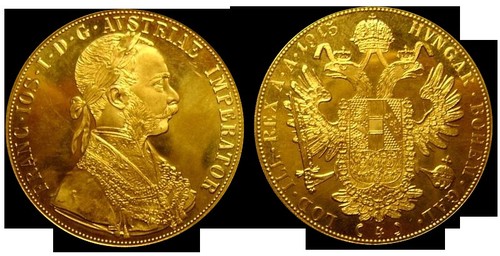
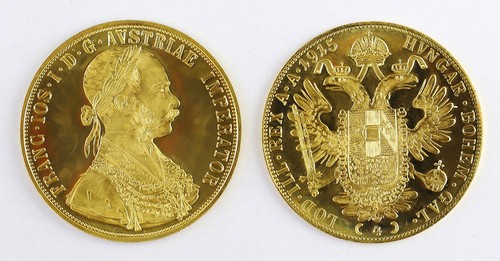
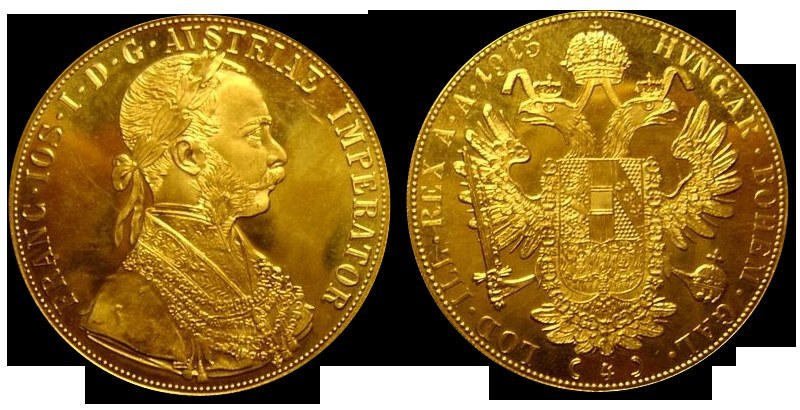
A high-purity Austrian gold ducat of the Habsburg monarchy, showing a crowned ruler in military dress on the obverse and the double-headed imperial eagle on the reverse.
- Country
- Austria
- Denomination
- 1 Ducat
- Metal
- Gold
Got a coin like this?
Identify any coin from a photo, free.
Overview
The Austrian Gold Ducat is a small, high-purity gold trade coin of the Habsburg monarchy, valued at one ducat. The example shown is gold and dates from the 18th to 19th century, the long era in which Austria struck ducats as an internationally recognized standard of fine gold.
The obverse carries a portrait of a crowned ruler in military attire facing right, ringed by a Latin titular legend. The reverse displays the double-headed Austrian eagle bearing an ornate coat of arms surmounted by a crown — the classic heraldic device of the Habsburg emperors. The ducat's appeal has always rested on its near-pure gold content and its consistent, widely trusted weight rather than on a large face value.
History & Background
The ducat was a European gold trade coin whose weight and fineness traced back to medieval Venice, and the Habsburg lands adopted the standard to produce a coin merchants across the continent would accept on sight. Through the 18th and 19th centuries Austria struck ducats in large numbers under successive emperors of the House of Habsburg, keeping the metal near-pure so the pieces functioned as a reliable store of value.
Because the ducat was a trade coin rather than everyday small change, its design emphasized authority and continuity: a crowned imperial portrait paired with the double-headed eagle that had long served as the emblem of the Habsburg and Holy Roman imperial tradition. The type persisted with only gradual changes across reigns, which is why ducats of this general appearance span many decades.
Austria continued to produce ducats into the 20th century, and the coin remains familiar today partly because later dates have been officially restruck as bullion. The 18th- and 19th-century pieces, however, are genuine circulating-era trade coins and are collected as tangible records of Habsburg gold coinage.
How to Identify
Obverse: a right-facing portrait of a crowned ruler in military attire, surrounded by an abbreviated Latin legend giving the emperor's name and titles. Reading that legend is the key to attributing the coin to a specific Habsburg ruler and reign.
Reverse: the double-headed Austrian eagle, wings displayed, bearing an ornate coat of arms and a crown. The date typically appears within or beneath this design. The eagle-and-arms reverse is the strongest single indicator that a small gold coin is an Austrian ducat.
Physical clues: the ducat is a small, thin gold coin of high fineness — historically close to pure gold — and light in weight compared with its diameter. Confirm the crowned military portrait, the double-headed eagle reverse, and the Latin legend together; the combination, not any one feature, identifies the type.
Value & Collectibility
Value depends on the ruler and date, the mint, the sharpness of the portrait and eagle, and overall condition. Because the ducat is a near-pure gold coin, its precious-metal content sets a firm floor, and most circulated pieces trade in relation to their gold value with a modest premium for age and collectibility.
Scarcer rulers, early dates, and well-preserved examples can bring more than bullion, while common later types stay close to melt. Exact prices vary widely, so treat any single figure with caution. Gold ducats are also among the most frequently restruck and counterfeited coins, so compare recent sales of matching dates and obtain authentication before buying or selling a valuable example.
Frequently asked questions
What is an Austrian gold ducat?
It is a small, high-purity gold trade coin of the Habsburg monarchy valued at one ducat. The example shown dates from the 18th to 19th century and shows a crowned ruler on the obverse and the double-headed Austrian eagle on the reverse.
Who is on the coin?
The obverse shows a crowned Habsburg ruler in military attire facing right, named in the surrounding Latin legend. Reading that legend identifies which emperor struck the piece.
Why is the ducat almost pure gold?
The ducat was an international trade coin, and its value came from a consistent, near-pure gold content that merchants across Europe would accept. High fineness was the whole point of the denomination.
What is the eagle on the reverse?
It is the double-headed eagle of the Habsburg and imperial tradition, shown with an ornate coat of arms and a crown. It is the classic emblem of Austrian imperial coinage.
Is it valuable?
As a near-pure gold coin its metal sets a floor, and ruler, date, and condition can raise the value above bullion. Because ducats are often restruck and faked, have valuable examples authenticated.
Austrian Gold Ducat guides
In-depth guides for identifying, valuing, and collecting Austrian Gold Ducat.