
How to Identify the Austrian Gold Ducat
Identify an Austrian gold ducat by its crowned military portrait, the double-headed eagle reverse with a crowned coat of arms, and its small, thin, near-pure gold module.
Read the full Austrian Gold Ducat encyclopedia entry →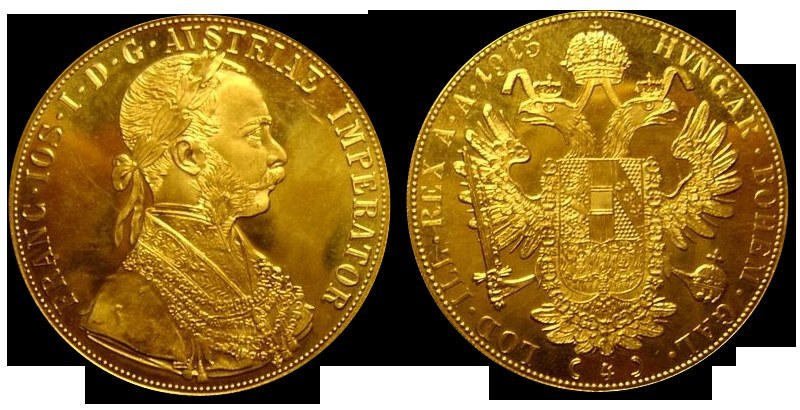
Start with the reverse eagle. The clearest signal that a small gold coin is an Austrian ducat is the double-headed eagle with wings displayed, bearing an ornate coat of arms and a crown. This heraldic device sets Austrian and imperial ducats apart from the many other European ducats that use religious figures, standing rulers, or plain shields.
Read the obverse portrait and legend. The obverse shows a crowned ruler in military attire facing right. Read the abbreviated Latin legend around the portrait to fix the emperor's name and titles; this is how you attribute the coin to a specific Habsburg reign rather than judging the face alone. Note the date, which usually sits on the reverse near the eagle.
Check size, weight, and metal. A ducat is small, thin, and struck in high-fineness gold, so it feels light for its diameter and shows a warm, rich gold tone. Weigh and measure the coin and compare against published ducat specifications; genuine gold is dense relative to base metals, non-magnetic, and does not tarnish. A piece well off the expected weight or diameter is a warning sign.
Watch for look-alikes. Many countries struck ducats to the same standard — the Netherlands, Hungary, and others — and their coins share the size and fineness but differ in design, so the Austrian eagle-and-arms reverse is the deciding feature. Be aware too that Austria has officially restruck later ducat dates as bullion; a restrike is real gold but not an original circulating-era coin, which matters for collector value.
Authenticate carefully. Gold ducats are among the most copied coins in the market, with both period counterfeits and modern gilt or cast fakes. Inspect the edge and fields for casting seams or softness, check that the portrait and eagle detail are crisp, and confirm the legend matches a known ruler and date. For any valuable example, seek a specialist opinion or third-party certification and compare recent auction results for matching coins.
Frequently asked questions
How do I tell an Austrian ducat from another country's ducat?
The size and fineness are shared across many nations, so rely on the design: the Austrian ducat shows the double-headed eagle with a crowned coat of arms on the reverse and a crowned Habsburg ruler in military dress on the obverse.
How do I identify which emperor struck the coin?
Read the abbreviated Latin legend around the obverse portrait, which gives the ruler's name and titles, and check the date near the reverse eagle. Do not rely on the crowned military portrait alone.
Is a restruck ducat still real gold?
Yes. Officially restruck ducats are genuine high-purity gold, but they are modern productions of an earlier date rather than original circulating coins, so they generally trade nearer to bullion than a period example.
What are the main authentication risks?
Cast copies, gilt base-metal fakes, and restrikes are all common. Weigh and measure the coin, inspect the edge for seams, look for crisp portrait and eagle detail, and have valuable pieces professionally authenticated.