1 Pengő
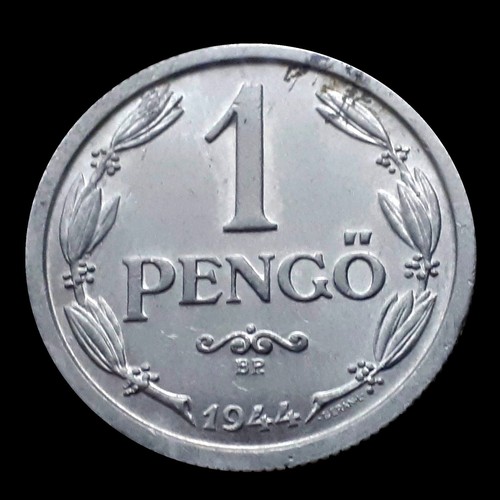
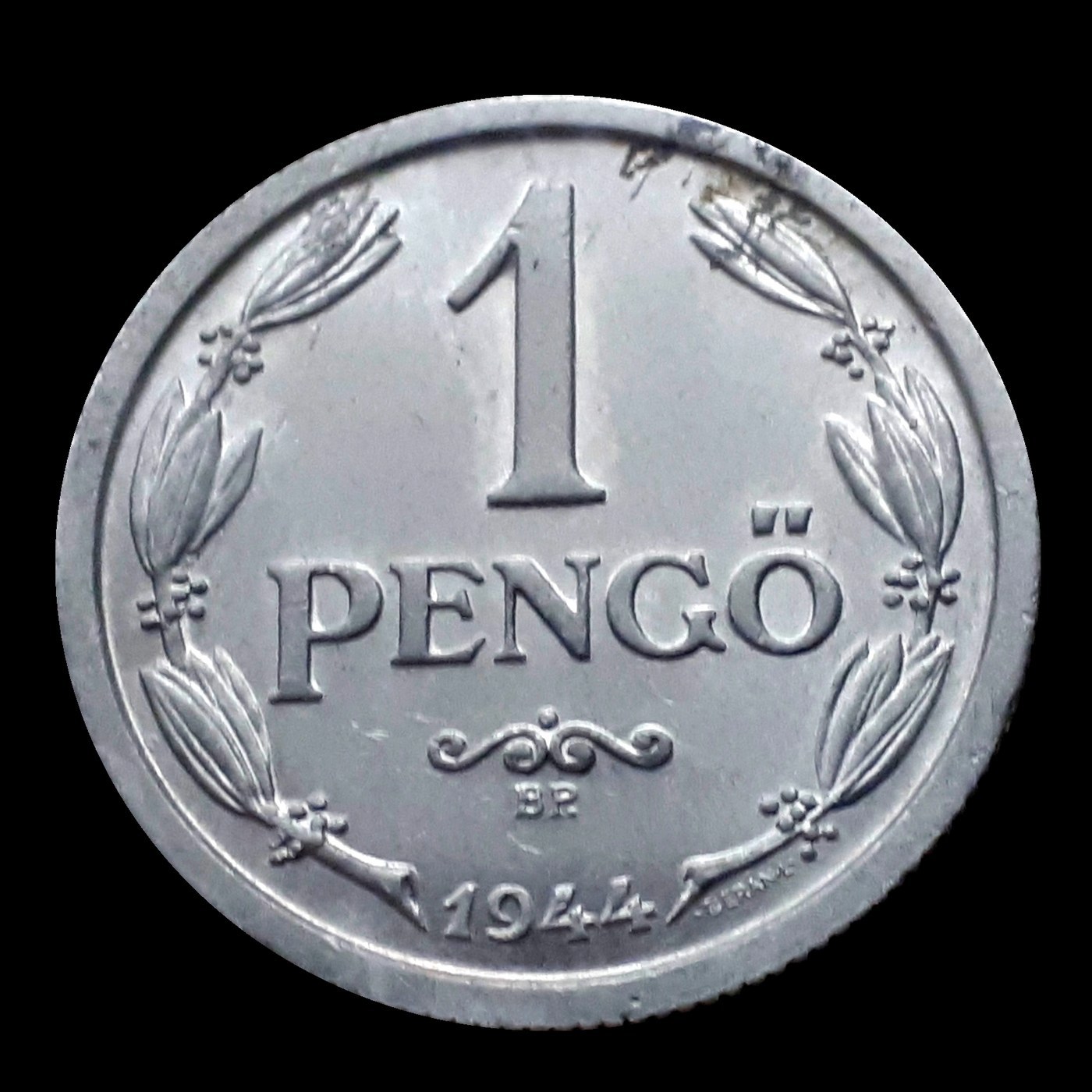
Wartime Hungarian one pengő struck in lightweight aluminum, with an ornamental laurel-wreath design on one side and the value with the 1944 date on the other.
- Country
- Hungary
- Denomination
- 1 Pengő
- Metal
- Aluminum
Got a coin like this?
Identify any coin from a photo, free.
Overview
The 1 Pengő dated 1944 is a small circulating coin of Hungary, struck in lightweight aluminum during the closing years of the Second World War. One face carries an ornamental design framed by laurel wreaths, while the other presents the denomination and the date, marking the coin's value and year of issue.
This is a base-metal wartime issue rather than a precious-metal coin. Aluminum was used because silver and other strategic metals were scarce and reserved for the war effort, so the appeal of the piece is historical and typological rather than tied to any bullion content. It is very light in the hand, a distinctive trait of the aluminum coinage of the period.
Collectors value the 1944 pengő as an accessible emblem of Hungary in the final phase of the war, when the country's monetary system was strained and its coinage reduced to inexpensive metals. It is a common, affordable representative of the pengő era, which ended a few years later amid the catastrophic hyperinflation of 1945 to 1946.
History & Background
The pengő was introduced in 1927 as Hungary's stabilized currency, replacing the earlier korona. Early silver pengő coins gave way, as the Second World War progressed, to cheaper metals, and by the early 1940s the smaller denominations were being struck in aluminum to conserve strategic materials. The 1 Pengő in aluminum belongs to this wartime economizing.
A 1944-dated example comes from the very end of this period, when Hungary was deep in the conflict and under intense military and political pressure. Coinage of these years reflects an economy geared toward the war, with utilitarian aluminum pieces standing in for the silver coins of more prosperous times.
The pengő did not long survive the war. In the aftermath the currency collapsed into one of the most extreme hyperinflations in recorded history, and the pengő was replaced by the forint in 1946. That dramatic ending gives the late wartime pengő coinage, including the 1944 issue, a particular place in monetary history.
How to Identify
Identify this coin first by its metal and weight. It is struck in aluminum, so it is strikingly light for its size and shows a dull silvery-grey, whitish tone rather than the warm yellow of bronze or brass or the bright white heft of silver. This lightness is one of the clearest signals of the wartime aluminum pengő.
Look at the two faces. One side carries an ornamental design bordered by laurel wreaths, a decorative framing typical of the type. The other side shows the denomination together with the date. Reading the value and the year 1944 confirms the specific issue in hand.
The combination that pins down this type is the aluminum fabric, the light weight, the laurel-wreath ornamental side, and the value-and-date side reading 1944. A heavy, warm-toned, or clearly silver piece of similar design would be a different metal variety or denomination, so weight and color are as important as the inscriptions.
Value & Collectibility
As a common wartime base-metal coin, the 1 Pengő of 1944 is inexpensive. Aluminum coins of this era were produced for everyday circulation and survive in quantity, so most examples trade for pocket-change to low single-digit dollar sums. The value rests on history and condition rather than metal content, since aluminum carries no bullion premium.
Condition drives what little premium exists. Aluminum is soft and prone to nicks, scratches, and dark or chalky corrosion, so bright, cleanly struck coins with smooth original surfaces and sharp detail are worth more than the typical worn or marked pieces. Corroded, bent, or heavily handled coins sell for less.
Because values are modest, treat any figure as a broad guideline rather than a firm quote; actual prices depend on grade, eye appeal, and demand at the time of sale. At this price level there is little incentive to counterfeit, so the practical focus is condition and originality rather than authentication.
Frequently asked questions
What country and period is this coin from?
It is a Hungarian 1 Pengő dated 1944, a wartime circulating coin from the final years of the Second World War, struck in aluminum during a time of metal shortages.
Is it made of silver?
No. This is an aluminum coin, which is why it feels so light and shows a dull silvery-grey tone. It contains no precious metal, so its value is historical rather than based on bullion.
Why is the coin so light?
It was struck in aluminum to conserve silver and other strategic metals for the war effort. Aluminum coins are far lighter than silver, bronze, or nickel pieces of the same size, which is a hallmark of wartime coinage.
What happened to the pengő?
The pengő collapsed in an extreme hyperinflation just after the war and was replaced by the forint in 1946. That makes late wartime pengő coins like the 1944 issue historically notable end-of-era pieces.
Is it worth much?
It is common and affordable. Most circulated examples are worth only a few dollars, while bright, well-preserved coins with original surfaces and no corrosion bring a modest premium among collectors of Hungarian coinage.
1 Pengő guides
In-depth guides for identifying, valuing, and collecting 1 Pengő.