
Coin Encyclopedia
Search and identify coins from around the world — with country, denomination, metal, mint, history, and how to tell them apart.
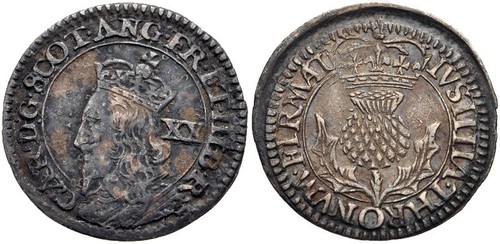
Charles I Twenty Pence
A small hammered silver twenty-pence coin of Charles I, showing his crowned profile and a heraldic reverse with rose and thistle badges.
Hammered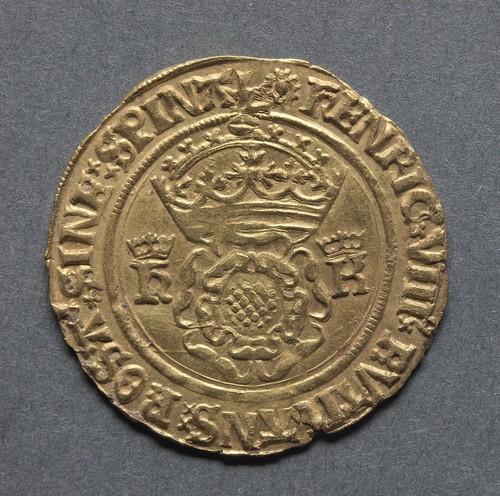
Crown of the Double Rose
A hammered Tudor gold crown of Henry VIII, valued at five shillings and named for the crowned double Tudor rose that defines its design.
Hammered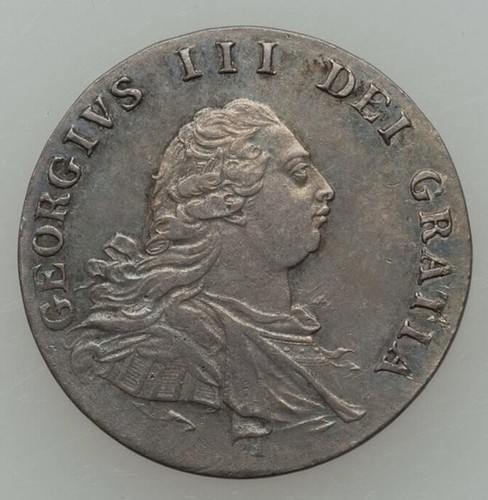
British Groat
A small George III silver fourpence of 1792, the British groat: laureate king's profile obverse, crowned shield and value reverse.
Circulation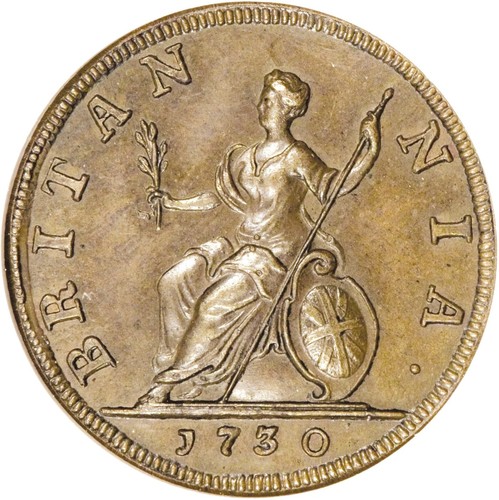
British Farthing
Small copper farthing of King George II, with his laureate bust facing left and a seated Britannia on the reverse; struck in the 1730s.
British Isles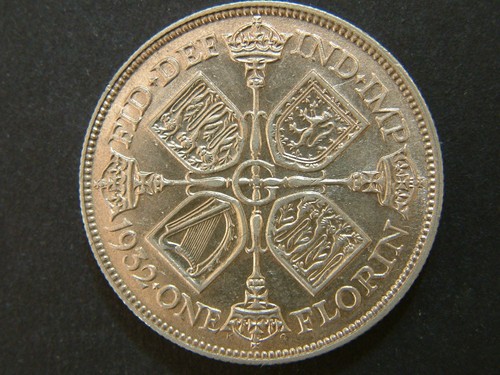
British Florin
A Victorian silver two-shilling florin with a crowned, veiled Victoria and a heraldic crowned-shields reverse; the pictured coin is dated 1890.
World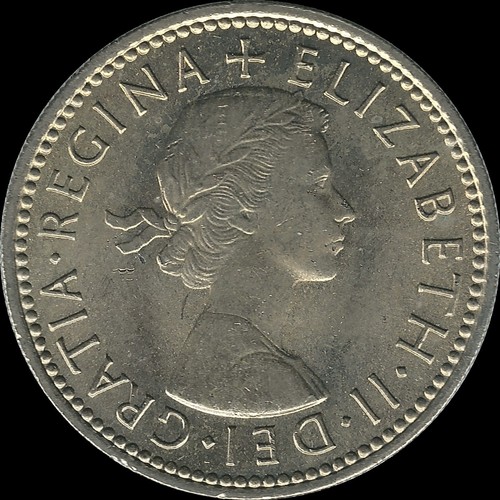
British Shilling
Small Victorian silver shilling showing Queen Victoria's crowned, veiled Jubilee portrait and a crowned heraldic shield reverse.
World Coins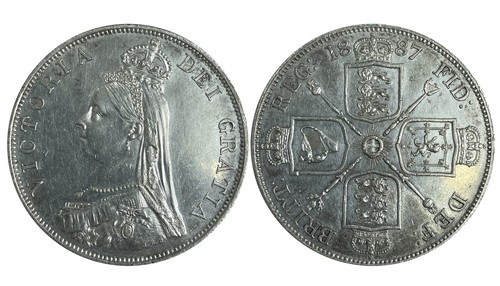
British Double Florin
Large Victorian silver four-shilling piece with the Jubilee Head of Queen Victoria and a cross of four crowned shields on the reverse.
World Coins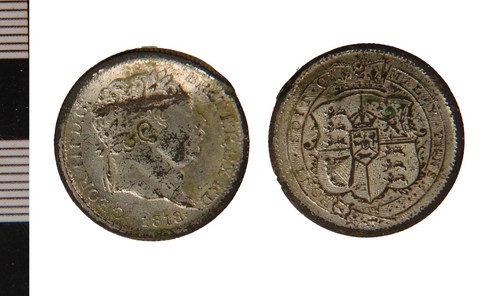
British Bank Token
Copper token of the late George III period bearing the king's left-facing bust and a quartered royal-arms reverse, dated 1819.
British Isles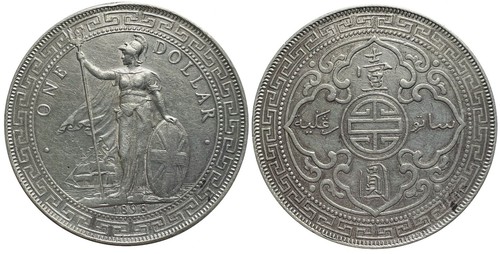
British Trade Dollar
British silver trade dollar for Far East commerce, with seated Britannia holding a trident and shield and a Chinese dragon reverse.
Dollar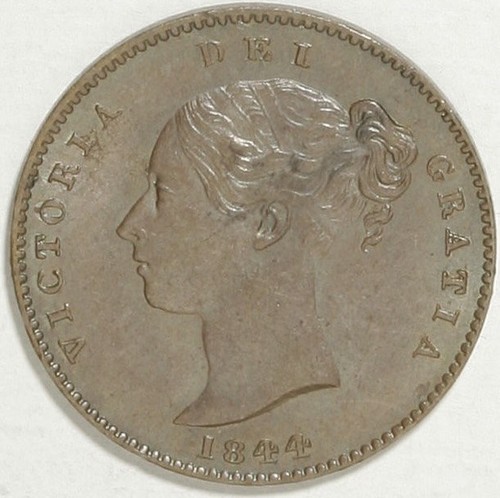
British Third Farthing
A tiny 1844 Victoria copper coin: young left-facing queen's bust obverse, crowned value reverse. One of Britain's smallest denominations, struck for Malta.
Circulation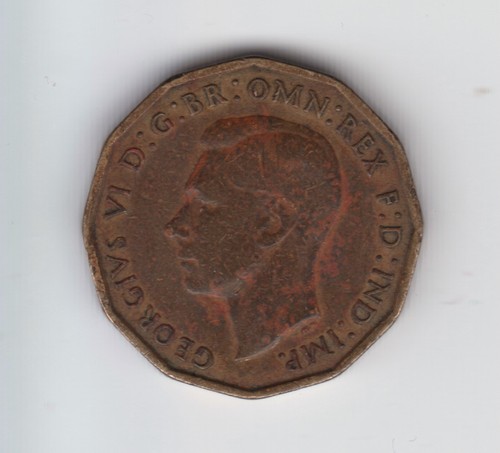
British Brass Threepence
Chunky twelve-sided nickel-brass threepence of George VI, showing his head and a thrift plant reverse; the example shown is dated 1942.
British Isles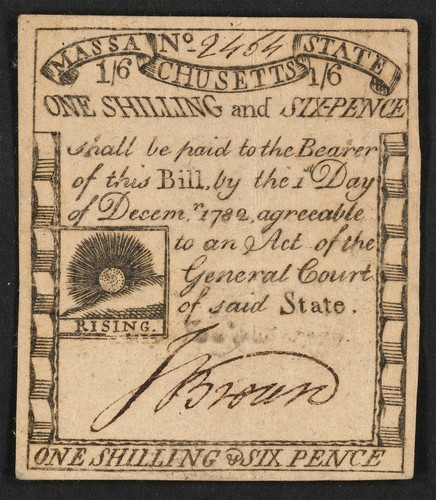
Massachusetts Shilling (1 Shilling 6 Pence)
A colonial-era Massachusetts silver piece valued at one shilling and sixpence, joining a pine-tree obverse with a rising-sun reverse and the date 1779.
Colonial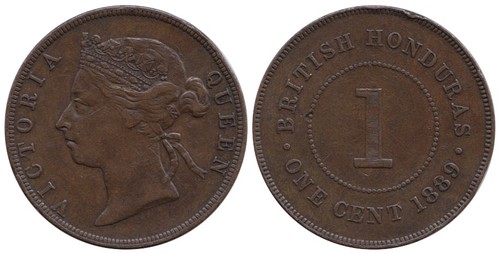
British Honduras One Cent
A colonial copper one cent of British Honduras under Queen Victoria, dated 1889, with the Queen's profile and the value and country name on the reverse.
Colonial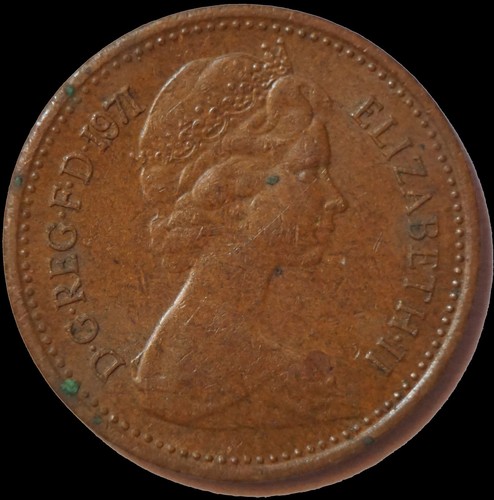
British Decimal Half Penny
The smallest UK decimal coin, a tiny bronze half-penny introduced with decimalisation in 1971, bearing a crown reverse and the Machin portrait of Elizabeth II.
British Isles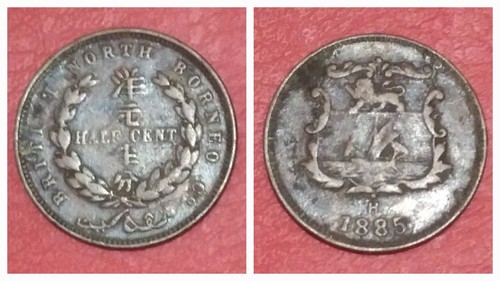
British North Borneo Half Cent
An 1885 copper half cent of British North Borneo: a bust in a laurel wreath on the obverse and the company arms with a heraldic supporter on the reverse.
Colonial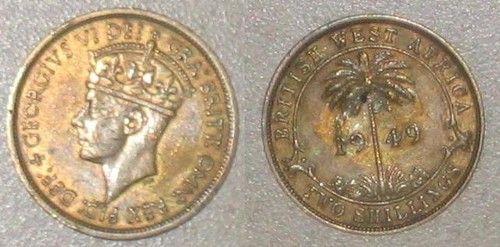
British West Africa 2 Shillings
A colonial copper-nickel two-shilling piece of British West Africa, showing King George VI and a palm-tree reverse.
World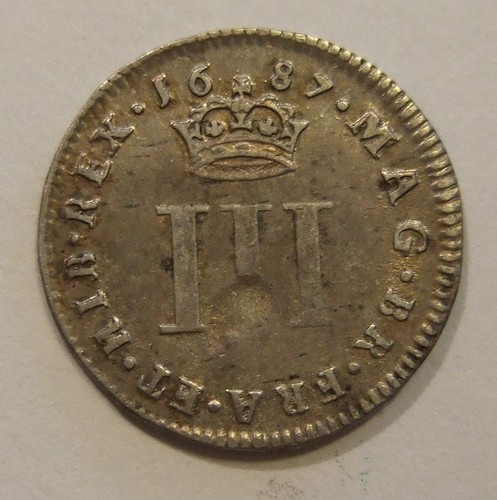
Maundy Three Pence
A tiny sterling-silver threepence tied to Britain's Royal Maundy tradition; the photographed 1687 coin shows James II's bust and a crowned Roman numeral III.
Maundy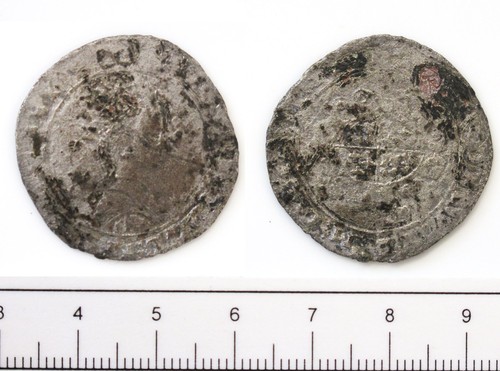
Shilling of Edward VI
A hammered Tudor silver shilling of Edward VI, showing the young king's crowned profile and a reverse cross over the quartered royal-arms shield.
World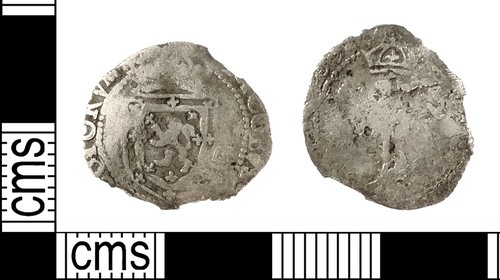
Eighth Thistle Merk
A small hammered silver Scottish coin of James VI, showing a crowned heraldic shield of arms on one side and a crowned thistle on the other.
Hammered
Edward IV Ryal
English medieval gold coin of Edward IV showing the king armored in a ship with a shield, and a radiant rose-on-sun design on the reverse.
Medieval Coins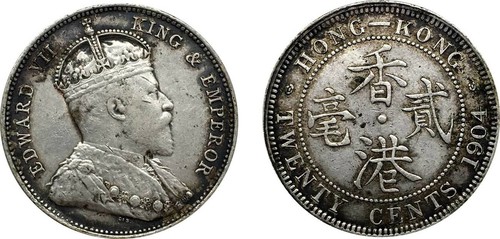
Hong Kong 20 Cents
A small British Hong Kong silver 20 Cents of Edward VII, with the crowned royal profile on one side and a Chinese dragon and value on the other.
Circulation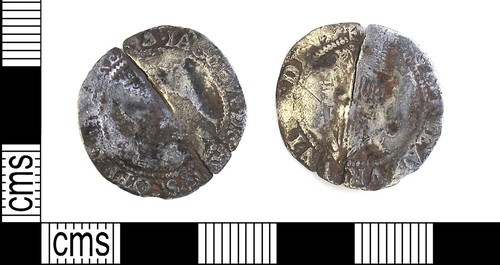
Sixpence of James I
A hammered silver sixpence of James I of England: crowned profile bust with VI value mark, and a dated garnished shield over a cross on the reverse.
Hammered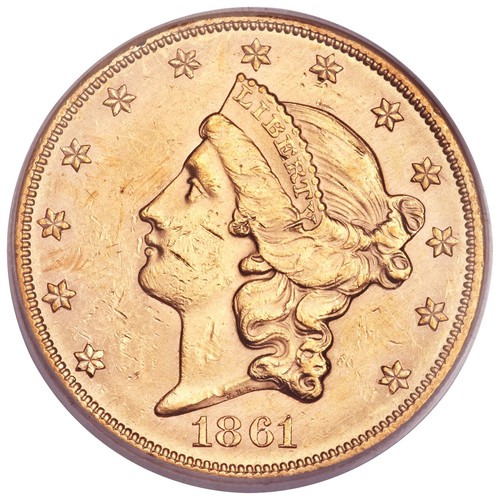
Paquet Double Eagle
An 1861 U.S. $20 gold piece with the standard Liberty Head obverse paired with Anthony Paquet's rare tall-letter reverse variety.
Gold Type Coin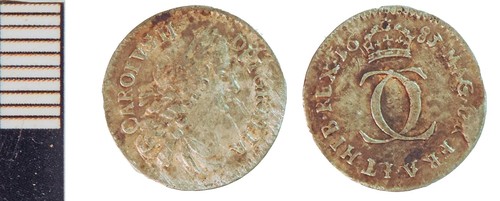
Charles II Twopence
A small milled twopence of Charles II, showing the king's profile bust on the obverse and a crowned mark of value on the reverse.
Milled