
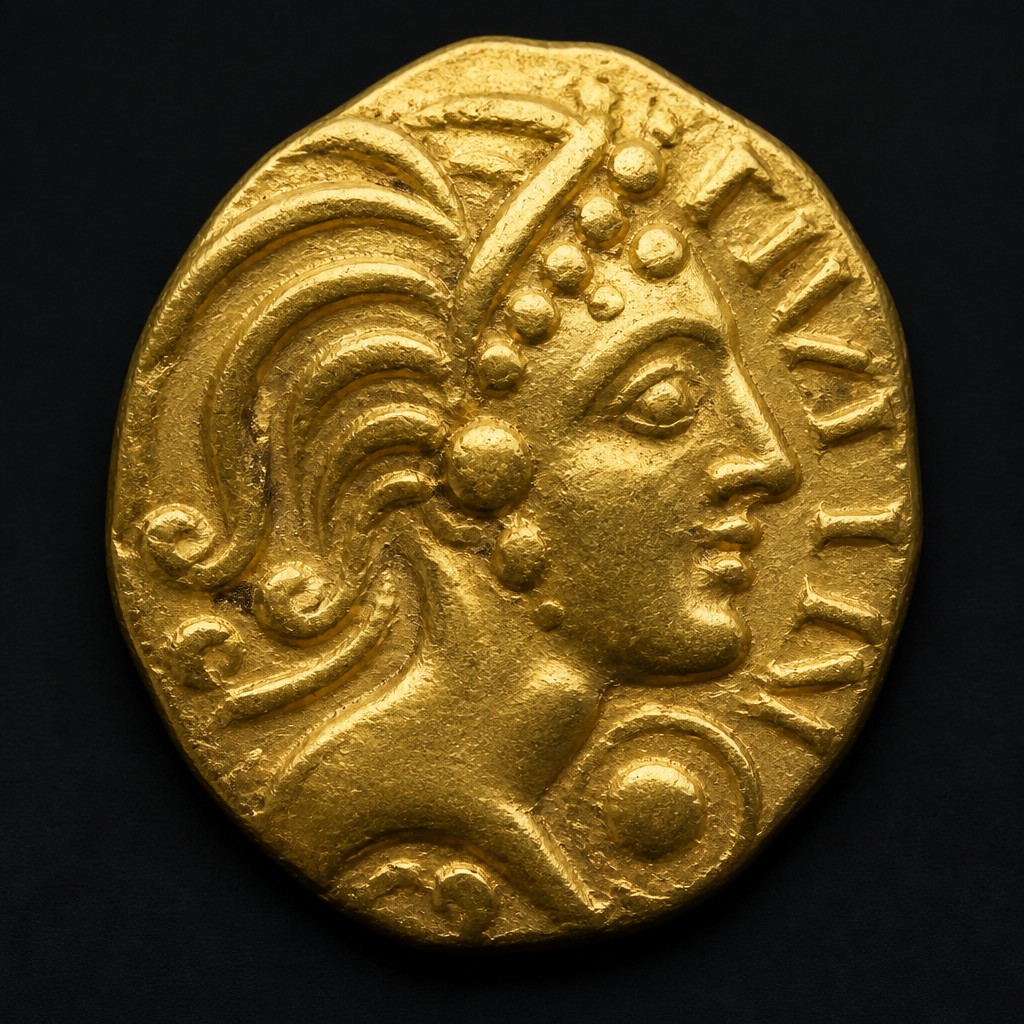
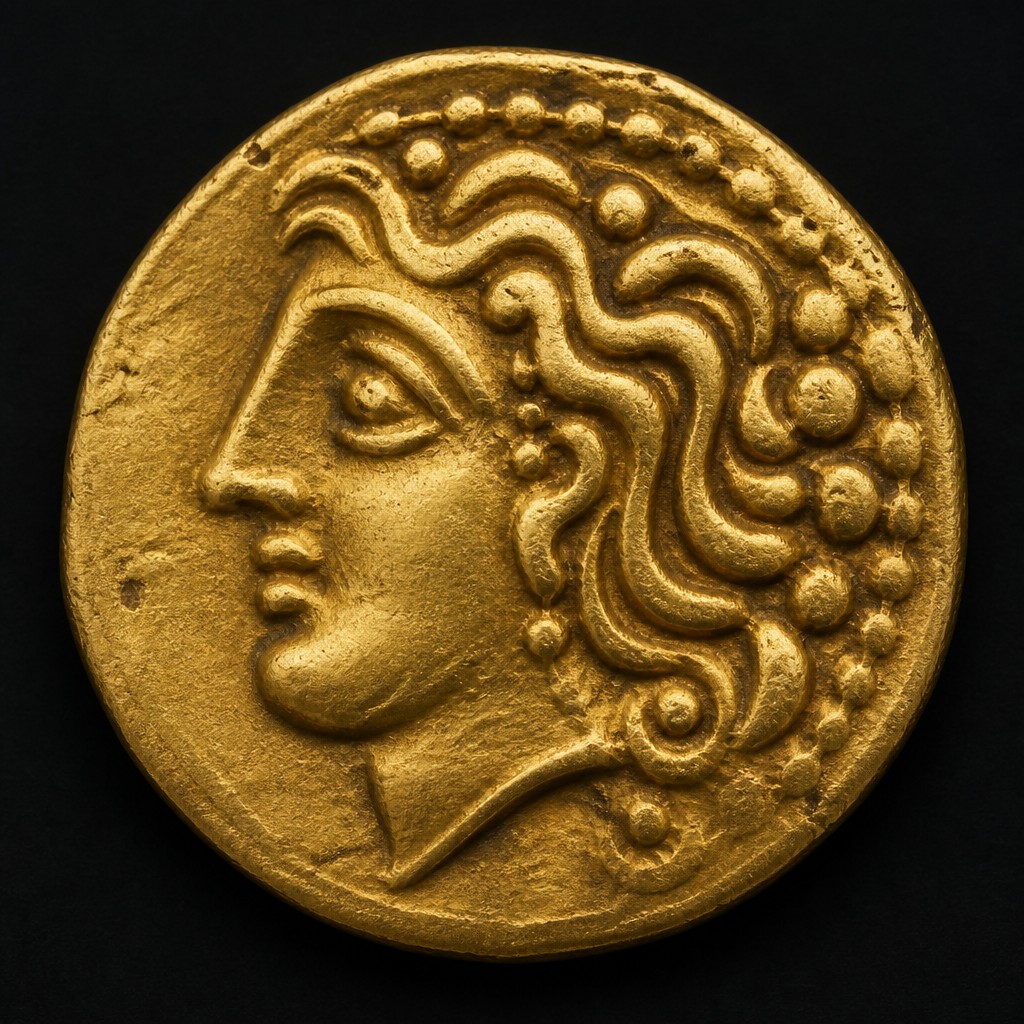
Ancient British Gold Stater (Cunobelin)
A gold stater of Cunobelin, the powerful pre-Roman British king later immortalized by Shakespeare as Cymbeline, notable for its ear-of-corn and horse reverse types.
- Country
- Ancient Britain (Catuvellauni)
- Denomination
- Stater
- Metal
- Gold
Got a coin like this?
Identify any coin from a photo, free.
Overview
Cunobelin, ruler of the Catuvellauni tribe in southeastern Britain in the early 1st century AD, was among the most powerful and wealthy of the native British kings in the decades before the Roman conquest. His gold staters are among the best-known and most collected pieces of ancient British Celtic coinage, both for their historical importance and for their connection to Shakespeare's play Cymbeline, which drew loosely on Cunobelin's legend.
These coins are prized by collectors of both British history and ancient Celtic numismatics as tangible artifacts from the twilight of independent Britain before it became a Roman province.
History & Background
Cunobelin ruled a substantial territory in what is now southeastern England, centered on his capital at Camulodunum (modern Colchester), from around AD 9 into the early 40s. Roman writers, including Suetonius, referred to him using the Latin term "Britannorum rex" (king of the Britons), reflecting his status as the dominant ruler in the region prior to the Roman invasion of AD 43.
His coinage reflects a British Celtic tradition that had, by this period, absorbed significant Roman stylistic influence through trade contact, producing more naturalistic and legible designs than earlier, more abstract Celtic issues. Cunobelin's gold staters typically carried his name in Latin letters, "CVNO" or fuller variants, along with the mint name abbreviation "CAMV" for Camulodunum, reflecting his kingdom's growing sophistication and connections with the Roman world.
Cunobelin's death shortly before the Roman conquest of Britain in AD 43 is sometimes cited by historians as a contributing factor to the political instability that Rome exploited in its invasion, and his sons Togodumnus and Caratacus went on to lead British resistance against the Roman legions.
How to Identify
A Cunobelin gold stater commonly shows, on the obverse, an ear of barley or wheat, a distinctive and recognizable motif for the type, sometimes accompanied by a small branch or other symbol, along with the abbreviated legend "CAMV" referencing Camulodunum. Other obverse types instead show a horse.
The reverse typically depicts a horse, rendered in a relatively naturalistic style compared to earlier, more abstract Celtic horse types, often with a branch, star, or other symbol in the field, along with the king's name abbreviated as "CVNO" or "CVNOBELINVS" in Latin letters. This combination of a legible Latin name and a specific mint abbreviation is a notable feature distinguishing Cunobelin's coinage from earlier, unlettered British Celtic issues.
Because Cunobelin issued a range of coin types over a long reign, with variations in the specific symbols and legend forms, collectors and specialists refer to detailed reference catalogs of ancient British coinage to distinguish specific sub-types and mint variations within his broader gold stater series.
Value & Collectibility
Cunobelin's gold staters are among the more recognizable and desirable ancient British Celtic coins, valued for their clear legends, historical significance, and connection to a well-documented pre-Roman British ruler. Prices for typical, well-preserved examples are generally solid within the ancient British coin market, reflecting steady collector demand.
Sharper strikes, better centering, and particularly desirable or scarce sub-types command higher prices, and coins with a clear, fully legible "CVNOBELINVS" legend or unusual symbol combinations attract stronger interest from specialists in ancient British numismatics. As with all ancient coinage, authenticity and correct attribution benefit from consultation with an experienced dealer in Celtic and British coins.
Frequently asked questions
Is Cunobelin the same as Shakespeare's Cymbeline?
Yes, Shakespeare's play Cymbeline drew loosely on the legendary reputation of the historical king Cunobelin, though the play's plot is largely fictional.
What does CAMV mean on the coin?
It is an abbreviation for Camulodunum, Cunobelin's capital, located at the site of modern Colchester in England.
How powerful was Cunobelin?
Roman sources describe him as the dominant British ruler of his era, controlling a large territory in southeastern Britain shortly before the Roman conquest of AD 43.
What happened after Cunobelin died?
His sons Togodumnus and Caratacus led British resistance against the Roman invasion that began shortly after his death.
Other coins you may enjoy
Theodosius I Solidus
379–395 AD
Republican Victoriatus
c. 211–170 BC
Islamic Gold Dinar (Umayyad)
c. 696–750 AD
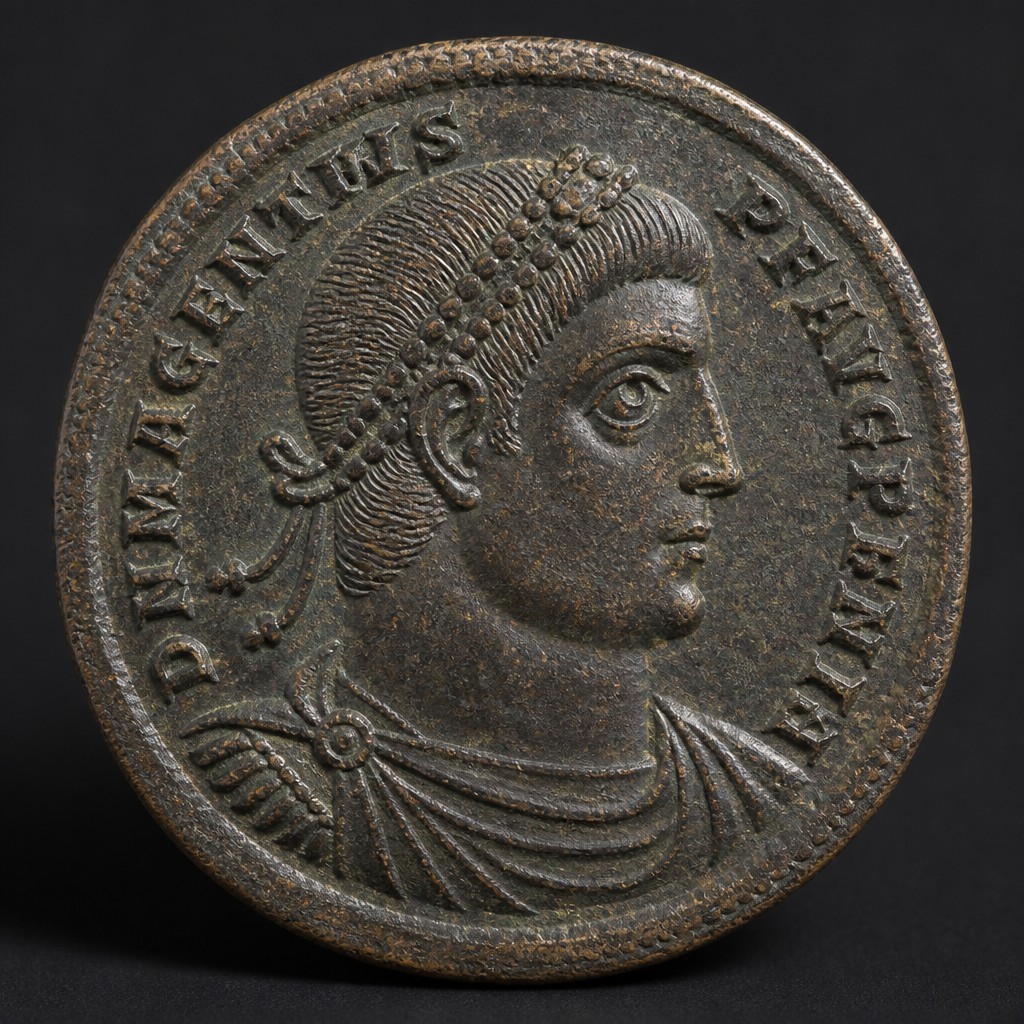
Magnentius Double Centenionalis
350–353 AD
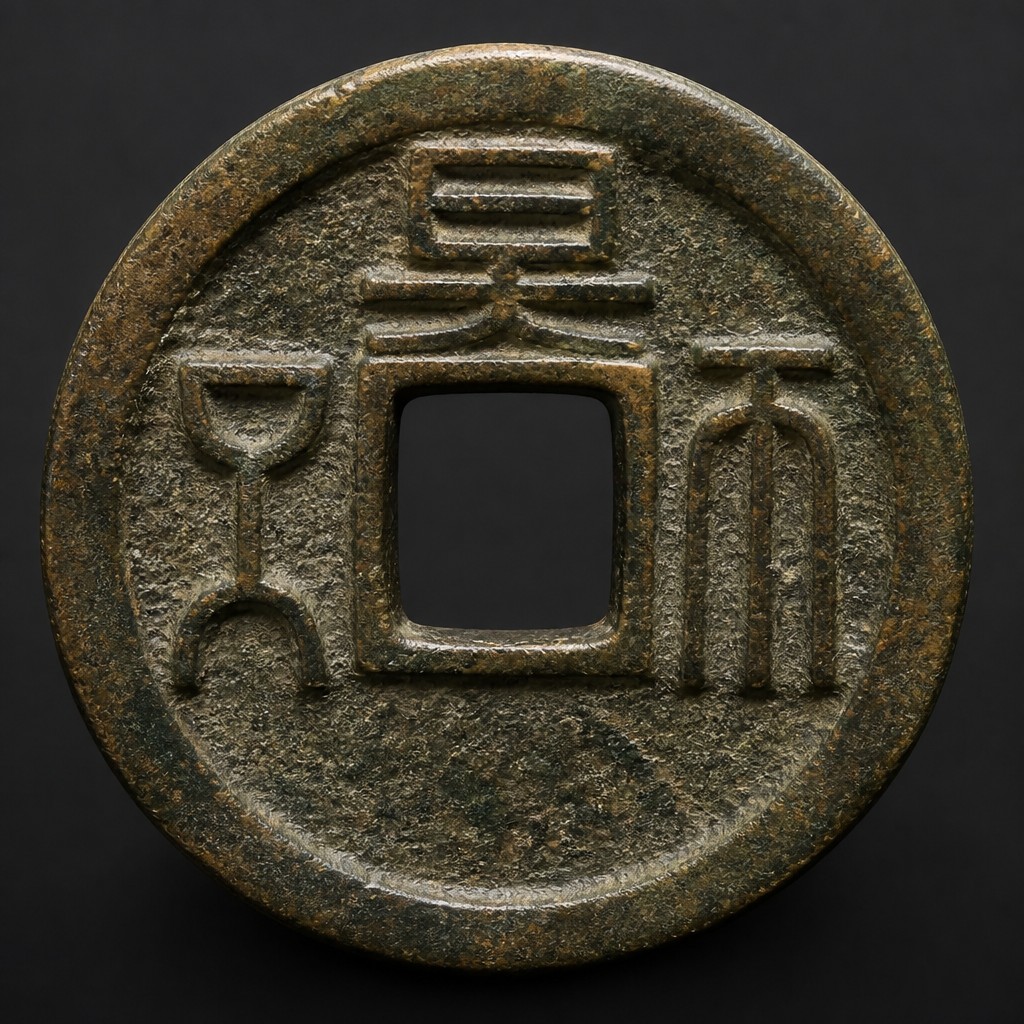
Chinese Wu Zhu Cash
118 BC – 618 AD
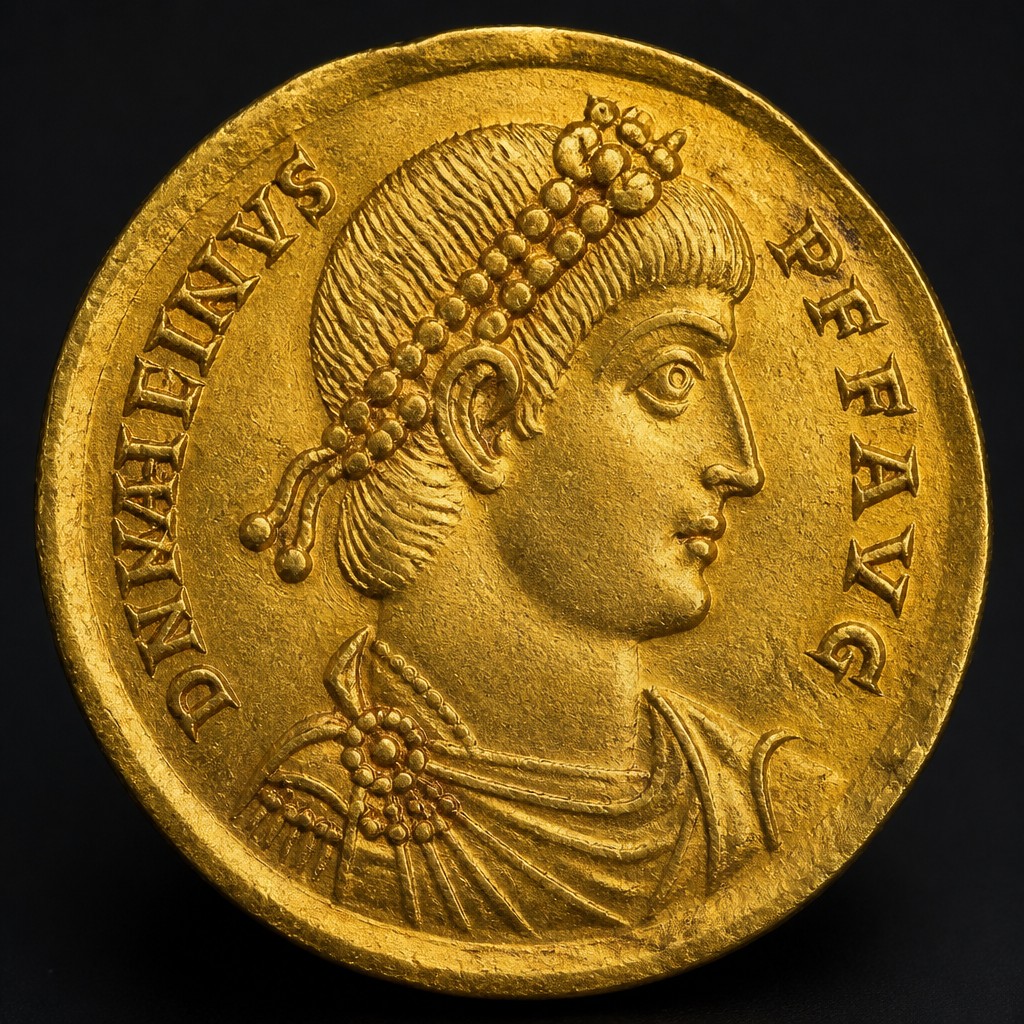
Valentinian I Solidus
364–375 AD
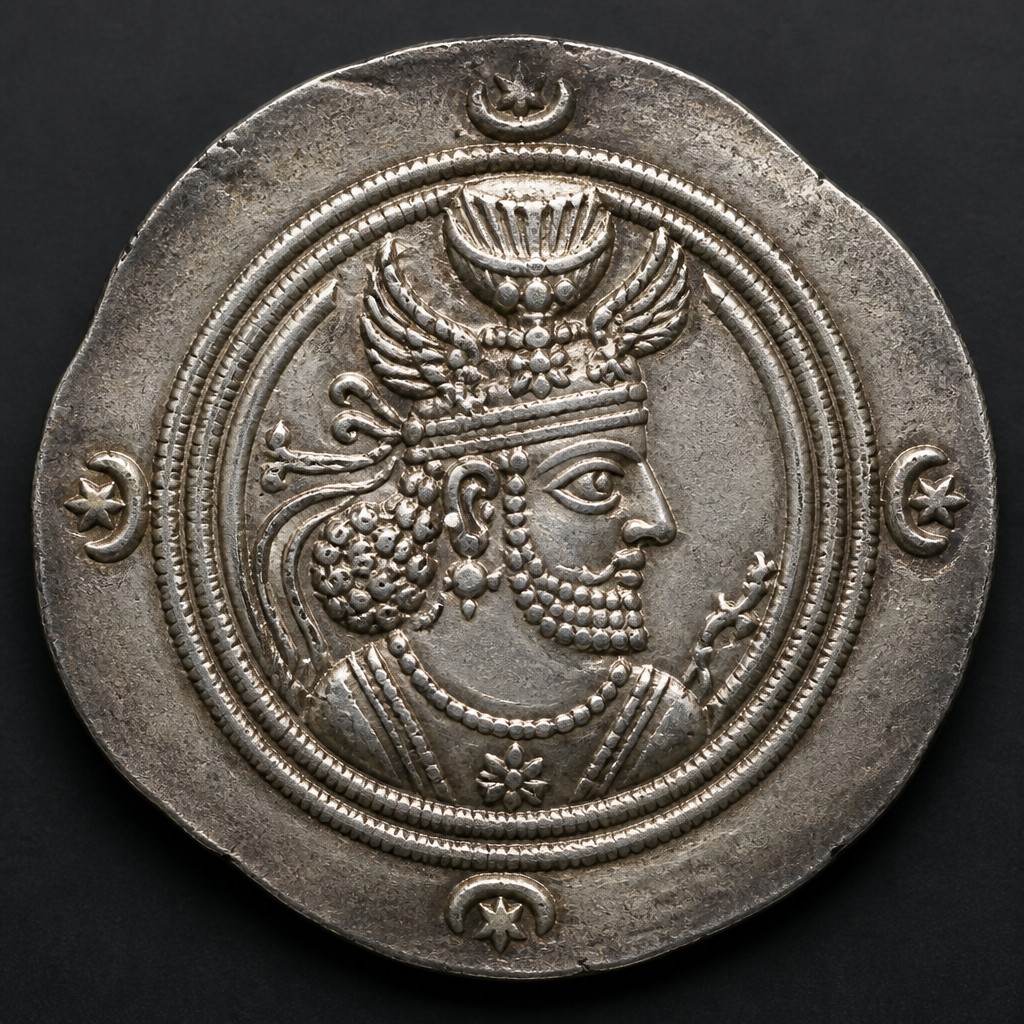
Sassanian Silver Drachm
c. 224–651 AD
Chinese Ban Liang Cash
c. 221–118 BC
Gupta Empire Gold Dinar
c. 320–550 AD
Byzantine Gold Tremissis
c. 4th–7th century AD
Byzantine Follis
498–c. 11th century AD
Celtic Gold Stater
c. 3rd century BC – 1st century AD