
Coin Encyclopedia
Search and identify coins from around the world — with country, denomination, metal, mint, history, and how to tell them apart.
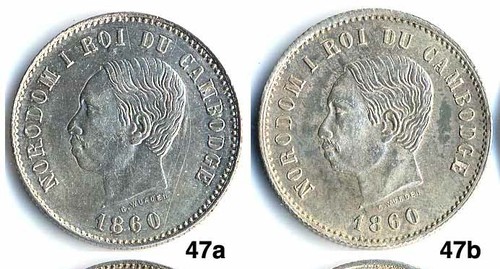
Cambodia Two Francs
A crown-sized Cambodian Two Francs of King Norodom I, its obverse a royal profile and DEUX FRANCS reverse over a crowned coat of arms; dated 1860 but long restruck.
Southeast Asia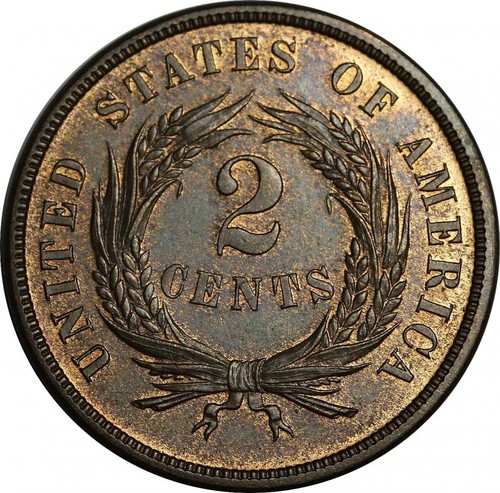
Two Cent Piece
America's only two-cent coin, struck in bronze from 1864 to 1873, and the first U.S. coin to carry the motto "IN GOD WE TRUST."
Two Cent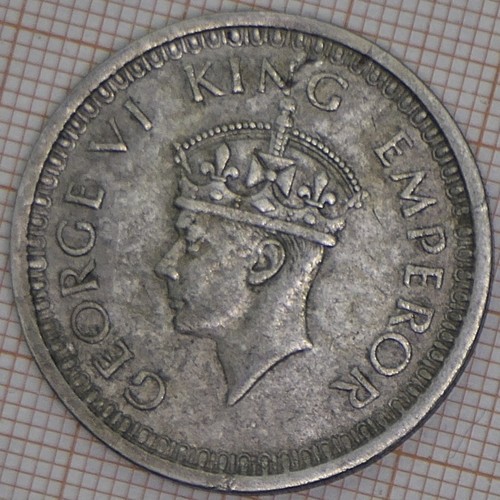
Victoria One Rupee
Silver 1-rupee coin of British India bearing Queen Victoria's crowned bust, struck from 1862 to 1901 under Crown rule.
British India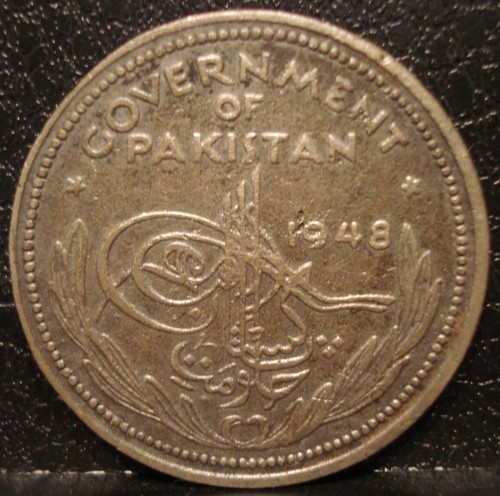
Pakistan One Rupee
An early coin of newly independent Pakistan, dated 1948, with the GOVERNMENT OF PAKISTAN legend framing an ornate Islamic geometric and floral design.
South Asia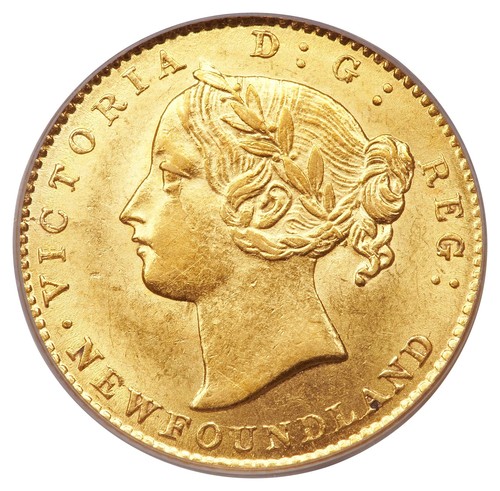
Newfoundland Two Dollars
Small gold two-dollar coin of the colony of Newfoundland; the only circulating coin ever denominated in dollars, cents, and pence together.
Canadian & Provincial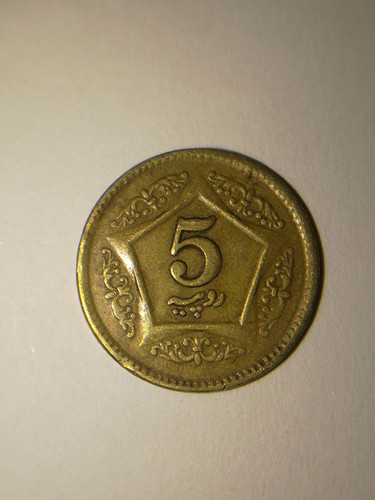
Pakistan 5 Rupees
A brass Pakistani five-rupee coin with a large numeral 5 set in an ornamental frame and Islamic-style Urdu calligraphy around both faces.
South Asia
India Half Rupee (Copper)
Copper coin bearing a lion design with the English legend 'HALF RUPEE INDIA' and the date 1947, dated to the year of Indian independence.
Modern India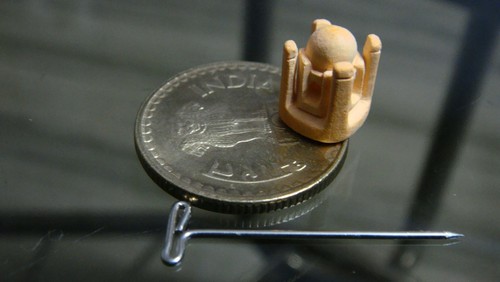
India 1 Rupee Commemorative
Copper-nickel Republic of India one rupee showing the Ashoka Lion Capital emblem, with the value and Devanagari legends on the reverse, from the late 20th century.
Modern India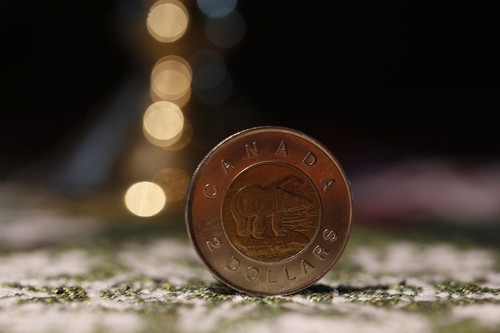
Canadian Two Dollar (Toonie)
Canada's bimetallic $2 coin, introduced in 1996 with a polar bear design; universally nicknamed the 'toonie' after the loonie dollar.
Canadian & Provincial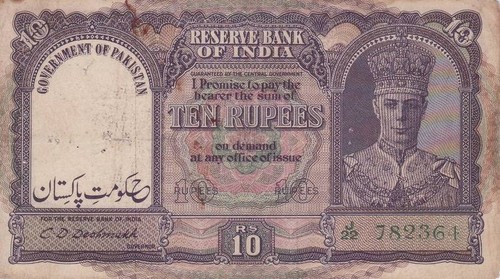
India 10 Rupees
A silver-era Indian coin carrying the profile of King George VI, struck during the final years of British India and the transition to the Republic.
Circulation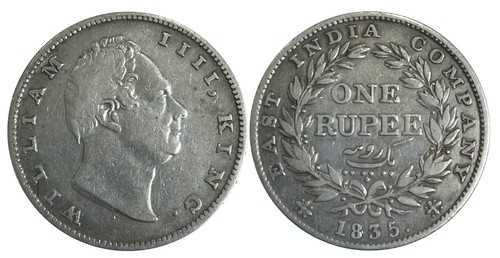
William IV One Rupee
Silver one-rupee coin of British India struck in 1835 under the East India Company, bearing the right-facing bust of King William IV.
British India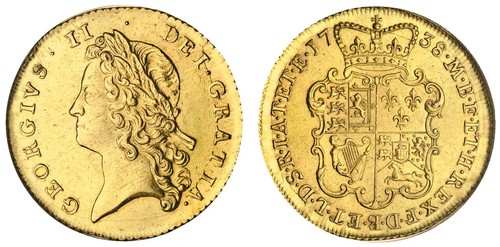
Two Guineas of George II
A large milled gold two-guinea piece of George II, with his left-facing laureate head and a crowned garnished shield of the royal arms; the pictured coin is dated 1738.
Milled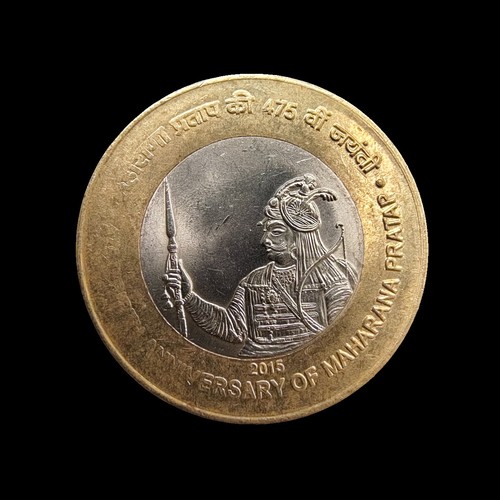
India 10 Rupees Commemorative
Bi-metallic Indian 10-rupee commemorative honoring Maharana Pratap, shown in armor with a sword and Devanagari inscription, dated 2015.
Modern India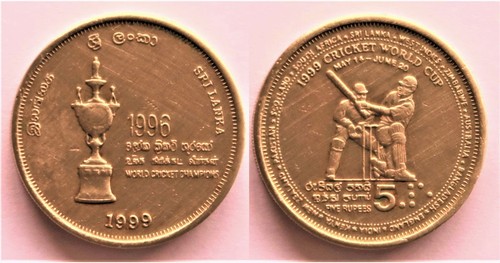
Sri Lanka 5 Rupees
Sri Lanka's 1999 copper-nickel five rupees marking the Cricket World Cup, showing the tournament trophy on one face and a batsman at the crease on the other.
South Asia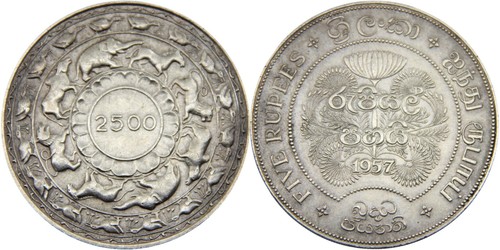
Ceylon 5 Rupees Buddhism Anniversary
Ceylon's 1957 silver five rupees marking 2,500 years of Buddhism, with an ornate 2500 device amid mythological creatures and a scrolled RUPEES reverse.
South Asia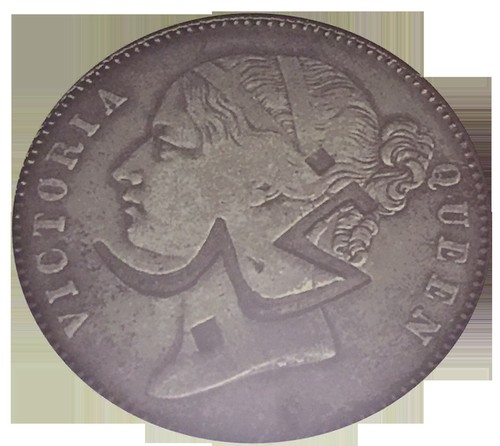
Najd Silver Coin
Silver trade coin catalogued to Najd, central Arabia, bearing a left-facing Victoria Queen bust and an 1862 date in the British India rupee style.
Arabia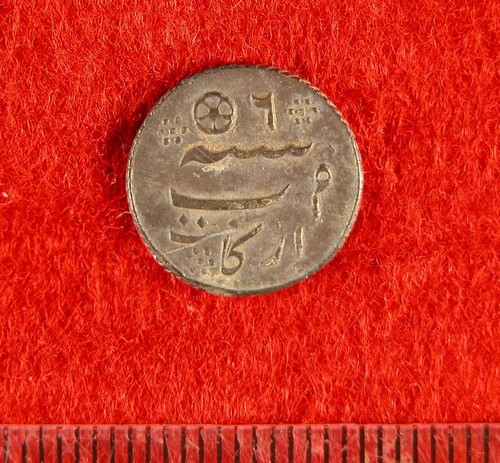
Indian Silver Coin
A silver coin of British India bearing Persian/Urdu calligraphy and a mint mark, in the Mughal-derived inscriptional style of Company-era coinage.
British India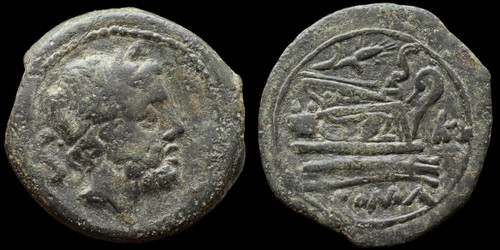
Ancient Sicilian Silver Coin
A silver coin of ancient Greek Sicily, showing a female goddess or nymph head on one face and a two-horse chariot (biga) on the other.
Ancient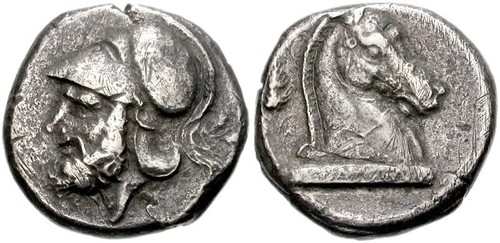
Ancient Greek Didrachm
An ancient Greek silver didrachm worth two drachms, here with a bearded male head and a horse-and-rider reverse in the tradition of Magna Graecia.
Ancient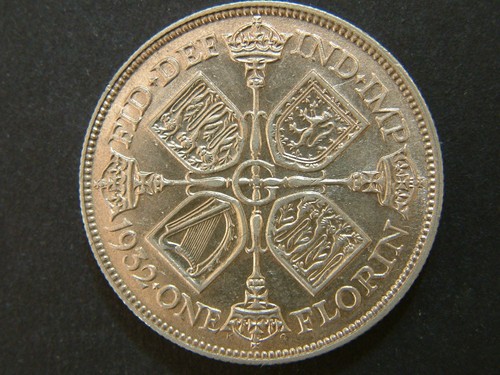
British Florin
A Victorian silver two-shilling florin with a crowned, veiled Victoria and a heraldic crowned-shields reverse; the pictured coin is dated 1890.
World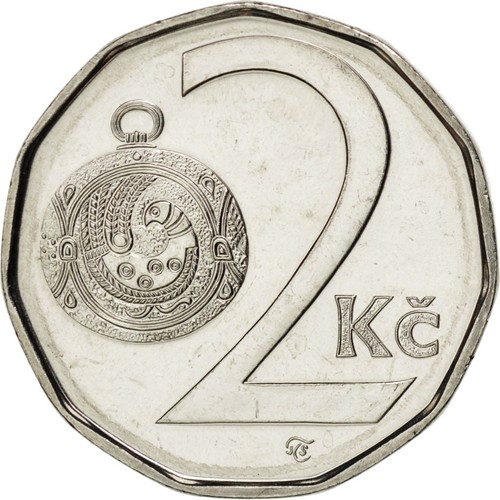
2 Koruny
A circulating Czech Republic coin introduced in 1993, known by its eleven-sided shape, the Czech heraldic lion, and a Great Moravian jewel motif beside 2 Kč.
Modern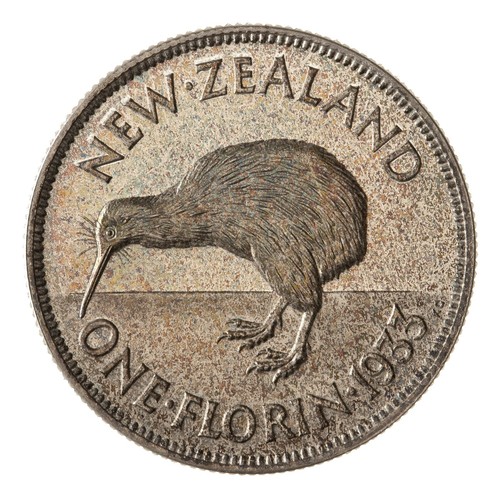
New Zealand Florin
New Zealand's silver two-shilling coin; this 1933 first-year example shows a kiwi and the legend NEW ZEALAND ONE FLORIN.
New Zealand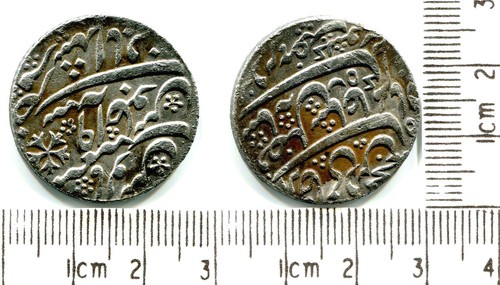
East India Company Rupee
British East India Company silver rupee struck to the Mughal pattern, carrying only Persian/Urdu calligraphy naming the reigning emperor.
British India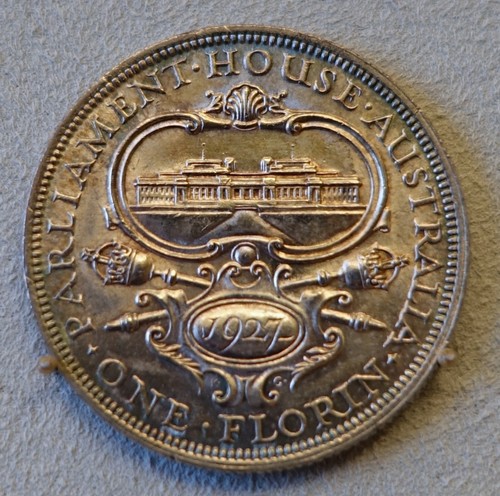
Australian Florin
Australia's pre-decimal silver two-shilling coin, showing the Commonwealth coat of arms with kangaroo and emu supporters and the reigning monarch.
World Coins