
Pakistan One Rupee
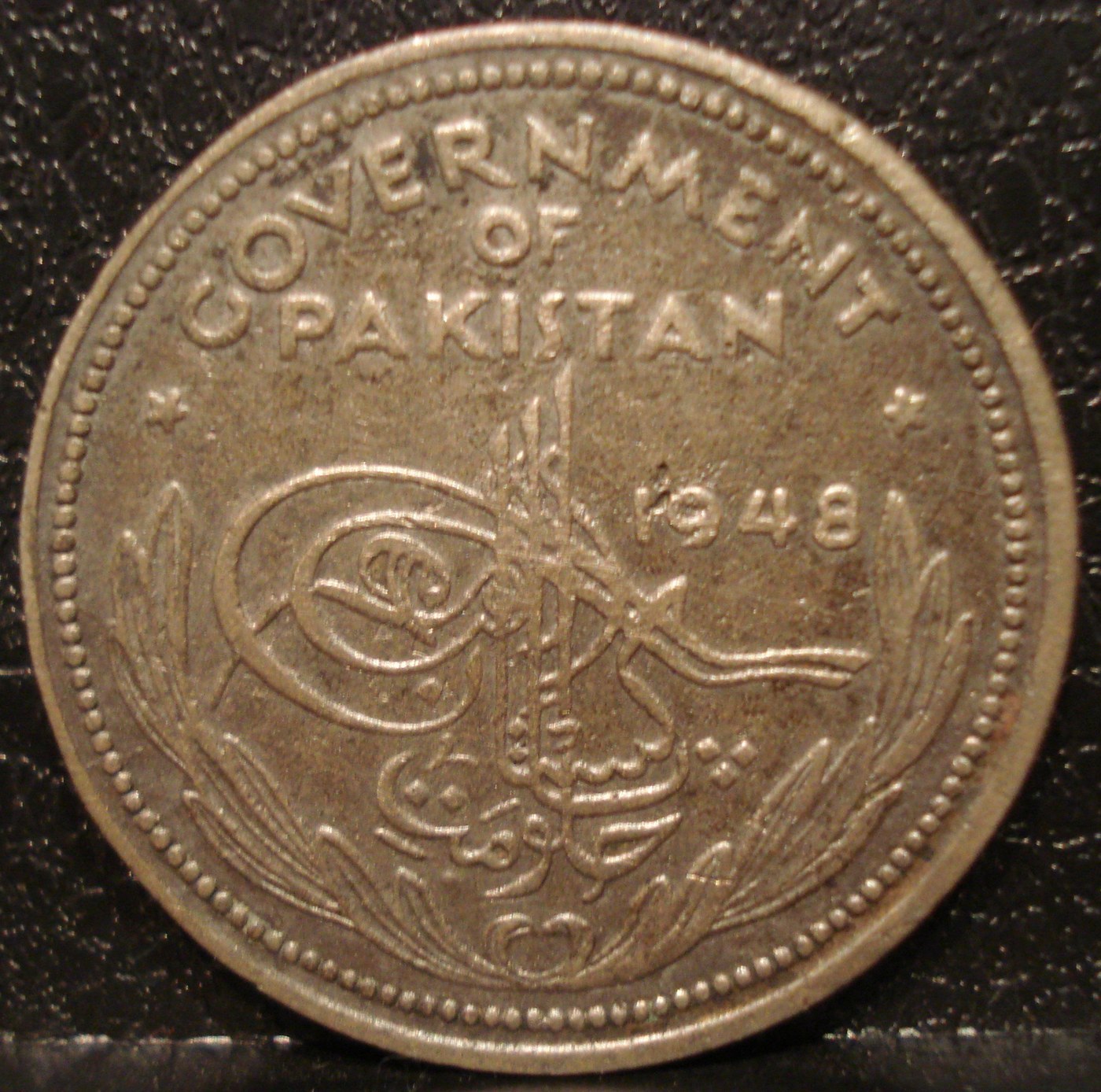
An early coin of newly independent Pakistan, dated 1948, with the GOVERNMENT OF PAKISTAN legend framing an ornate Islamic geometric and floral design.
- Country
- Pakistan
- Denomination
- 1 Rupee
- Metal
- Copper-nickel
Got a coin like this?
Identify any coin from a photo, free.
Overview
The Pakistan One Rupee is a coin of the Dominion of Pakistan struck in the country's first years of independence. The example shown is dated 1948 and carries the legend GOVERNMENT OF PAKISTAN around an ornate design of Islamic geometric and floral ornament, marking it as part of the earliest national coinage issued after the country separated from British India in 1947.
The rupee was the principal unit of Pakistani currency, sitting at the top of a system of annas and pice inherited from the British Indian money in use before independence. As the one-rupee piece, this is a comparatively large and important denomination within that early series, and its careful decorative design reflects the new state's use of Islamic art motifs in place of the royal portrait that had appeared on the coinage of the colonial period.
Because it is dated 1948, the very first year in which the young government issued coins bearing its own name, this rupee is a tangible artefact of the birth of Pakistan's independent currency.
History & Background
Pakistan came into being in August 1947 with the partition of British India. In its earliest months the new state continued to rely on the existing British Indian coinage, but it quickly moved to issue money in its own name. Coins inscribed GOVERNMENT OF PAKISTAN and dated 1948 belong to this first national series, replacing the effigy of the British monarch with legends and ornament appropriate to the new republic.
The early Pakistani coinage retained the familiar rupee, anna and pice denominations of the subcontinent so that the public could adapt easily to it, while introducing distinctly Pakistani designs. In place of a ruler's portrait the coins used Islamic decorative motifs, inscriptions and the national symbols of crescent and star, reflecting the ideological foundations of the new state. The one rupee stood as the largest of the everyday circulating values in this system.
This 1948-dated issue therefore represents the transition from colonial to national money. Over the following years the design and metal of Pakistan's coinage would evolve, and the currency was later decimalised, but the GOVERNMENT OF PAKISTAN pieces of the late 1940s remain the founding coins of the country's own monetary history.
How to Identify
The most direct identifier on this coin is the legend GOVERNMENT OF PAKISTAN together with the date 1948, which appears on the visible face shown here alongside an ornate arrangement of Islamic geometric and floral ornament. That combination of an English state legend, a 1948 date and formal decorative patterning is characteristic of Pakistan's first national coinage and separates it at once from the British Indian coins it replaced.
As described in the source identity, this is a copper-nickel piece, so expect a hard, pale metallic surface rather than the brown tone of a copper coin. The one rupee is one of the larger denominations of the early series, so it is a substantial coin in the hand. The opposite face of this particular example is not shown in the image, but early Pakistani coinage of this period typically pairs the value and national symbols such as the crescent and star with the decorative and legend-bearing side.
To confirm an attribution, read the legend and date directly: the GOVERNMENT OF PAKISTAN wording and the 1948 year are the decisive features. The absence of any royal portrait, and the use of Islamic ornament in its place, further mark the coin out as an early national issue of Pakistan rather than a colonial-era coin of British India.
Value & Collectibility
The value of an early Pakistan One Rupee depends heavily on condition and on collector demand for the country's founding coinage. As a historically significant first-year national issue, a well-preserved 1948 rupee is of more interest to collectors than the small everyday denominations of the same period, but exact prices vary widely with grade and eye appeal.
Circulated examples with worn detail are the most commonly encountered and trade for modest sums, while coins that retain sharp ornament, clear legends and original surfaces command a stronger premium. Because these pieces are collected as artefacts of Pakistan's independence, provenance, legibility of the 1948 date and overall preservation matter more to value than the face denomination itself.
Figures quoted here are general context rather than fixed prices; actual realisations depend on the specific grade, any variety, and the state of the market at the time of sale. For a considered valuation, compare a given coin against recent sales of the same type and grade in standard references and auction records.
Frequently asked questions
What is the Pakistan One Rupee of 1948?
It is a coin from the first national coinage of independent Pakistan, dated 1948 and inscribed GOVERNMENT OF PAKISTAN. The rupee was the principal unit of the country's early currency, issued soon after the 1947 partition of British India.
Why does the coin say GOVERNMENT OF PAKISTAN?
After independence in 1947, Pakistan began striking money in its own name to replace the British Indian coinage it had inherited. The GOVERNMENT OF PAKISTAN legend identifies the piece as an official early issue of the new state.
What is the design on the coin?
The visible face carries the GOVERNMENT OF PAKISTAN legend and the date 1948 around an ornate arrangement of Islamic geometric and floral ornament. Early Pakistani coins used such decorative motifs and national symbols instead of a royal portrait.
What metal is the Pakistan One Rupee made of?
This piece is a copper-nickel coin, so it shows a hard, pale metallic surface rather than the brown colour of copper. As the one-rupee value it is one of the larger denominations of the early Pakistani series.
Is a 1948 Pakistan Rupee rare or valuable?
Value depends mainly on condition and collector demand for Pakistan's founding coinage. Worn examples are modest, while sharp, well-preserved coins with a clear 1948 date and legend are more desirable. Compare against recent sales for a realistic figure.
Pakistan One Rupee guides
In-depth guides for identifying, valuing, and collecting Pakistan One Rupee.
Other coins you may enjoy
Pakistan 5 Rupees
20th century
Ceylon 10 Cents (Cupronickel)
1944
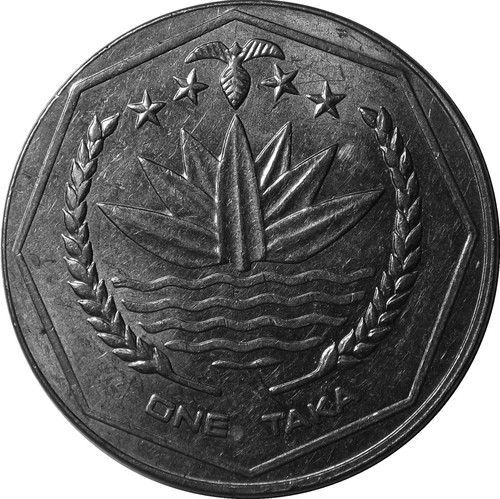
Bangladesh One Taka
Circulating type of the early 2000s; example dated 2002
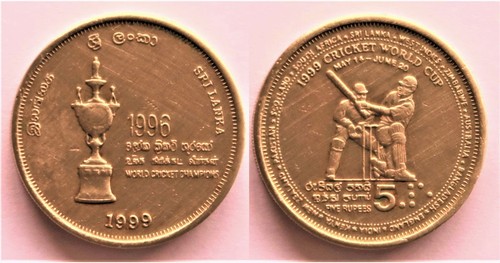
Sri Lanka 5 Rupees
Dated 1999, a commemorative Cricket World Cup issue
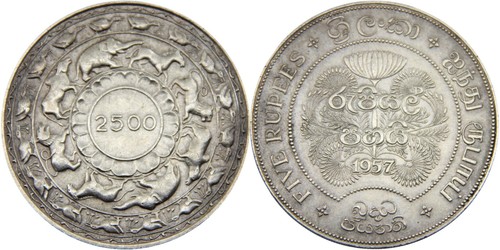
Ceylon 5 Rupees Buddhism Anniversary
Dated 1957, a single-year commemorative issue
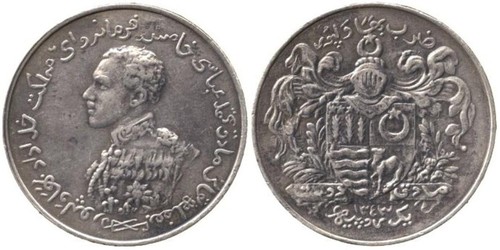
Bahawalpur Gold Coin
19th–20th century
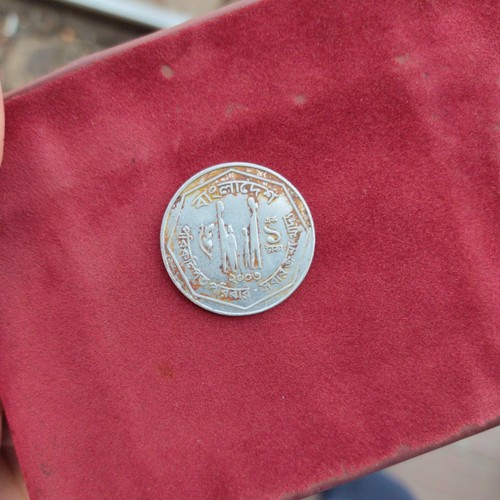
Bangladesh 5 Taka
Modern circulation issue of the People's Republic of Bangladesh; the higher-value Taka coins were introduced from the 1990s onward, with the steel-based 5 Taka belonging to the later composition.