
How to Identify the Pakistan One Rupee
A collector's guide to recognising the early Pakistan One Rupee: the GOVERNMENT OF PAKISTAN legend, 1948 date, Islamic ornament, copper-nickel metal and look-alikes.
Read the full Pakistan One Rupee encyclopedia entry →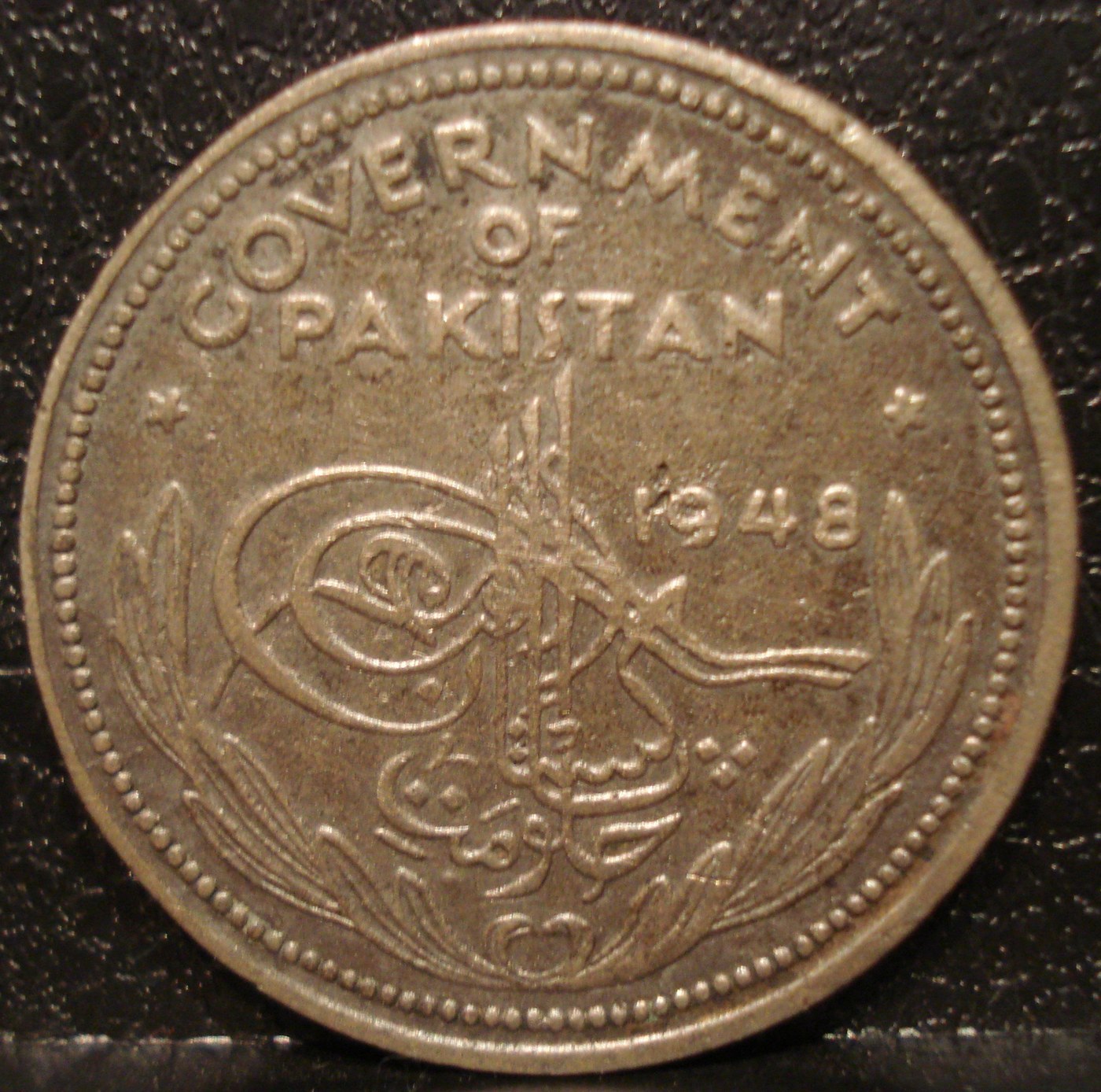
Start with the legend and date, because they are the surest identifiers. A genuine early Pakistan One Rupee carries the words GOVERNMENT OF PAKISTAN and a date; on the coin shown that date is 1948, the first year of the country's own national coinage. Reading this English legend and the year directly is the single most reliable step in attributing the piece, and it immediately separates it from the British Indian coins that circulated before independence.
Examine the decorative design. The face shown here surrounds the legend with an ornate arrangement of Islamic geometric and floral ornament rather than a ruler's portrait. This aniconic, pattern-based style is characteristic of Pakistan's founding coinage, so the presence of formal Islamic ornament in place of an effigy is a strong supporting clue. Early Pakistani coins also make use of the national crescent and star, which may appear alongside the value on the coin.
Check the metal and size. The source identity records this as a copper-nickel coin, so expect a hard, pale metallic surface rather than the brown or reddish tone of copper. As the one-rupee value, it is one of the larger circulating denominations of the early series and feels substantial in the hand; the smaller annas and pice of the same period are noticeably lighter and smaller. Weighing and measuring the coin and comparing it against catalogue figures for the type is a good way to confirm the denomination.
Be alert to look-alikes and to the parts of the design you cannot see. The obverse of this particular example is not shown in the photograph, so base your attribution on the visible legend and date rather than assuming the design of the hidden face. Other early Pakistani denominations share the GOVERNMENT OF PAKISTAN legend and similar ornament, so read the stated value carefully rather than judging by the decoration alone. Worn coins of British India or of neighbouring states can also resemble this piece at a glance if the legend is not clearly legible.
For authentication, confirm that the coin matches the recorded weight, diameter and metal for the type, since a piece that is the wrong size, magnetic where it should not be, or made of an incorrect metal is a warning sign. Genuine coins are struck, so treat soft, grainy detail, casting seams or surface bubbles with caution as they can indicate a cast copy. When the legend or date is unclear, photograph both faces and check the design against standard references for early Pakistani coinage before settling on an identification.
Frequently asked questions
What is the fastest way to identify a Pakistan One Rupee?
Read the legend and date. A genuine early piece is inscribed GOVERNMENT OF PAKISTAN with a date such as 1948, set around Islamic geometric and floral ornament rather than a portrait. That combination is the surest identifier.
How do I tell it apart from a British India coin?
Coins of British India usually carry the British monarch's portrait and titles, while the Pakistan rupee replaces the effigy with Islamic ornament and the GOVERNMENT OF PAKISTAN legend. The state name and date are the decisive difference.
The other side of my coin looks different from the photo. Is that a problem?
Not necessarily. The image here shows only the legend-and-ornament face; the opposite side of early Pakistani coins typically carries the value and national symbols such as the crescent and star. Judge the coin by its visible legend and date rather than by one face alone.
How can I spot a fake or replica?
Check that the coin matches the recorded weight, diameter and copper-nickel metal for the type. Be wary of pieces that are the wrong size or metal, and of soft surfaces, casting seams or bubbles that suggest a cast copy rather than a struck coin.