
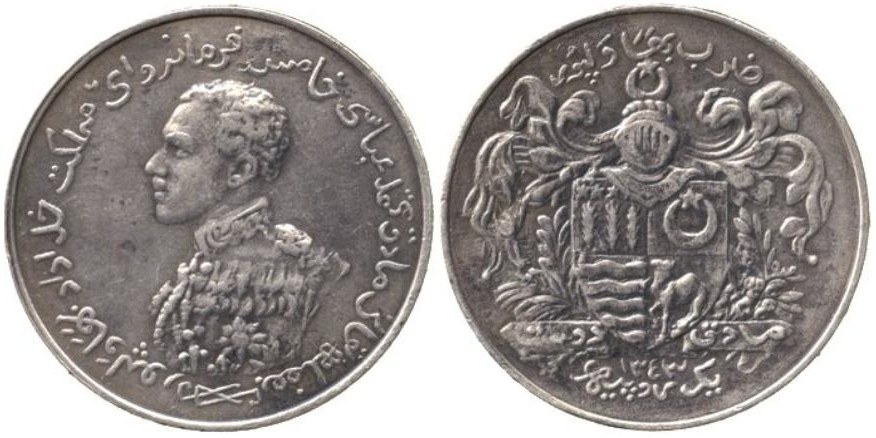
Bahawalpur Gold Coin
A gold coin or medallic piece linked to the princely state of Bahawalpur, its obverse bearing a uniformed royal portrait and its reverse an ornate coat of arms.
- Country
- Bahawalpur
- Denomination
- Unknown
- Metal
- Gold
Got a coin like this?
Identify any coin from a photo, free.
Overview
The Bahawalpur Gold Coin is a gold piece associated with the former princely state of Bahawalpur, a Muslim-ruled state in what is now southern Punjab, Pakistan, governed by the Abbasi dynasty of Nawabs. The example shown here presents a European-style royal portrait in profile facing left, wearing an ornate military uniform with decorations, medals and a sash — the visual language of the ruling Nawab as a modern sovereign.
The reverse carries an elaborate coat of arms with heraldic devices, the kind of state emblem adopted by Bahawalpur's rulers during the period of British paramountcy. The denomination is not clearly established from the piece itself, so it is catalogued here simply as a gold coin rather than assigned a specific value.
Because portrait-and-arms gold pieces of this style differ markedly from Bahawalpur's inscription-based circulating coinage, this type is best understood as a prestige, commemorative or medallic gold issue tied to the Nawab and his state rather than an everyday trade coin. Treat the attribution as descriptive of what the piece depicts, and verify specifics against specialist references.
History & Background
Bahawalpur was one of the larger princely states of British India, ruled by the Abbasi Nawabs and centered on the city of Bahawalpur along the Sutlej and Indus river country. From the early nineteenth century the state maintained a treaty relationship with the British while retaining internal autonomy, and its rulers projected sovereignty through titles, ceremony, a state flag and a coat of arms.
The state's own historical coinage was struck in the Islamic tradition, carrying Persian and Arabic inscriptions — the ruler's name and titles, mint and regnal or Hijri dating — rather than portraits. Gold pieces bearing a uniformed European-style bust and a full heraldic coat of arms, as seen here, reflect the later princely fashion for Western-influenced regalia and are typically commemorative or presentation objects rather than circulating currency.
The long reign of Nawab Sir Sadiq Muhammad Khan V (Sadeq Mohammad Khan Abbasi V, ruled 1907–1955) spanned the era in which such portrait-and-arms imagery was most fashionable among Indian princes, and pieces of this style are usually placed in that late-state period before Bahawalpur's accession to Pakistan in 1947 and its later integration. Precise dating of any individual piece requires reading its legends and comparing it to documented examples.
How to Identify
Start with the obverse portrait. This piece shows a left-facing profile bust of a ruler in an ornate military or court uniform, complete with epaulettes, medals, decorations and a sash. That Western-style portraiture is the defining visual feature and is what links the coin to a modern princely sovereign rather than to a classical inscription coin.
Turn to the reverse, which bears an ornate coat of arms and heraldic design — shield, supporters and other devices arranged as a state emblem. Any surrounding legend, whether in Persian/Urdu script or in Latin letters naming Bahawalpur or the Nawab, is important for attribution and should be recorded carefully.
Because the denomination is not established and the style diverges from Bahawalpur's standard inscription coinage, do not assume a specific value or catalog number from appearance alone. Note the diameter, weight and any edge lettering, and be aware that gold color alone does not prove gold content. This description reflects the piece as photographed; confirm identity and metal with a specialist before relying on any single attribution.
Value & Collectibility
Value for a gold piece like this depends heavily on what it actually is — an official state issue, a commemorative or presentation medal, a later restrike, or a private or fantasy piece — and that can only be settled by examining the legends, fabric and provenance rather than the design alone. Attribution therefore matters far more here than for common circulating coins.
If a piece is genuine gold, it carries at minimum a bullion value tied to its weight and fineness, with any numismatic premium resting on rarity, historical association with the Nawabs of Bahawalpur, condition and documented provenance. Well-documented, clearly genuine princely gold can be desirable to collectors of Indian states material.
Because portrait-and-arms "princely state gold" is an area where unofficial strikes, tokens and outright fakes circulate, treat any figure as general context only and obtain independent expert verification and metal testing before assigning a firm value or paying a numismatic premium.
Frequently asked questions
Where is Bahawalpur and who issued this coin?
Bahawalpur was a princely state ruled by the Abbasi Nawabs in what is now southern Punjab, Pakistan. Pieces of this kind are associated with the state and its ruling Nawab during the late princely era.
Who is the man on the portrait?
The obverse shows a uniformed ruler of Bahawalpur in profile. The long-reigning Nawab Sadiq Muhammad Khan V (1907–1955) governed during the period when such portrait imagery was fashionable, but the exact identification should be confirmed from the coin's legends.
What denomination is it?
The denomination is not clearly established from the piece itself, which is why it is catalogued simply as a gold coin. Recording its weight, diameter and legends is the way to narrow this down.
Is it definitely solid gold?
It is described as a gold piece based on appearance, but gold color alone is not proof of gold content. Only weighing, measuring and professional metal testing can confirm the metal.
Is it a circulating coin or a commemorative?
A uniformed portrait with a full coat of arms differs from Bahawalpur's inscription-based circulating coinage, so pieces in this style are usually commemorative, presentation or medallic rather than everyday currency.
Bahawalpur Gold Coin guides
In-depth guides for identifying, valuing, and collecting Bahawalpur Gold Coin.
Other coins you may enjoy
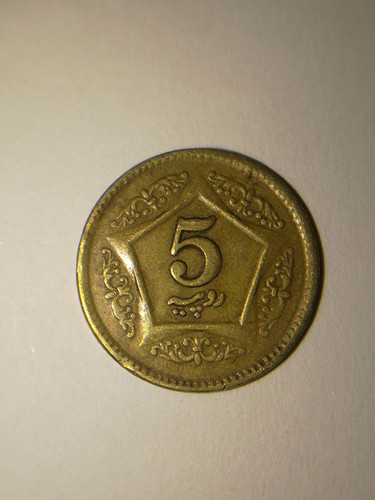
Pakistan 5 Rupees
20th century
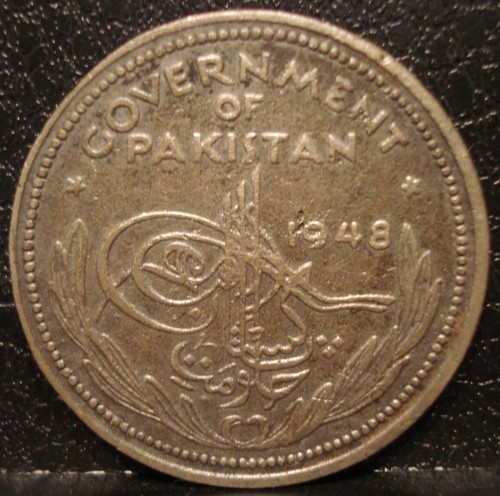
Pakistan One Rupee
1948
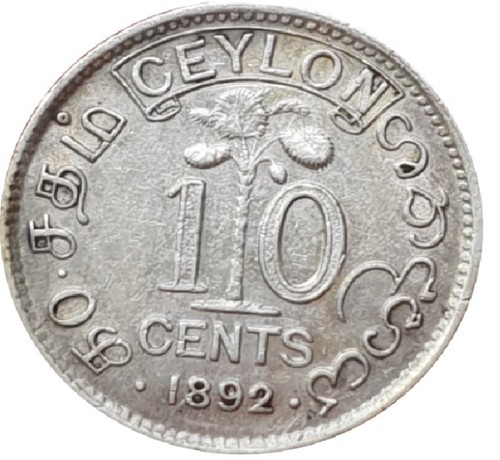
Ceylon 10 Cents (Cupronickel)
1944
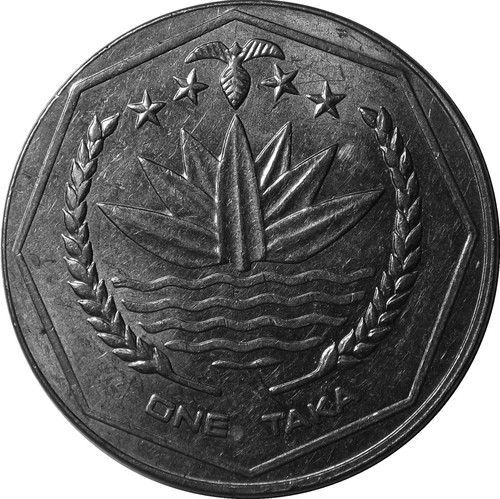
Bangladesh One Taka
Circulating type of the early 2000s; example dated 2002
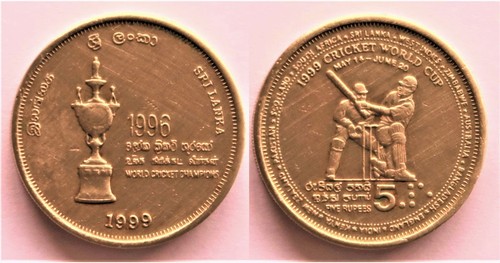
Sri Lanka 5 Rupees
Dated 1999, a commemorative Cricket World Cup issue
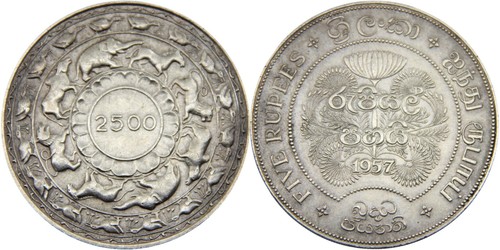
Ceylon 5 Rupees Buddhism Anniversary
Dated 1957, a single-year commemorative issue
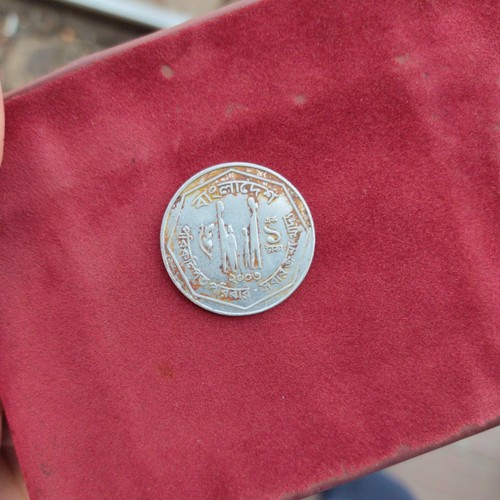
Bangladesh 5 Taka
Modern circulation issue of the People's Republic of Bangladesh; the higher-value Taka coins were introduced from the 1990s onward, with the steel-based 5 Taka belonging to the later composition.