India Half Rupee (Copper)
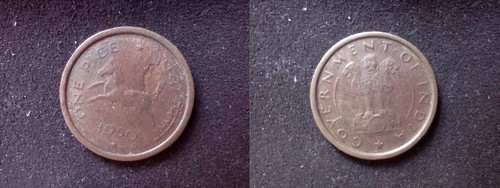
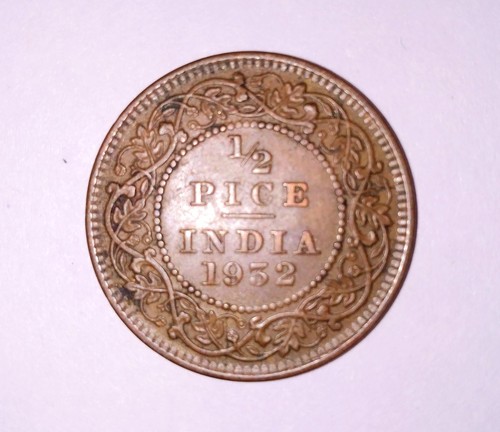
Copper coin bearing a lion design with the English legend 'HALF RUPEE INDIA' and the date 1947, dated to the year of Indian independence.
- Country
- India
- Denomination
- Half Rupee
- Metal
- Copper
Got a coin like this?
Identify any coin from a photo, free.
Overview
This piece is a copper coin carrying a lion design on the pictured face, the English legend 'HALF RUPEE INDIA,' and the date 1947. Its color and weight identify the metal as copper (or a copper alloy) rather than the silver or nickel used for most official Indian half rupees of the era. The reverse is not visible in the photographed example, so this entry describes only the features that can be confirmed from the coin itself.
The date 1947 places it at the moment of Indian independence, and the prominent lion motif echoes the Lion Capital of Ashoka, the ancient sculpture that India adopted as its state emblem. Coins and coin-like pieces combining this imagery with a bold English 'HALF RUPEE INDIA' legend are collected today as a distinctive, easily recognized type.
History & Background
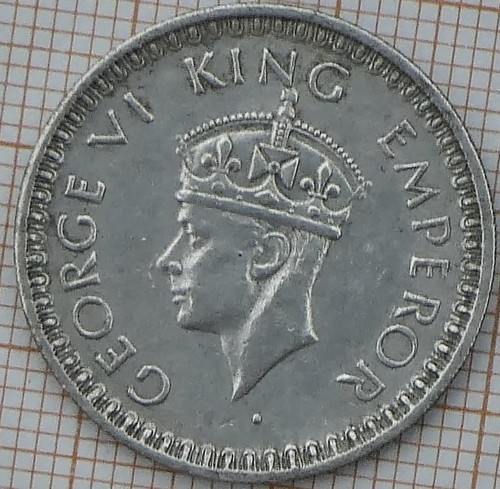
The year 1947 was pivotal for Indian coinage. British India was still issuing coins under King George VI as independence arrived in August 1947, and the Republic of India would not introduce its own emblem-based coinage until 1950. Standard British India half rupees of the mid-1940s were struck in nickel and carried the king's portrait, not a free-standing lion with an all-English legend.
Because a copper half rupee dated 1947 with a lion design does not match the official circulating series of the period, a coin of this description is best understood outside the standard government-issue framework. Pieces of this kind are commonly encountered as commemorative, novelty, replica, or unofficial 'fantasy' issues that borrow the independence-era date and India's lion symbolism. Collectors value them for their striking design and historical association rather than as documented regular-issue currency.
Without an official mint record matching this exact combination of metal, denomination, and design, firm attribution to a government mint should not be assumed. Treat the 1947 date as the date depicted on the coin rather than proof of a specific official issue.
How to Identify
The clearest diagnostics are on the visible face: a central lion design, the English legend 'HALF RUPEE INDIA,' and the date 1947. The metal reads as copper or a copper alloy, shown by its reddish-brown to brown tone and, typically, a heavier feel than a same-size nickel or aluminum coin. Confirm the metal with a scale and a magnet, as copper is non-magnetic.
Because the reverse is not visible here, note both faces when you have the coin in hand: record any additional legends, symbols, edge type (plain or reeded), diameter, and weight. These measurements are essential for separating a genuine period piece from a modern replica or fantasy strike. Compare the lettering style, the lion's rendering, and the overall sharpness against reference images, since casual copies often show soft, mushy detail.
Do not confuse this piece with the official British India half rupee of 1946-1947, which is nickel, carries the portrait of King George VI, and does not present a lone lion with an all-English 'HALF RUPEE INDIA' legend. The all-English wording and copper metal are strong signals that the coin sits outside the standard government series.
Value & Collectibility
Value for a copper 1947 'HALF RUPEE INDIA' lion piece depends heavily on what it actually is. If it is a commemorative, novelty, replica, or fantasy issue rather than a documented official coin, it typically trades in the low range associated with such curiosities, often a few dollars to low double digits in US terms, driven by eye appeal and condition rather than rarity or bullion content.
Copper has only modest metal value, so any premium comes from collector interest in the design and the independence-era date. Because look-alike modern strikes are common, provenance and clear photographs of both faces materially affect what a buyer will pay. Treat any single asking price as indicative and compare recent sales of the same design before assigning a value.
If you suspect the coin could be a genuine pattern, trial, or scarce unofficial issue, its worth could be higher, but that should be established through expert examination and third-party authentication rather than assumed from the date alone.
Frequently asked questions
Is the 1947 copper Half Rupee an official British India coin?
It does not match the standard series. Official British India half rupees of 1946-1947 were nickel and carried King George VI's portrait, not a lone lion with an all-English 'HALF RUPEE INDIA' legend. A copper lion piece is best treated as a commemorative, replica, or unofficial issue unless proven otherwise.
What does the lion on the coin represent?
The lion motif echoes the Lion Capital of Ashoka, an ancient sculpture that independent India adopted as its national emblem. Pairing it with the 1947 date links the design to the year of Indian independence.
How can I confirm the coin is copper?
Look for a reddish-brown to brown tone, weigh it, and test with a magnet. Copper is non-magnetic and denser than aluminum, so a magnetic or very light coin points to a different metal or a modern reproduction.
Why is only one side shown?
The photographed example shows the lion obverse with 'HALF RUPEE INDIA' and 1947; the reverse is not visible. When identifying your own coin, always record both faces, plus diameter, weight, and edge type.
What is a coin like this worth?
If it is a novelty, replica, or unofficial issue, it usually sells in a low range driven by design appeal and condition rather than rarity. Copper's metal value is modest, so compare recent sales of the same design and seek authentication before assuming a high value.
India Half Rupee (Copper) guides
In-depth guides for identifying, valuing, and collecting India Half Rupee (Copper).