India 50 Paise
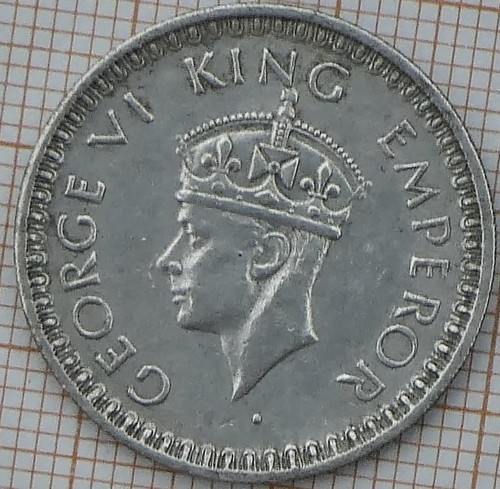
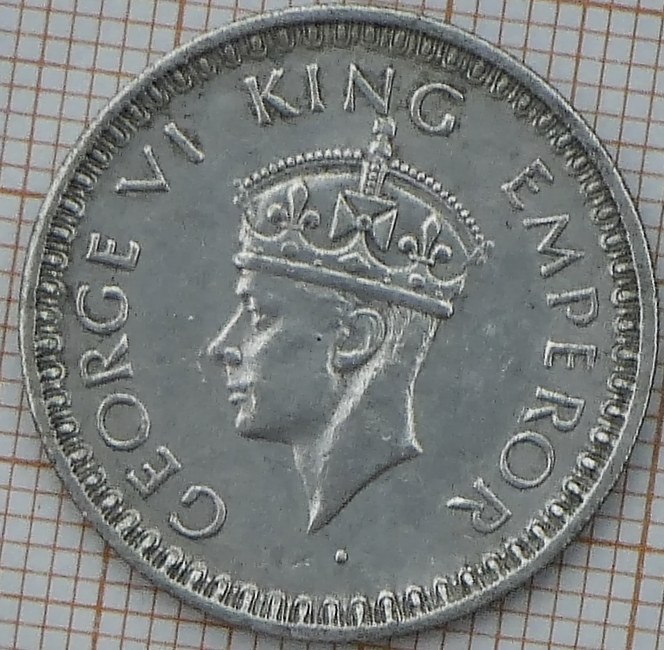
A George VI half-rupee of British India dated 1946 — the pale nickel-brass ancestor of the modern 50 paise, with a crowned royal bust and a rampant lion reverse.
- Country
- India
- Denomination
- 50 Paise
- Metal
- Nickel-brass
Got a coin like this?
Identify any coin from a photo, free.
Overview
The coin shown here is a half rupee of British India dated 1946, struck during the reign of King George VI. Because a half rupee equals fifty paise once the rupee was later divided into 100 paise, this type is often catalogued under the modern "50 Paise" heading, and it stands as the direct predecessor of India's decimal half-rupee coinage.
The obverse carries the crowned profile bust of George VI with a surrounding royal inscription, while the reverse shows a rampant lion together with the legend HALF RUPEE INDIA and the date 1946. It is a mid-sized coin struck in a pale, brassy-golden alloy described here as nickel-brass, rather than the silver used for earlier half rupees.
As a late-colonial issue produced just before Indian independence, this half rupee is a common and accessible piece that sits at the transition between the old British Indian rupee system and the Republic of India coinage that followed.
History & Background
George VI was proclaimed King-Emperor of India in 1936 and his portrait appears on Indian coinage struck through the 1940s. His reign covered the final years of British rule on the subcontinent, ending with independence in 1947, so 1946-dated coins such as this half rupee are among the last regular British India issues.
During and immediately after the Second World War the price of silver rose sharply, and mints around the world moved away from silver in everyday coinage. In British India the higher-value coins that had once been struck in silver were reissued in base-metal alloys, and the half rupee of this period was produced in a pale nickel-brass type rather than in silver, keeping the familiar denomination while conserving precious metal.
After independence and the adoption of decimal coinage in 1957, the rupee was divided into 100 paise, making the old half rupee equal to fifty paise. The Republic of India went on to issue 50 paise coins in its own designs, but the George VI half rupee remains the historical link between the pre-decimal rupee and the modern 50 paise denomination.
How to Identify
Look first at the obverse: this type shows the crowned profile bust of George VI facing the viewer's left, encircled by a royal titling inscription. The presence of a crowned king rather than a national emblem immediately marks it as a British India colonial issue rather than a Republic of India coin.
The reverse is the key diagnostic. It displays a rampant lion together with the clear English legend HALF RUPEE INDIA and the date 1946. The wording HALF RUPEE, rather than a paise figure, tells you this is a pre-decimal coin even though its value corresponds to fifty paise. The coin is struck in a pale, yellow-tinged nickel-brass alloy, giving it a brassier look than the earlier silver half rupees of the same denomination.
A mint mark, when present, appears as a small symbol beneath the date or the bust and distinguishes the government mints that struck the series. Because the design carries English lettering and Western (Arabic) numerals for the date, it is straightforward to read and to separate from Mughal or princely-state coins, which use Persian script and no royal portrait.
Value & Collectibility
George VI half rupees of this base-metal type are common coins, produced in large numbers late in the British Indian period, so most circulated examples trade at modest collector prices rather than at scarce-coin levels. Their appeal comes largely from their history as a last colonial issue and as the forerunner of the modern 50 paise.
Within the type, value is driven by condition, the sharpness of the king's portrait and the lion, the presence and clarity of any mint mark, and overall eye appeal. Well-preserved, lightly circulated pieces and especially uncirculated examples with original luster command a premium over worn, heavily handled coins.
As with any coin, exact prices depend on grade, demand and the specific date-and-mint combination, so the figures a collector encounters should be treated as general ranges rather than fixed values. An accurate read of the date, alloy and any mint mark is the best starting point for placing a given example in the market.
Frequently asked questions
Why is a half rupee listed as 50 paise?
After India adopted decimal coinage in 1957 the rupee was divided into 100 paise, so half a rupee equals fifty paise. This 1946 George VI half rupee is the pre-decimal ancestor of the modern 50 paise denomination.
Is this 1946 half rupee made of silver?
No. Unlike earlier half rupees, this wartime-era type was struck in a pale base-metal alloy — a nickel-brass rather than silver — because silver was conserved during and after the Second World War.
Who is the person on the coin?
The crowned profile bust is King George VI, who was King-Emperor of India from 1936 until independence in 1947. His portrait and title appear on the obverse.
What does the reverse show?
The reverse depicts a rampant lion with the English legend HALF RUPEE INDIA and the date 1946, identifying both the denomination and the country of issue.
Is the 1946 half rupee rare or valuable?
It is a common coin from the late British India period, so ordinary circulated examples are inexpensive. Higher grades with a sharp portrait, clear lion and good luster are worth more to collectors.
India 50 Paise guides
In-depth guides for identifying, valuing, and collecting India 50 Paise.